
Why does IRM use a risk framework instead of a random folder of risk statements?
Select an answer to reveal the explanation.
Short Explanation
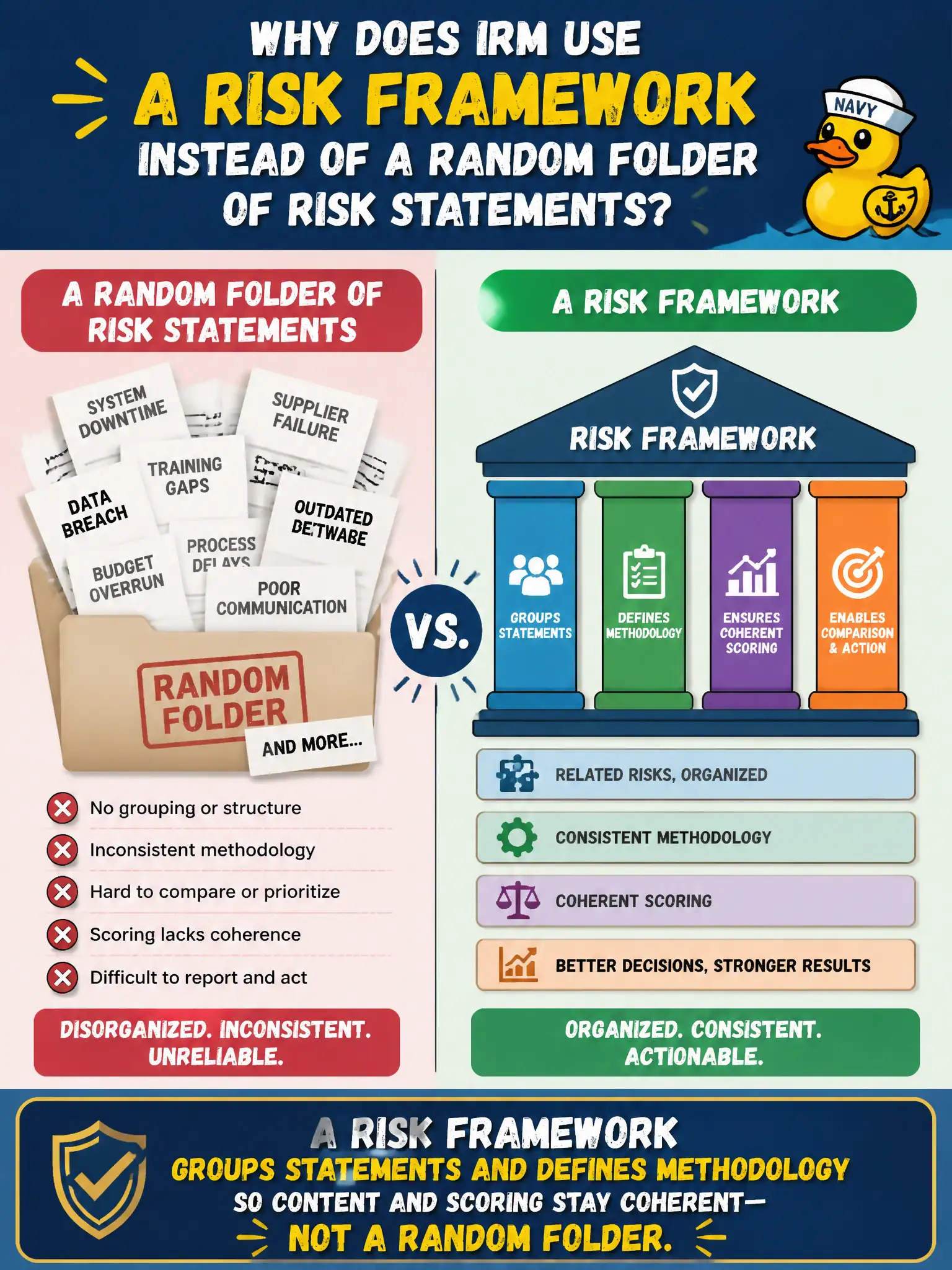
A framework is the library catalog plus the scoring rulebook—not a junk drawer. It groups statements and sets methodology so everyone is playing the same game. Random folders and logo-only containers miss that job.
Full Explanation
IRM uses a risk framework instead of a random folder of risk statements because a framework groups statements and defines methodology so content and scoring stay coherent. Civic programs need that catalog-plus-rulebook so departments play the same game. Claiming frameworks only store company logos for board slides fails by concept because logos are branding, not risk architecture. Claiming frameworks delete entity scoping so risks become global orphans fails by concept because frameworks organize content; they do not abolish entity-scoped instances. Claiming frameworks exist solely to mirror ITSM priority codes fails by concept because ITSM priority is a service-desk concept, not risk methodology. Exam caveat: CIS-RC risk frameworks group statements and define scoring methodology. Operational check: open the enterprise risk framework, confirm categories and methodology are defined, place sample statements under categories, and verify scores use the framework methodology rather than ad-hoc personal scales. In civic IRM programs, retain configuration and decision evidence so examiners can reconstruct why this design supports public services. In civic IRM programs, retain configuration and decision evidence so examiners can reconstruct why this design supports public services.