
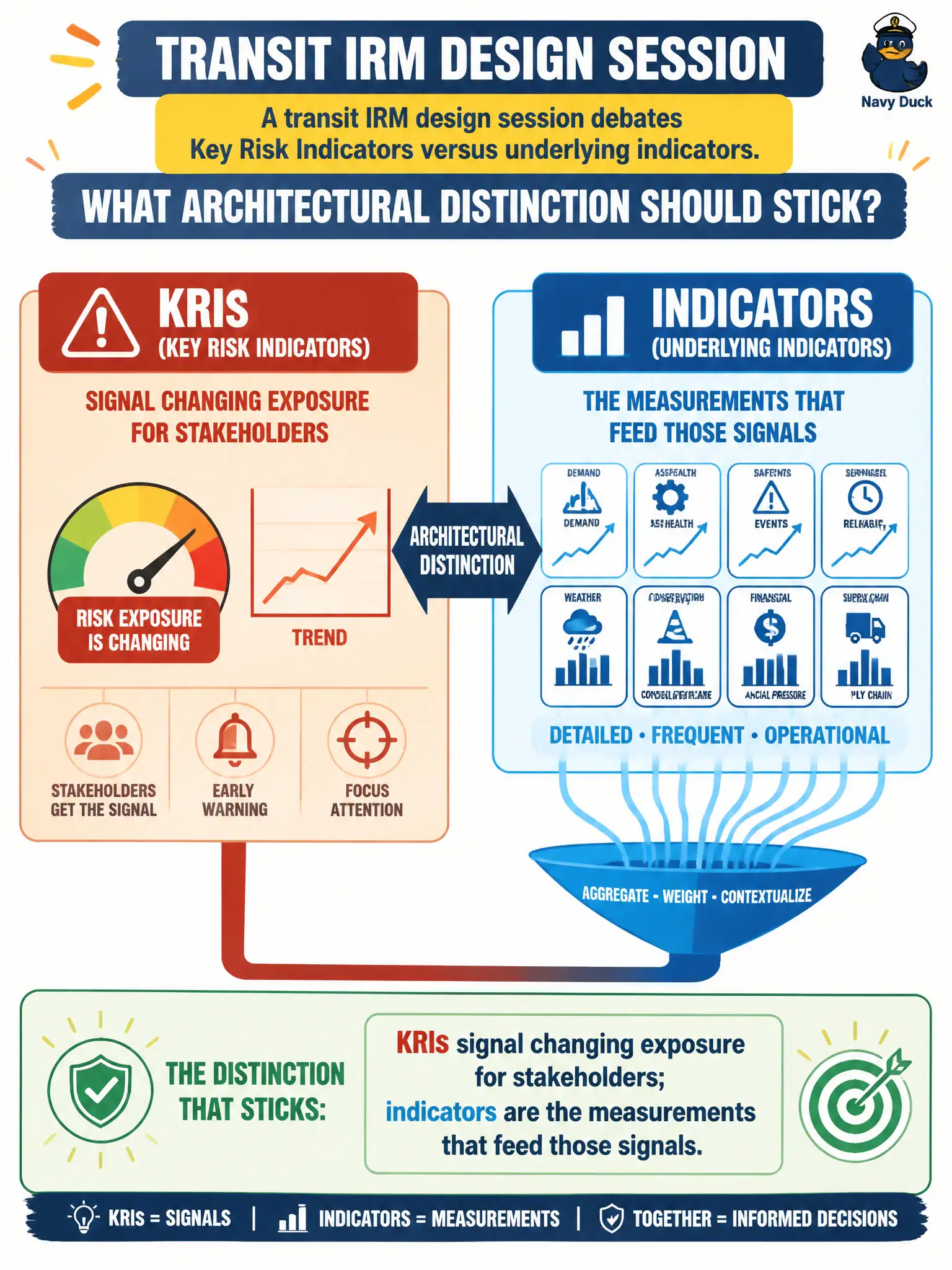
A transit IRM design session debates Key Risk Indicators versus underlying indicators. What architectural distinction should stick?
Select an answer to reveal the explanation.
Short Explanation
Think dashboard light versus the sensor behind it. KRIs are the “hey, exposure is moving” signals; indicators are the measurements feeding those lights. One does not erase the need for actual risk records.
Full Explanation
KRIs signal changing exposure for stakeholders; indicators are the measurements that feed those signals. In transit IRM design, that distinction keeps dashboard lights separate from the sensors behind them for civic mobility risks. Claiming indicators replace risks entirely so risk records become unnecessary fails by concept because measurements inform risks; they do not delete the need for owned risk records. Treating KRIs as only audit finding codes with no measurement role fails by concept because KRIs are forward-looking exposure signals, not finding taxonomies. Treating indicators and KRIs as identical UI themes with the same data model and purpose fails by concept because architecture separates signal from underlying measurement. Exam caveat: CIS-RC distinguishes KRIs (stakeholder signals) from indicators (feeding measurements). Operational check: define an underlying indicator (for example on-time performance or vendor SLA breach rate), map it to a KRI that escalates when thresholds move, and verify the KRI alerts stakeholders while the risk record remains the owned object. In civic IRM programs, retain configuration and decision evidence so examiners can reconstruct why this design supports public services.