
A large ISO-style framework needs nested clause references under one authority document. What citation structure should the team allow?
Select an answer to reveal the explanation.
Short Explanation
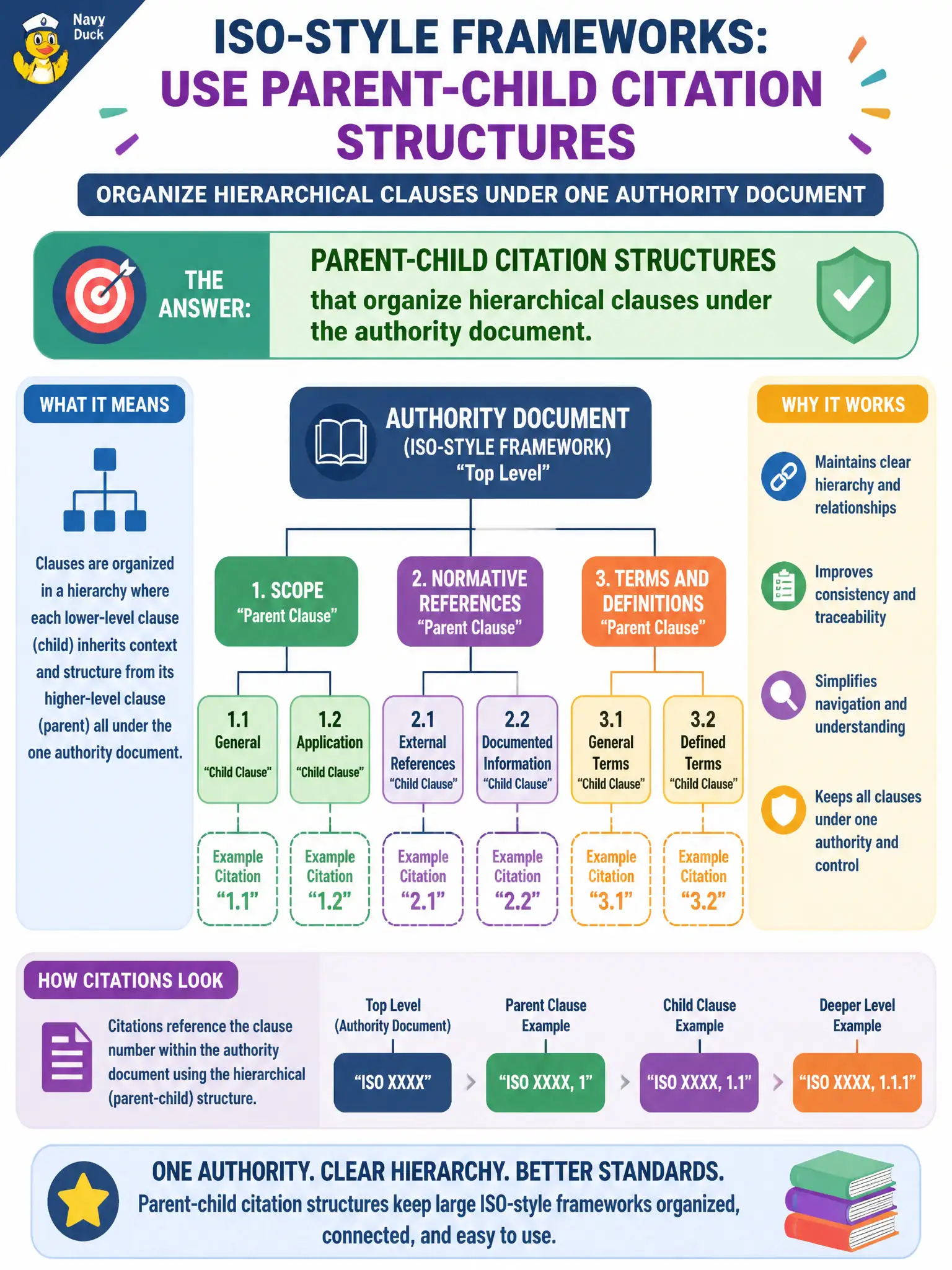
Big frameworks are outline-shaped—chapter, section, clause. Parent-child citations let you hang that outline under one authority document instead of flattening everything into a single blob or exploding into hundreds of fake ‘laws.’
Full Explanation
Large ISO-style frameworks need nested clause references under one authority document, so the team should allow parent-child citation structures that organize hierarchical clauses under that authority document. Limiting the library to only one citation total per authority document, regardless of framework size, cannot represent clause trees examiners reference by number. Storing citations exclusively as attachments with no structured records loses mapping, ownership of obligations, and reporting. Creating one new authority document for every leaf clause to avoid hierarchy explodes the library, breaks mandate cohesion, and frustrates crosswalks. Exam caveat: hierarchy depth should mirror the framework enough for traceability without over-modeling every editorial sub-bullet that has no distinct control implication for the city. Operational check: import or create parent-child citations for a pilot ISO domain, map leaf or mid-level citations to control objectives as designed, generate lineage reports, and validate with auditors that clause references are understandable. Document citation hierarchy conventions in the municipal content standard so authors stay consistent across frameworks and future imports.