
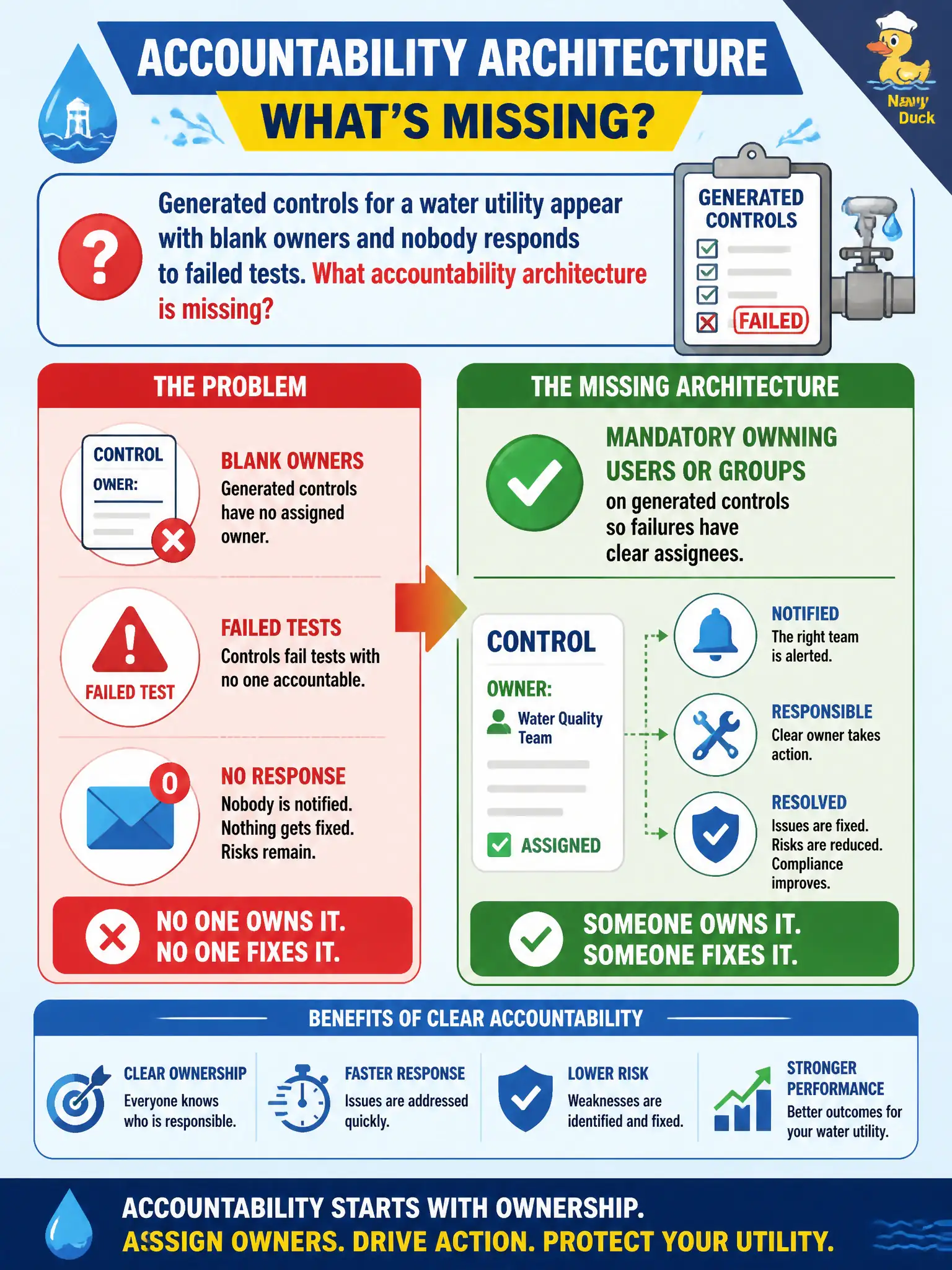
Generated controls for a water utility appear with blank owners and nobody responds to failed tests. What accountability architecture is missing?
Select an answer to reveal the explanation.
Short Explanation
A broken hydrant with no crew assigned stays broken. Controls need owners—people or groups who own the testing and the fix. Blank ownership breaks the accountability architecture.
Full Explanation
Generated controls for a water utility that appear with blank owners—while nobody responds to failed tests—show that mandatory owning users or groups on generated controls are missing from the accountability architecture. Failures need clear assignees or queues go silent. Optional ownership so dashboards stay uncluttered sacrifices accountability for cosmetic cleanliness. Ownership only on authority documents, never on controls, leaves entity-level work unassigned even when the library looks complete. Replacing owners with anonymous robot accounts for every control creates a false assignee that no human remediates and auditors will reject. Exam caveat: prefer group ownership where shift-based utility operations require coverage, but the group must be monitored, staffed, and included in escalation paths. Operational check: enforce ownership on generation, report blank-owner controls as defects, assign stewards, retest routing of failed tests to human queues, and add ownership completeness to the utility's entity and control data-quality scorecard. Escalate persistent blanks to facility or application managers before the next regulatory examination cycle, and block campaign launch when blank-owner rates exceed the agreed threshold.