
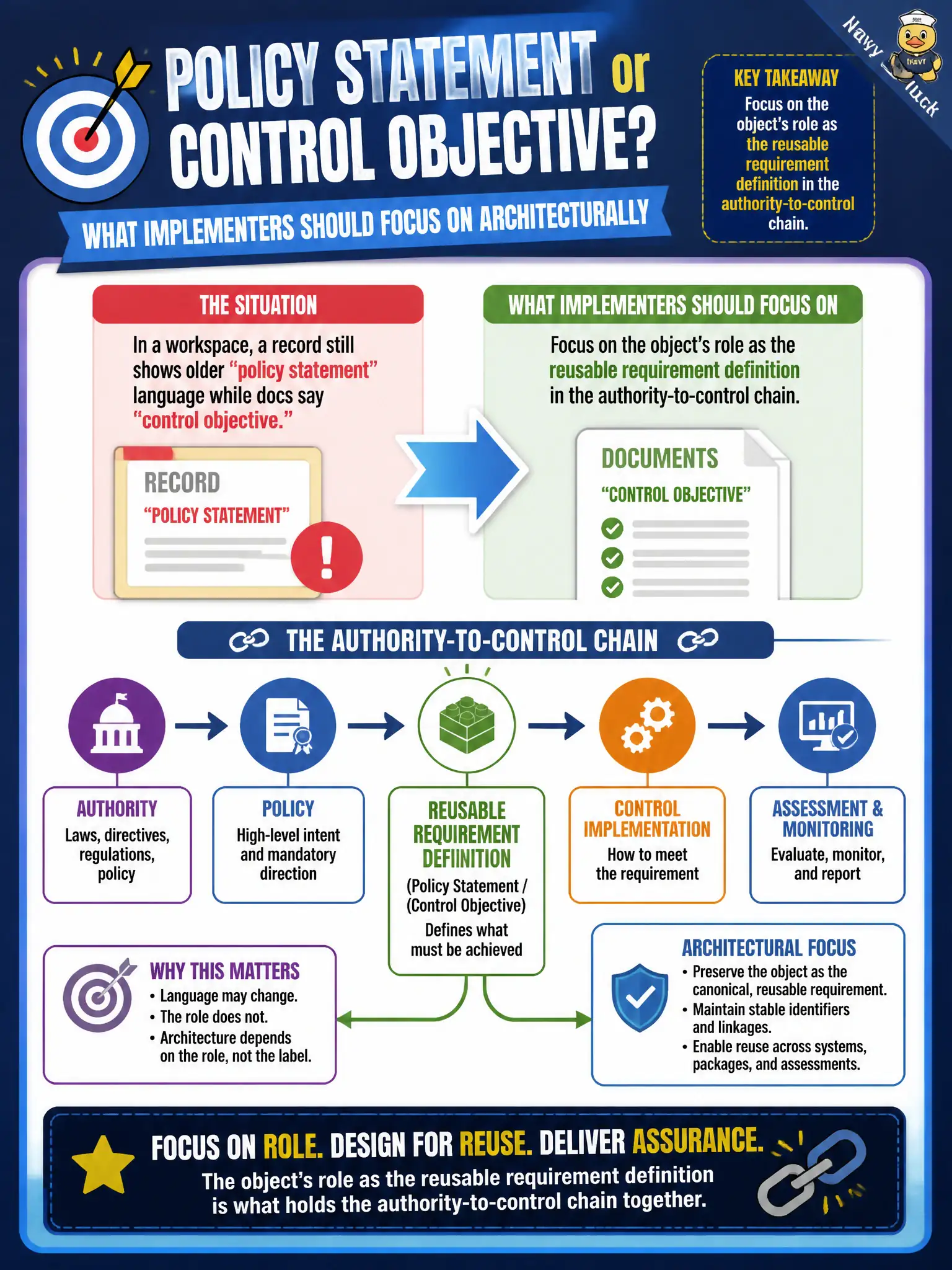
In a workspace a record still shows older ‘policy statement’ language while docs say ‘control objective.’ What should implementers focus on architecturally?
Select an answer to reveal the explanation.
Short Explanation
Names on the jar change; the jam’s job does not. Whether the UI says policy statement or control objective, the architectural role is the reusable requirement in the chain. Focus on that role, not the sticker.
Full Explanation
When a workspace record still shows older policy statement language while documentation says control objective, implementers should focus architecturally on the object's role as the reusable requirement definition in the authority-to-control chain. Deleting all classic labels before any controls can be generated is unnecessary theater that delays municipal go-lives. Treating the label difference as proof that two unrelated tables must both be filled duplicates work from naming drift and confuses authors. Ignoring the record because naming drift supposedly means the feature is deprecated abandons the definition layer incorrectly and breaks content design. Exam caveat: confirm the table behind the label in your release notes, but do not let chrome differences stall content mapping, scoping, or generation decisions. Operational check: map workspace and classic labels to the same definition object in the city glossary, train authors on both names, create one objective or statement, map citations, generate controls, and prove the chain end to end in UAT. Update training after upgrades that rename labels again so staff turnover does not revive the two-table myth inside bureau teams responsible for civic policy content.