
Compliance manager and audit manager both want authority to close findings the same way. How should the implementer distinguish the roles?
Select an answer to reveal the explanation.
Short Explanation
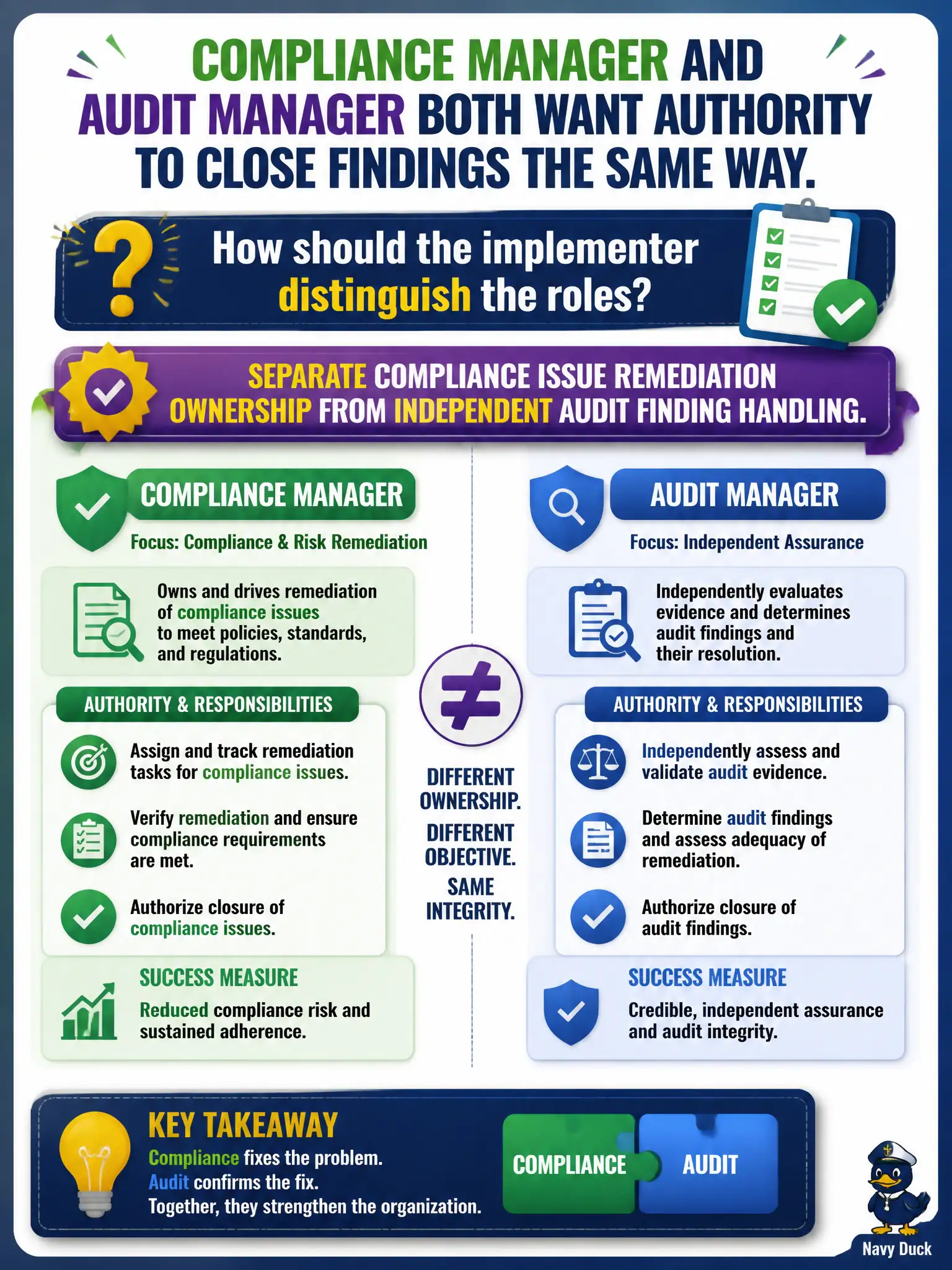
Compliance fixing a broken control and audit closing an independent finding are different sports with different jerseys. Do not hand both teams the same “close anything” button. Keep remediation ownership and audit finding handling clearly separated in roles.
Full Explanation
Compliance managers typically drive remediation of compliance issues and control failures, while audit managers handle independent audit findings with different independence expectations. Merging both into undifferentiated “close anything” rights collapses first/second-line remediation with third-line finding disposition. Civic programs need both sports, but with different jerseys and workflows. Merging both roles into GRC admin so any manager can close any record type maximizes convenience and destroys segregation. Allowing only SIR major-incident managers to close GRC findings routes Risk and Compliance closures through security incident operations. Preventing both roles from closing anything and using email for all closures abandons platform workflow and evidence. Exam caveat: distinguish compliance issue remediation ownership from independent audit finding handling in role design. Operational check for the implementer: document separate close authorities for compliance issues versus audit findings, configure groups accordingly, and test that a compliance manager cannot dispose an audit finding the way they close a management issue. In civic IRM programs, document the decision, name owners, and verify the platform records match the intended operating model before expanding scope. Re-check after organizational or CMDB changes so evidence remains defensible.