
A risk manager persona needs to assess and treat risks without redesigning entity types. How should roles be separated?
Select an answer to reveal the explanation.
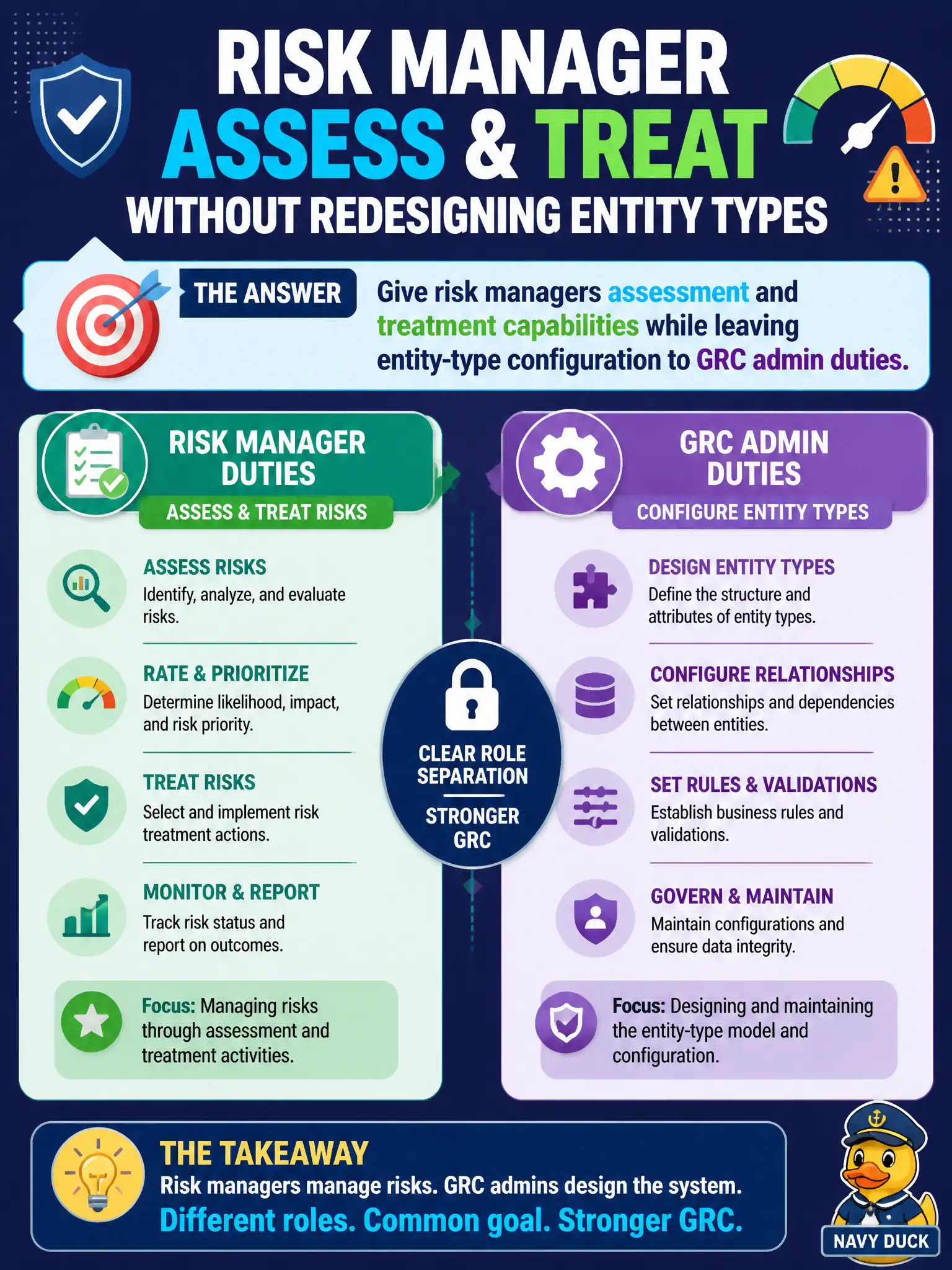
Short Explanation
Risk managers play the game; GRC admins paint the field lines. Assessing and treating risks should not require redesigning entity types every sprint. Split those personas so day-to-day risk work stays safe from accidental model changes.
Full Explanation
Risk managers need assessment and treatment capabilities while entity-type configuration remains a GRC admin duty. Persona boundaries let risk managers play the game without repainting the field lines every sprint. Clear separation protects the civic data model from accidental redesign during normal risk lifecycle work. Requiring risk managers to hold GRC admin so they can alter entity types during every assessment couples operational risk work to dangerous configuration rights. Blocking risk managers from risk records and routing all assessments through CAD developers prevents the risk function from operating. Allowing only CMDB admins to score residual risk on clinical applications misassigns risk methodology to infrastructure stewards. Exam caveat: operational risk personas assess and treat; admins configure Entity Framework. Operational check for role design: grant risk manager roles rights to assess, respond, and monitor risks on in-scope entities; verify those users cannot edit entity-type tables; keep entity-type changes behind GRC admin and change control. In civic IRM programs, document the decision, name owners, and verify the platform records match the intended operating model before expanding scope. Re-check after organizational or CMDB changes so evidence remains defensible.