
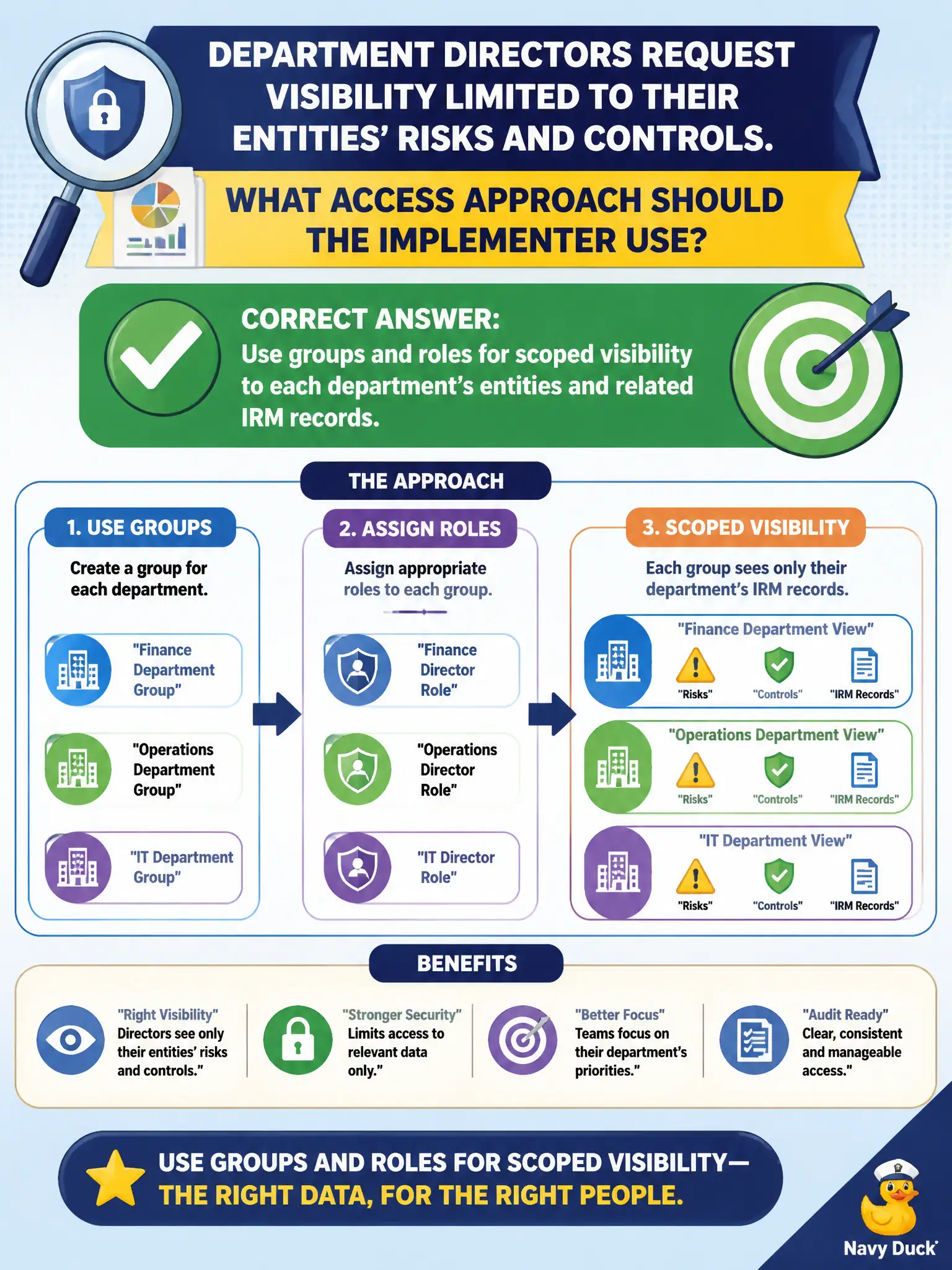
Department directors request visibility limited to their entities’ risks and controls. What access approach should the implementer use?
Select an answer to reveal the explanation.
Short Explanation
Directors need a window into their own street—not the master keys to rewire the whole city. Groups and roles scoped to their entities give the right visibility without spraying GRC admin everywhere. That is how access planning stays tidy.
Full Explanation
Department directors should receive scoped visibility through groups and roles tied to their entities’ risks and controls—not GRC admin and not public dashboards. They need a window onto their street, not master keys to rewire the city’s GRC model. Entity-oriented access planning keeps least privilege intact while still informing leadership. Sharing the GRC admin role with every director for unrestricted configuration access converts visibility requests into privilege escalation. Publishing all GRC records to an unauthenticated public dashboard exposes sensitive posture and still fails targeted departmental views. Storing each department’s risks only in separate personal email inboxes recreates silos IRM should eliminate. Exam caveat: scoped group/role visibility is the implementation-planning answer for departmental leadership access. Operational check for access design: create groups per department mapped to entity populations, assign director-appropriate GRC roles without admin, validate a director sees only their entities’ risks and controls, and confirm they cannot edit entity types. In civic IRM programs, document the decision, name owners, and verify the platform records match the intended operating model before expanding scope. Re-check after organizational or CMDB changes so evidence remains defensible.