
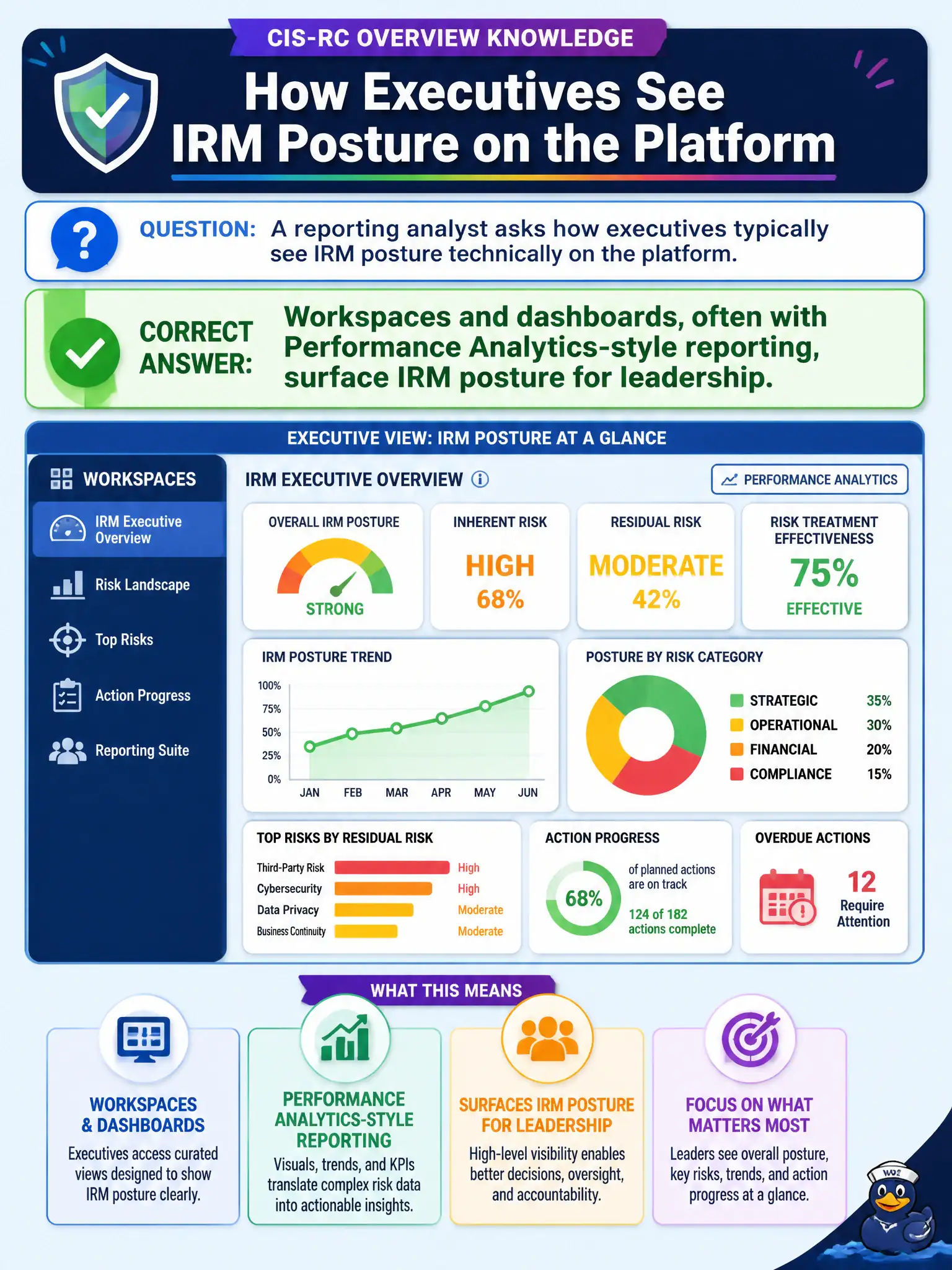
A reporting analyst asks how executives typically see IRM posture technically on the platform. Which description fits overview-level CIS-RC knowledge?
Select an answer to reveal the explanation.
Short Explanation
Leaders do not want a suitcase of spreadsheets—they want workspaces and dashboards that show risk and compliance health at a glance. IRM leans on those views (and PA-style metrics where used) so posture is visible without rebuilding the whole analytics product. That is overview depth, not a CIS-PA exam detour.
Full Explanation
At overview-level CIS-RC knowledge, executives typically see IRM posture through workspaces and dashboards, often complemented by Performance Analytics-style reporting where licensed and configured. Leaders need risk and compliance health at a glance for civic services, not a suitcase of nightly CSV exports. The point is purpose-level visibility into posture, issues, and assurance outcomes rather than turning every executive into a CIS-PA scorecard author. Claiming executives must export every control row to CSV nightly because workspaces cannot show posture denies designed IRM visibility surfaces. Saying only CIS-PA certification-level scorecard authoring is allowed, and that IRM has no visibility surfaces, overstates analytics certification and understates GRC workspaces. Limiting posture visibility solely to Security Incident Response major-incident bridges routes GRC reporting through the wrong product. Exam caveat: overview depth covers workspaces/dashboards and PA-style metrics without requiring deep CIS-PA expertise. Operational check for the reporting analyst: publish an IRM workspace or dashboard tile set showing risk distribution, compliance status, and open issues for one department, review it with an executive sponsor, and note any PA indicators still needed as a follow-on—not a blocker to basic posture visibility.