
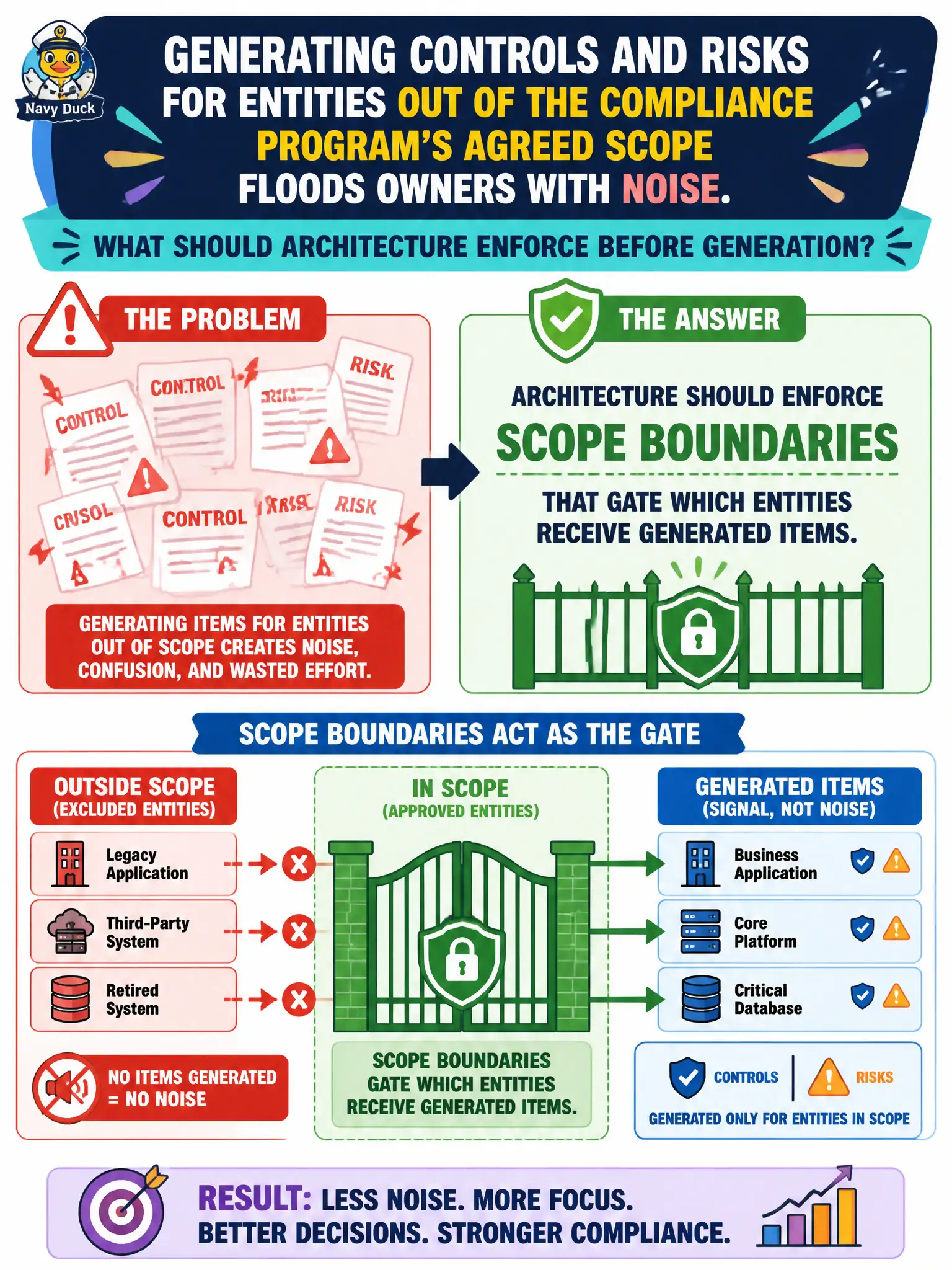
Generating controls and risks for entities that are out of the compliance program’s agreed scope floods owners with noise. What should architecture enforce before generation?
Select an answer to reveal the explanation.
Short Explanation
Generation without a fence is a firehose. Scope boundaries decide which entities are in the program before controls and risks spawn. Otherwise owners drown in junk for buildings and apps nobody asked IRM to govern.
Full Explanation
Item generation multiplies content across scoped entities. Architecture must enforce scope boundaries—entity filters, classes, or program scope—that gate which entities receive generated items before generation runs. Flooding owners with controls and risks for out-of-scope entities creates noise, fatigue, and ignored attestations across a municipal program, damaging the credibility of IRM. Unlimited generation for every CMDB CI regardless of program scope is the anti-pattern that turns a compliance system into spam. Assigning owners only after thousands of out-of-scope items already exist treats symptoms after harm and burns political capital with bureau leaders. Automatic generation for retired and decommissioned entities keeps history artificially hot and distracts from live obligations. Exam caveat: scope gates belong in design and generation prerequisites—not only in after-the-fact cleanup scripts that try to delete yesterday's mistake. Operational check: document in-scope populations with compliance leads, encode filters on entity types, dry-run generation counts, require sign-off when counts exceed thresholds, then generate. After go-live, monitor newly generated item volume weekly and investigate spikes that suggest scope leakage in the city's IRM estate, recording findings in the operations review.