
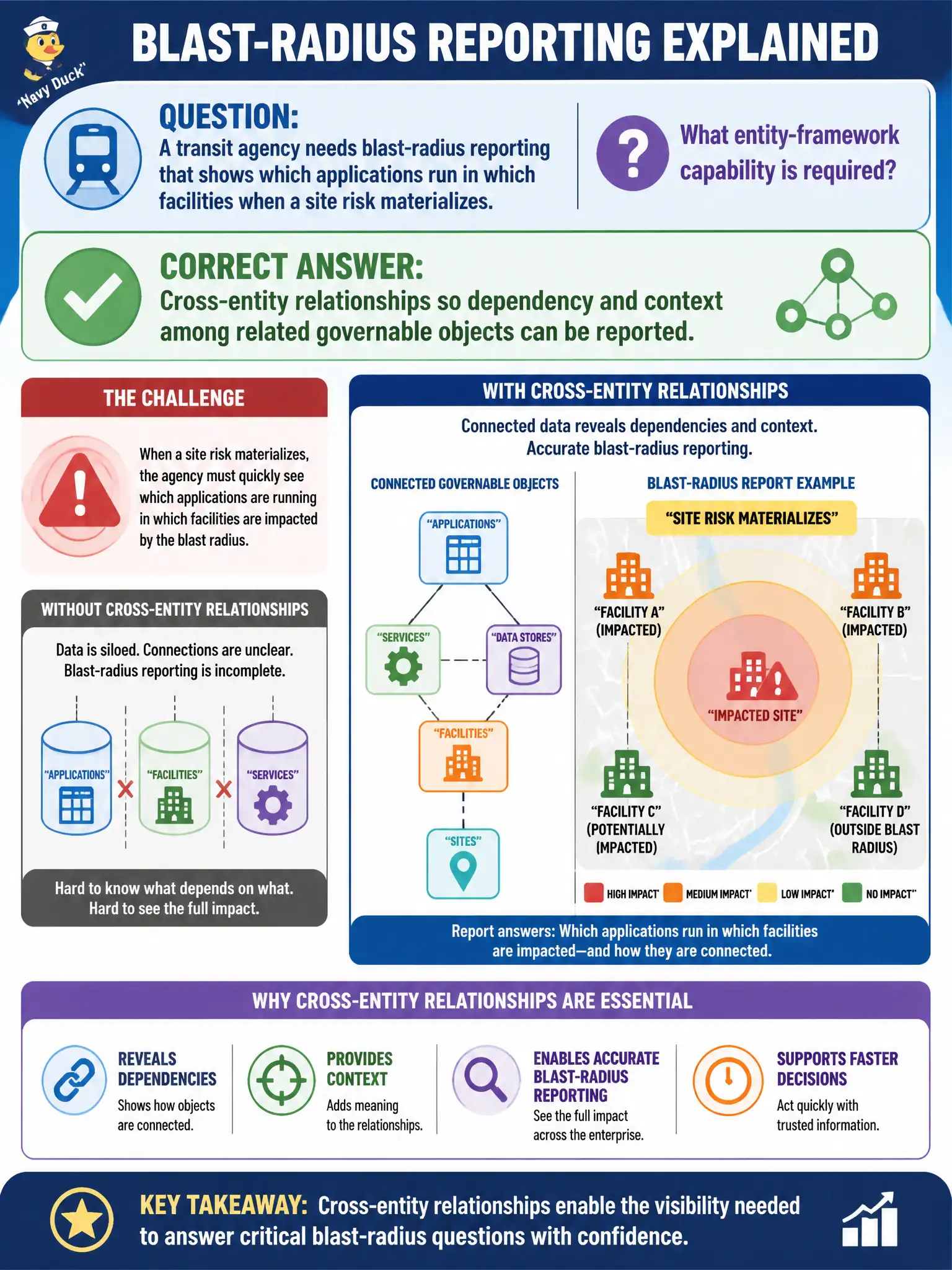
A transit agency needs blast-radius reporting that shows which applications run in which facilities when a site risk materializes. What entity-framework capability is required?
Select an answer to reveal the explanation.
Short Explanation
A flat phone book of entities won’t tell you that App X lives in Depot Y. You need relationships—edges between objects—so blast-radius views make sense. When the depot floods, related apps should light up with it.
Full Explanation
Entity architecture should allow relationships among entities, not only isolated lists. A transit agency needing blast-radius reporting that shows which applications run in which facilities when a site risk materializes requires cross-entity relationships so dependency and context among related governable objects can be reported and acted on. A flat entity list with no relationships cannot answer facility-impact questions during an incident or risk committee review. Limiting design to parent-child hierarchy within one entity type with no cross-type links is insufficient when applications and facilities are different types that must still connect. Manual Word diagrams updated after each audit with no system relationships drift immediately and fail operational response when minutes matter. Exam caveat: relationship quality depends on maintained data—empty or stale links produce false confidence in blast-radius views and can mislead emergency decisions. Operational check: relate pilot application entities to facility entities, generate a blast-radius report for a simulated site event, validate with transit operations and risk leads, assign stewards to keep links current, and include relationship completeness checks in the agency's entity data-quality scorecard reviewed each quarter.