
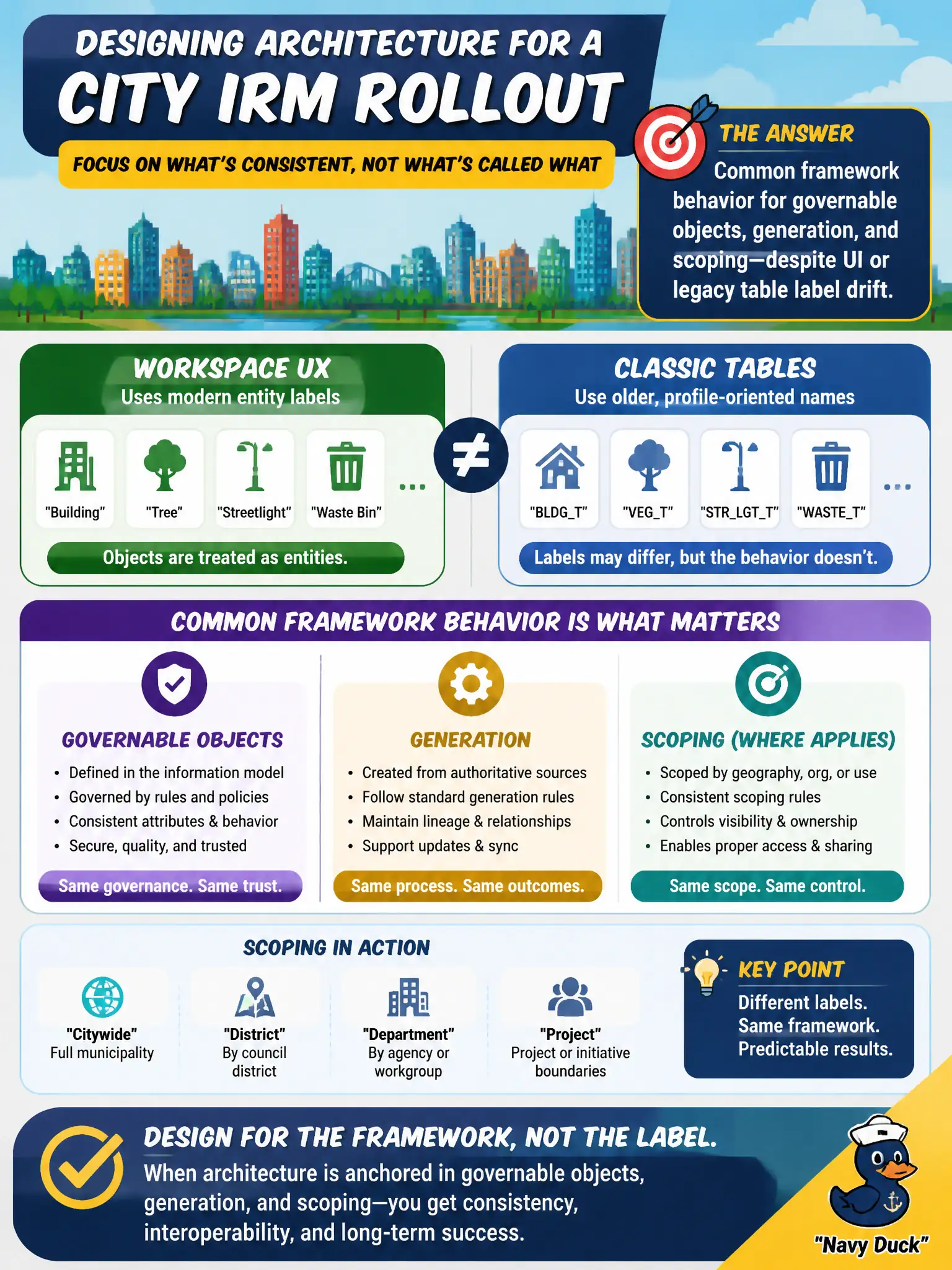
Workspace UX labels objects as entities while classic tables still use older profile-oriented names. When designing architecture for a city IRM rollout, what should the answer emphasize?
Select an answer to reveal the explanation.
Short Explanation
Don’t get hypnotized by the chrome. Workspace says “entity,” some tables still whisper “profile,” but the framework still joins policies and risks to the same governable objects. Design for that common behavior, not for whichever label is painted on the screen today.
Full Explanation
ServiceNow IRM evolved naming from profile-centric classic GRC toward entity language in workspaces, while some table names retain legacy terms. When designing architecture for a city IRM rollout, emphasize common framework behavior for governable objects, generation, and scoping—despite UI or legacy table label drift. Insisting that only classic table labels matter and that workspace terms should be ignored splits training and confuses implementers who live in modern workspaces. Believing UI chrome alone defines the data model—so renaming a form field changes framework behavior—overstates presentation and understates platform semantics. Treating entity and profile as unrelated products that must never share an implementation plan invents a false fork and duplicates design effort across the municipality. Exam caveat: learn both labels enough to navigate docs and tables, but design decisions follow framework behavior, not chrome. Operational check: publish a city glossary mapping entity/profile terms to tables and workspace labels, train admins and stewards with both names, validate generation and scoping behaviors in the target UI the municipality will use daily, and revisit the glossary after upgrades that rename workspace chrome so civic onboarding materials stay accurate.