
A team skips the entity class approach, arguing that entity types alone are enough. What limitation should the implementer highlight?
Select an answer to reveal the explanation.
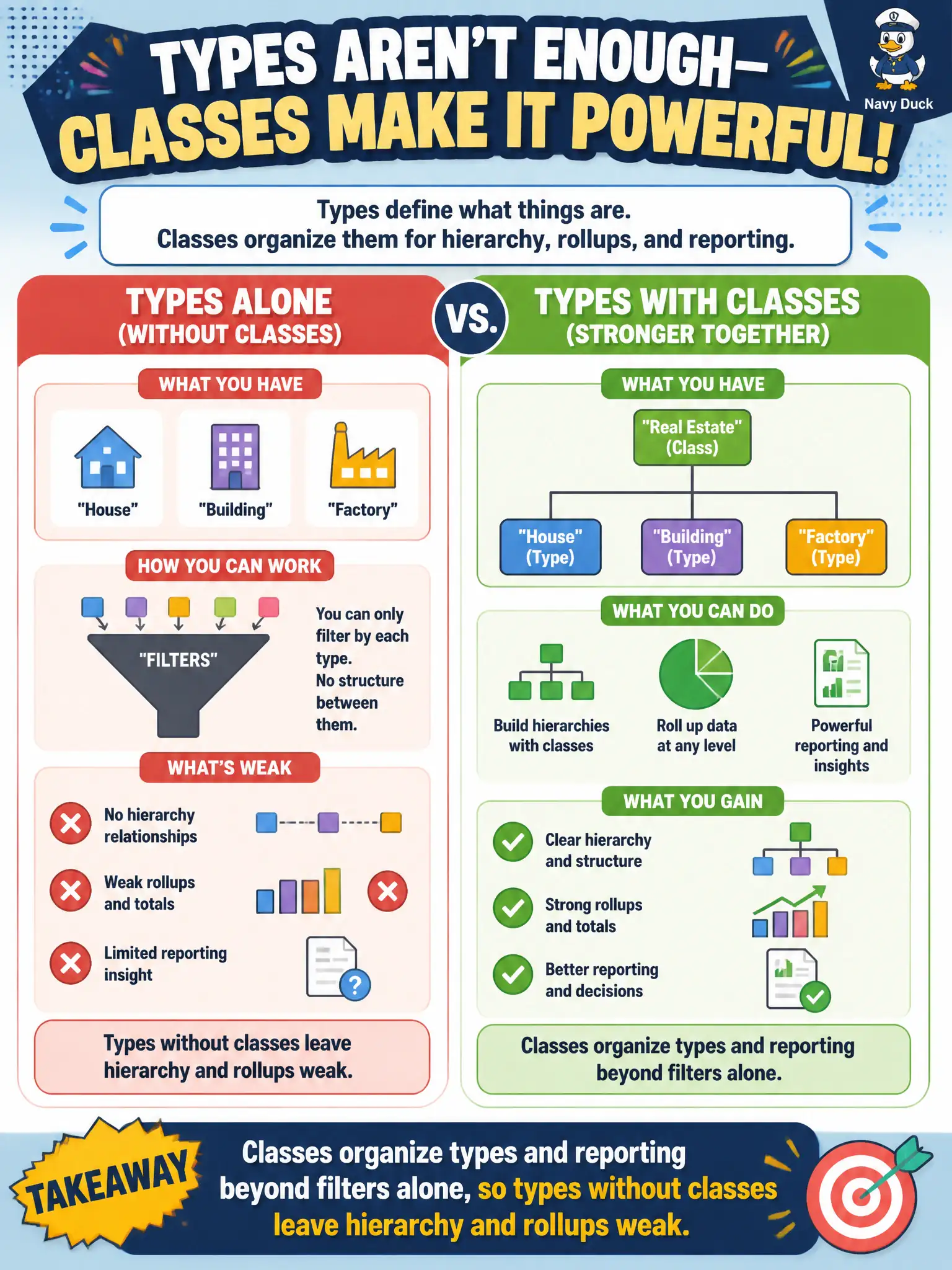
Short Explanation
Types catch the fish; classes sort the cooler. Filters alone don't give you Org versus Technology rollups. Skip classes and the dashboard still looks like one giant pile.
Full Explanation
Entity types handle source selection and generation filters, but classes organize types and reporting beyond filters alone, so types without classes leave hierarchy and rollups weak. Skipping the entity class approach leaves owners and executives with filter-defined populations that still look like one giant pile for Organization versus Technology storytelling across the city portfolio. Types catch the fish; classes sort the cooler for navigation and aggregation. It is false that entity types cannot reference any CMDB table without a class present—types can generate without classes, but reporting suffers. Classes do not permanently disable item generation for controls. Policy and Compliance does not require classes to equal types one-for-one as an install gate. Exam caveat: types and classes are complementary; arguing that types alone are enough usually fails the first executive dashboard workshop even if generation succeeds. Operational check: take an existing type-only pilot, assign classes, rebuild one municipal rollup report, and show stakeholders the navigation and aggregation improvement side by side. Capture the before/after in the IRM architecture decision record to prevent regression to type-only designs during later bureau onboarding, and add class assignment to the entity-type creation checklist.