
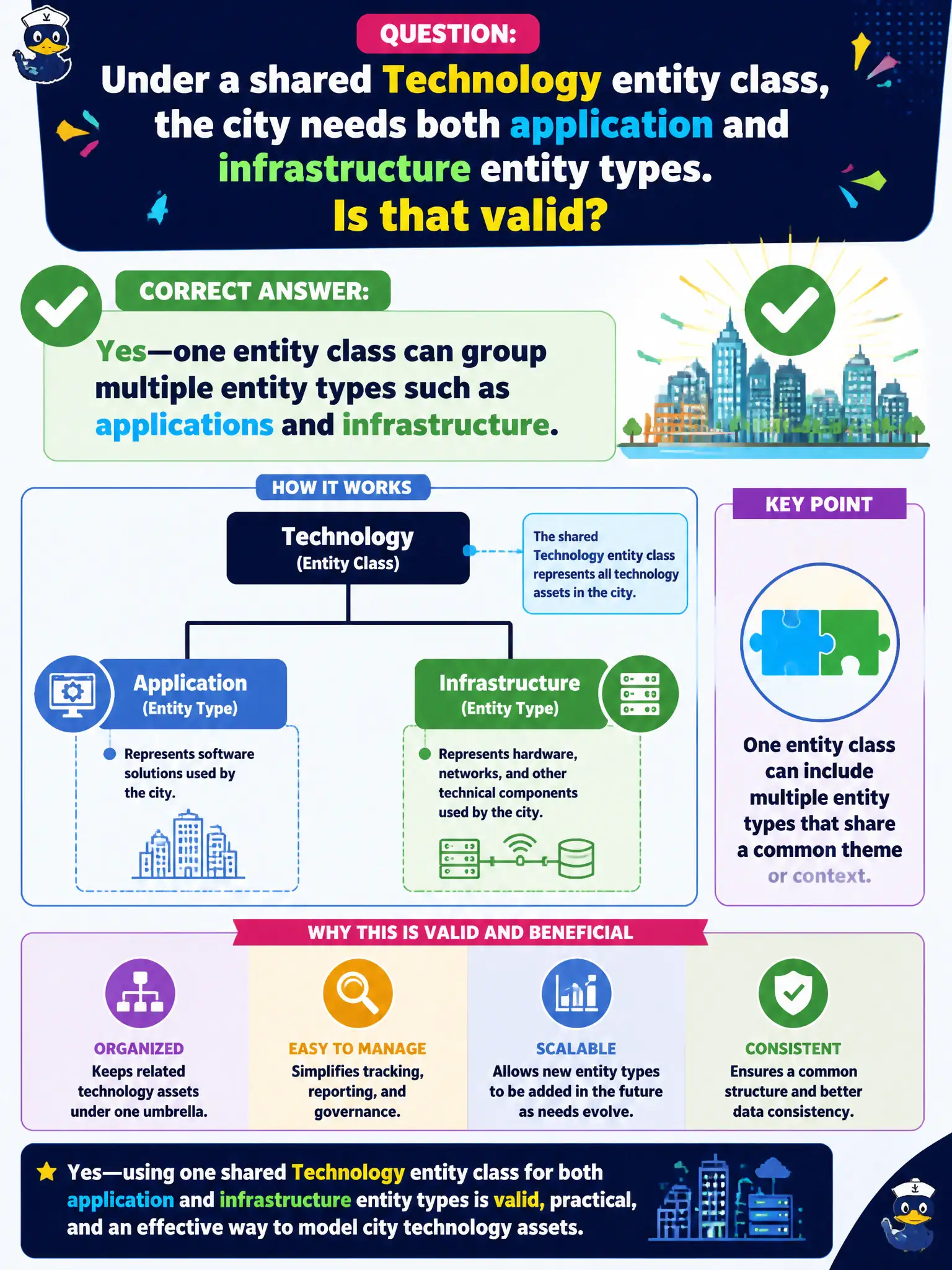
Under a shared Technology entity class, the city needs both application and infrastructure entity types. Is that valid?
Select an answer to reveal the explanation.
Short Explanation
Technology is the bookshelf; apps and infrastructure are different shelves on it. One class, multiple types—totally normal. You don't need a new bookstore for every shelf.
Full Explanation
Yes—one entity class can group multiple entity types such as applications and infrastructure under a shared Technology reporting category while each type keeps different tables and filters. That pattern is normal for municipal Technology portfolios where executives want one Technology slice without forcing identical generation rules. Claiming each class may contain only a single entity type forever forces artificial class sprawl and breaks stable taxonomy. Requiring infrastructure types to always use an Organization class misassigns nature-based taxonomy. Allowing multiple types only if they share one identical filter is unnecessary and wrong; filters belong to types, not to the class membership rule. Exam caveat: shared class does not imply shared generation filter—do not collapse type filters when grouping under one class, or you will mix unintended populations. Operational check: place application and infrastructure types under Technology, generate both populations, confirm class-level dashboards include both while type filters remain distinct, and document the pattern for other civic Technology subtypes such as OT or cloud accounts without inventing new classes per subtype unless the nature of the object truly differs. Review with city platform and risk leads that the Technology rollup matches their mental model before expanding.