
The city marks additional applications as business-critical in the CMDB and expects them to appear as IRM entities without hand-building each one. What should the design emphasize?
Select an answer to reveal the explanation.
Short Explanation
Criticality is a living label, not a tattoo. When CMDB flags flip to critical, refresh should pull those apps into the entity set. Dynamic membership beats a dusty one-time import every time.
Full Explanation
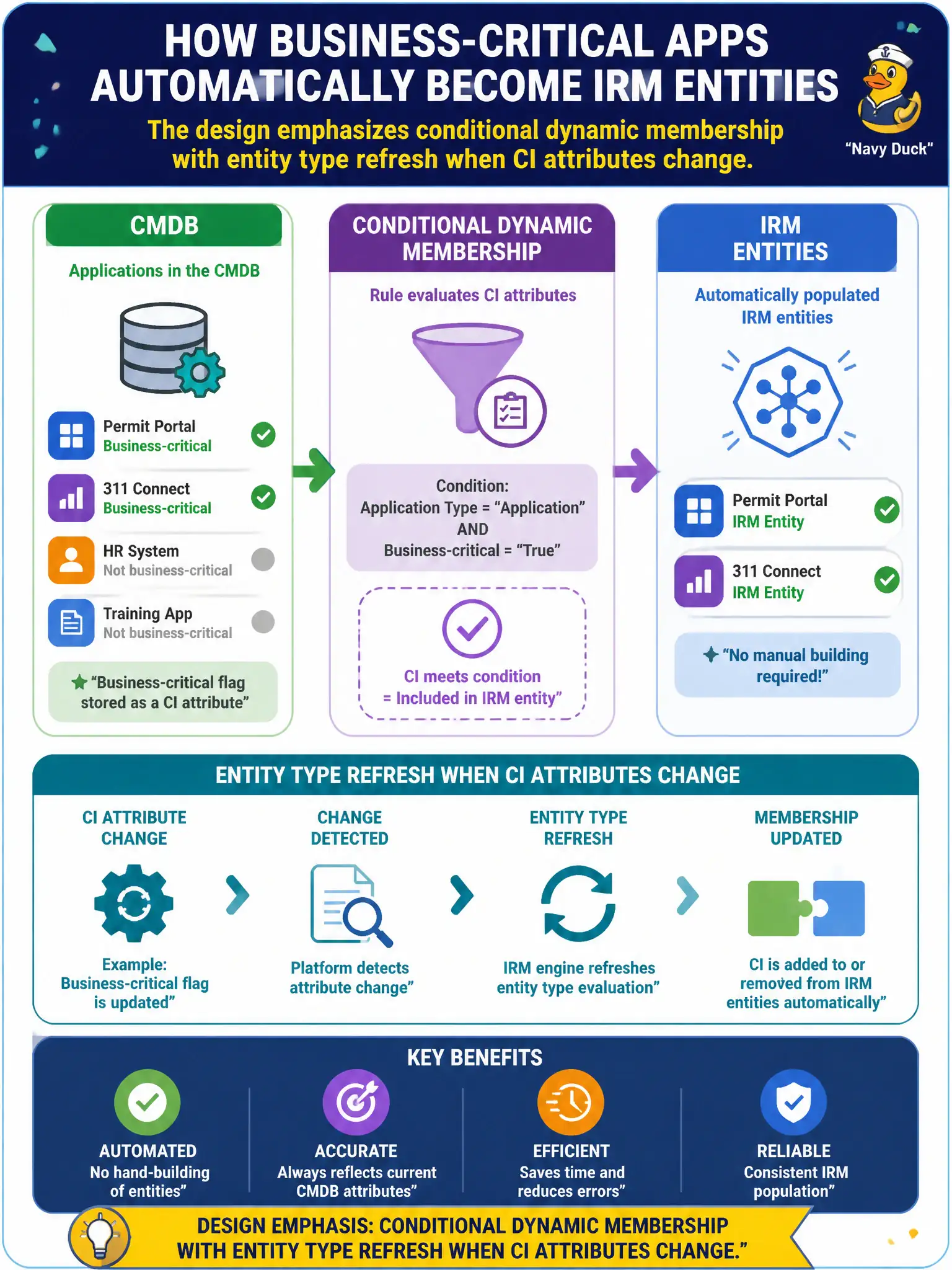
When the city marks additional applications as business-critical in the CMDB and expects them to appear as IRM entities without hand-building each one, design should emphasize conditional dynamic membership with entity type refresh when CI attributes change. Entity types use table filters so membership follows durable CMDB attributes such as business criticality; refresh or generation jobs update the entity population as attributes flip. One-time CSV imports that never refresh after go-live leave newly critical apps outside GRC until the next manual project. Manual creation tickets for every new critical app with no type filter do not scale and diverge from the CMDB source of truth. Disabling entity generation so criticality changes stay outside GRC defeats the purpose of tying IRM to living inventory. Exam caveat: dynamic membership depends on trustworthy CMDB attributes—stale criticality flags produce wrong entity sets even when refresh runs on schedule. Operational check: define the criticality filter on the application entity type, schedule or event-trigger refresh aligned to CMDB updates, flip a test application's criticality in a non-prod clone, confirm the entity appears with expected ownership, and document the municipal refresh cadence in the runbook. Re-validate quarterly that criticality values and entity membership still match the city's critical-application register.