
A team wants entity types for “anything we might audit someday,” including inactive side projects with no current program. What alignment should leadership enforce?
Select an answer to reveal the explanation.
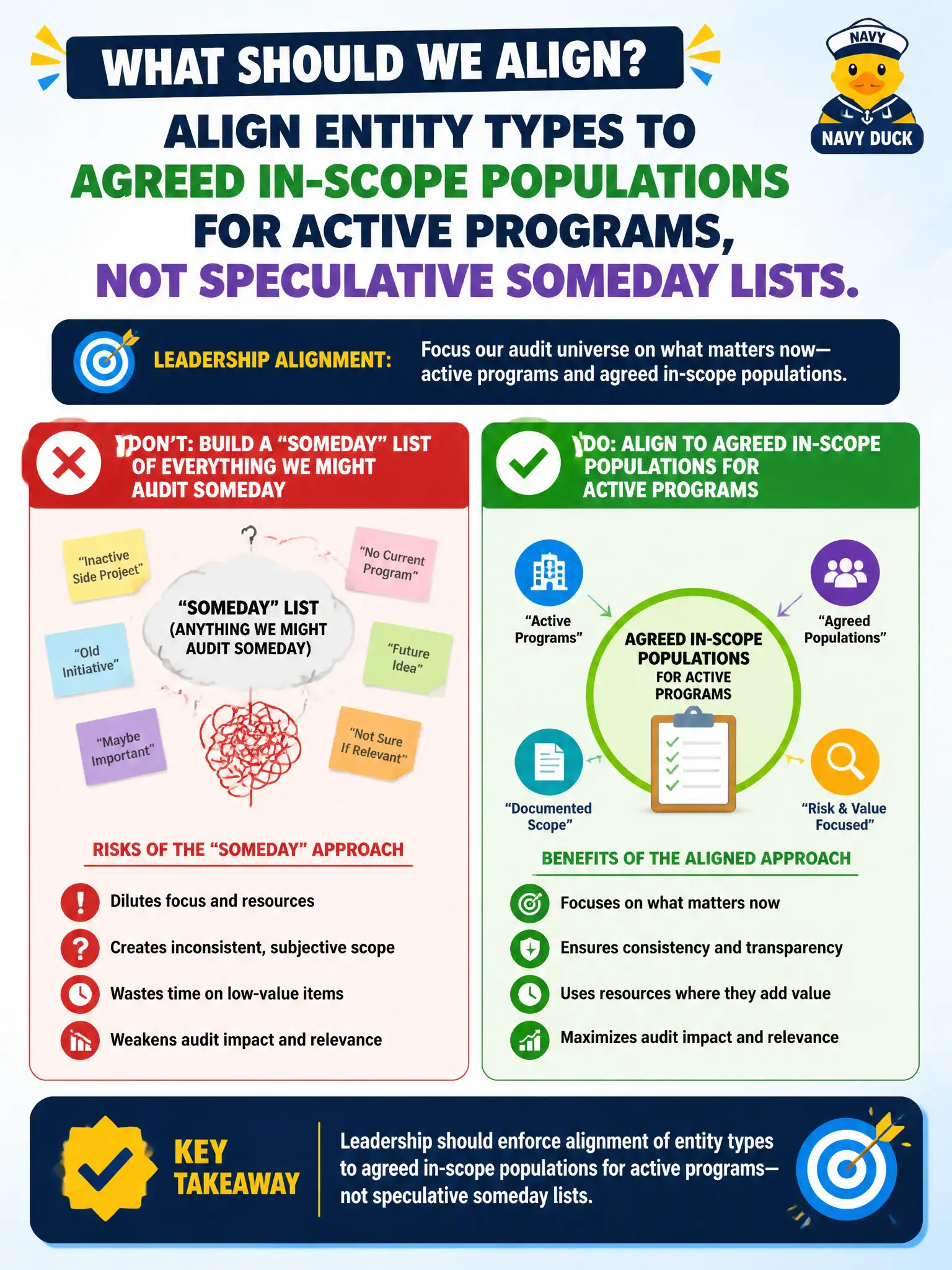
Short Explanation
“Someday audits” make a wonderful wish list and a terrible entity-type backlog. Build types for populations active programs already agreed to govern. Speculative shelves of empty types just confuse admins and never get owned.
Full Explanation
Entity types should align to agreed in-scope populations for active programs, not speculative someday audit wish lists including inactive side projects with no current program. Someday shelves of empty types add maintenance cost without owners, conditions, or generation schedules and confuse admins. Extend the type inventory when programs formally expand; idle types become configuration debt. Building entity types for every speculative future audit topic before programs exist creates unowned backlog. Disabling entity types entirely until the next external audit letter arrives leaves active programs without populations. Creating empty entity types with no table so future audits can fill them ad hoc abandons the type-plus-source pattern. Exam caveat: type inventory follows approved scoping decisions for live programs. Operational check for leadership: inventory existing entity types against active policy, risk, and audit programs; retire or park speculative types; require a program charter and owner before any new type is built. Keep civic stakeholders aligned on the operating model, and verify platform records after each change before reporting posture to leadership. Revisit the design when CMDB classes, org structures, or program charters change.