
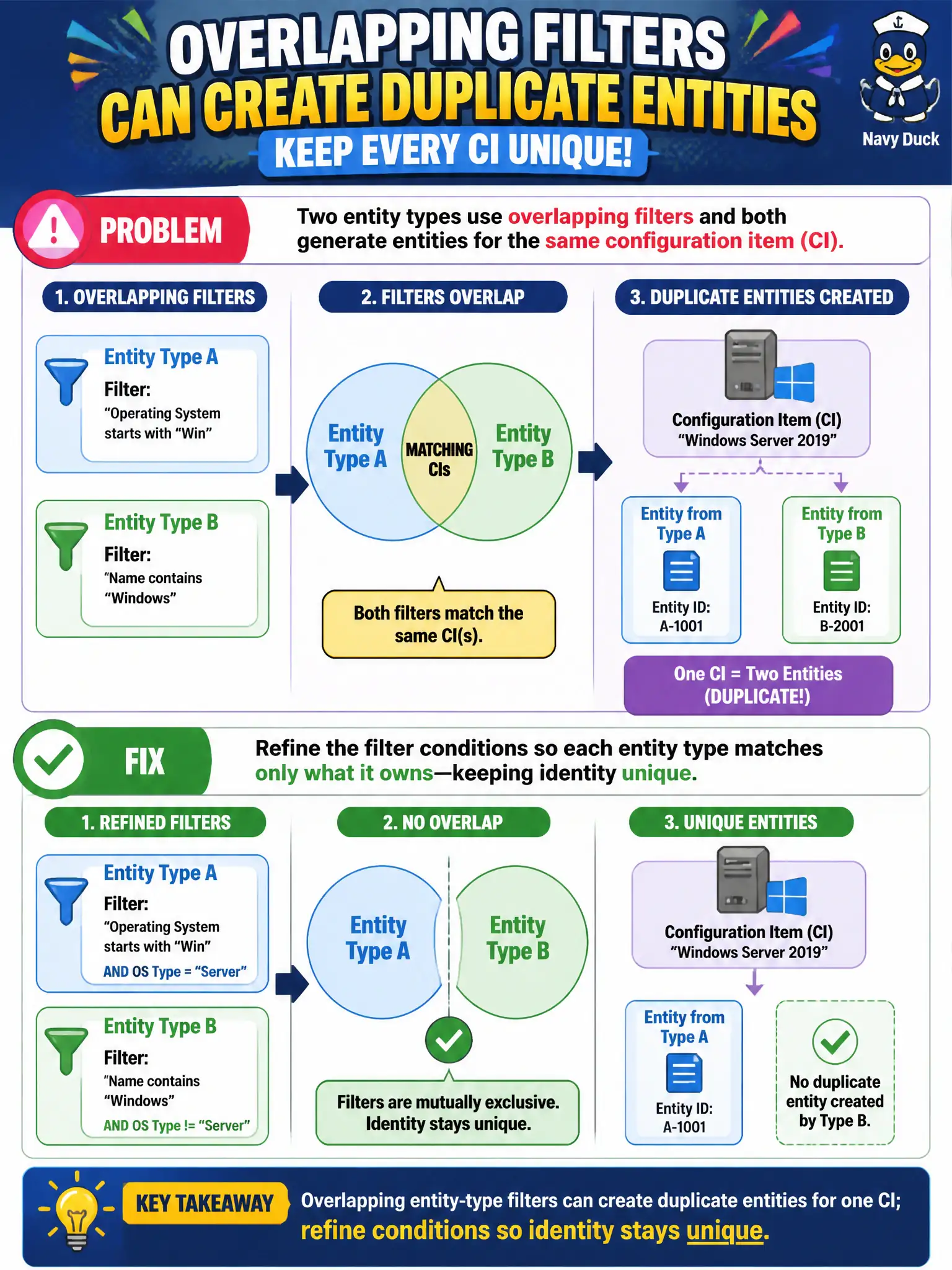
Two entity types use overlapping filters and both generate entities for the same configuration item. What problem should the team fix?
Select an answer to reveal the explanation.
Short Explanation
Two types fishing in the same pond can hook the same CI twice—and now you have twin entities arguing with each other. Tighten filters so each real object becomes one entity. Unique identity keeps scores and evidence sane.
Full Explanation
Overlapping entity-type filters can create duplicate entities for one CI; refine conditions so identity stays unique. Two types fishing in the same pond can hook the same civic CI twice, producing twin entities that argue over scores, owners, and evidence. Design reviews should check mutual exclusivity or intentional partitioning by class, and fix conditions at the type layer rather than proliferating duplicates downstream. Saying overlapping filters are required so every CI receives duplicate risk scores celebrates the defect. Claiming duplicate entities improve audit evidence by doubling control tests automatically multiplies noise, not assurance quality. Deleting the CMDB CI rather than adjusting entity-type conditions destroys operational inventory to paper over a filter mistake. Exam caveat: entity identity should map cleanly to the underlying object. Operational check for the team: report entities sharing the same source CI, adjust type conditions to partition or exclude overlaps, regenerate/reconcile duplicates, and add a design-review check for filter overlap before new types go live. Keep civic stakeholders aligned on the operating model, and verify platform records after each change before reporting posture to leadership. Revisit the design when CMDB classes, org structures, or program charters change.