
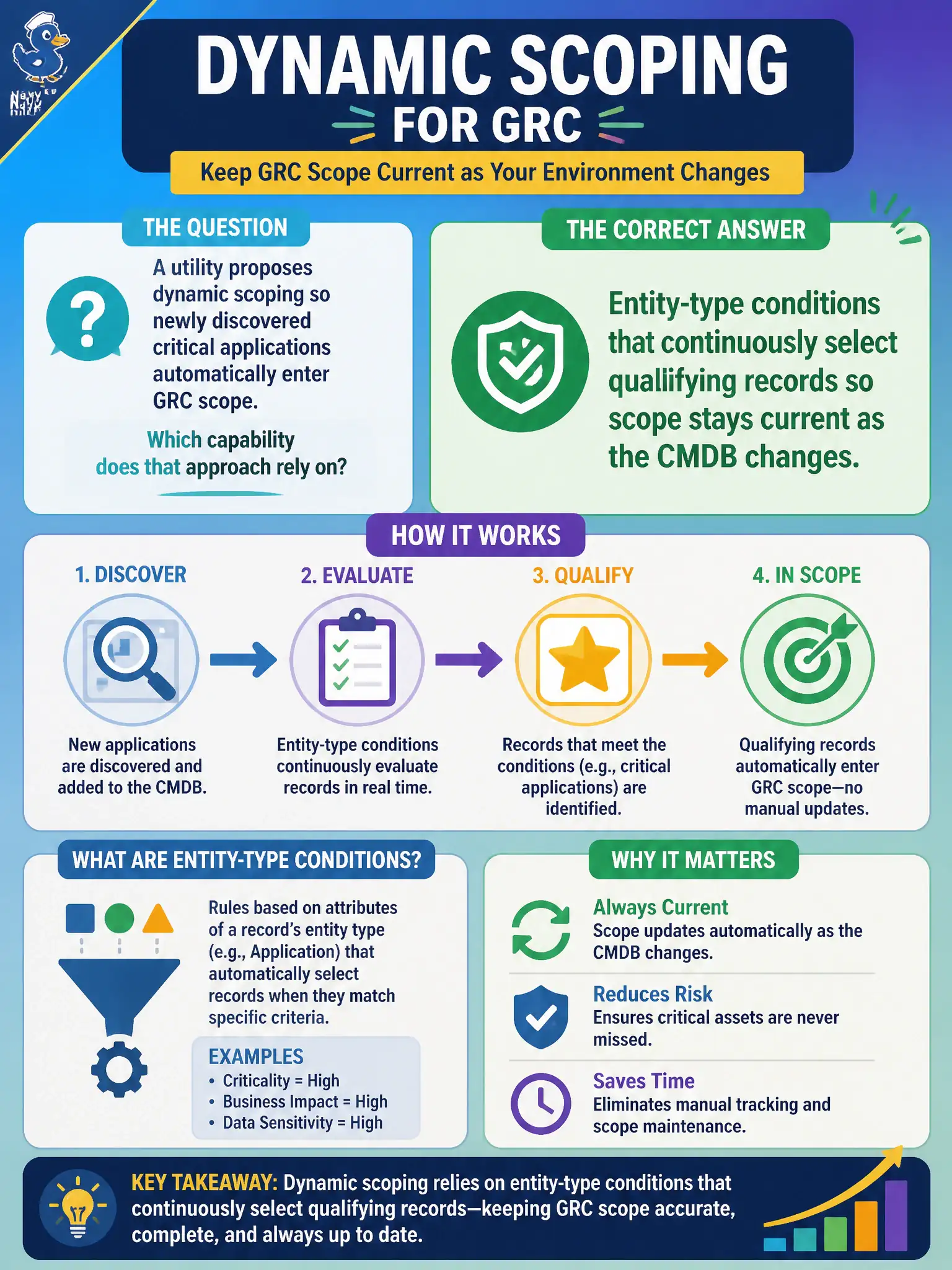
A utility proposes dynamic scoping so newly discovered critical applications automatically enter GRC scope. Which capability does that approach rely on?
Select an answer to reveal the explanation.
Short Explanation
Dynamic scoping is the automatic sprinkler that turns on when a new critical app appears—not someone walking the yard with a watering can every Friday. Entity-type conditions watch the CMDB for “critical application” and pull matches into scope. That keeps GRC current without heroic manual adds.
Full Explanation
Dynamic scoping relies on entity-type conditions that continuously select qualifying records so scope stays current as the CMDB changes. When a utility wants newly discovered critical applications to enter GRC scope automatically, the pattern is conditions on criticality or similar durable attributes plus generation/refresh—not heroic manual adds. That automatic sprinkler keeps civic GRC aligned with discovery without hardcoding sys_ids. Manually cloning each new application entity from a spreadsheet every quarter cannot keep pace with discovery-driven growth. Deleting entity types whenever the CMDB discovery schedule runs destroys the selector instead of refreshing entities. Replacing the entity framework with a single hardcoded list of sys_ids in a UI policy creates brittle, unmaintainable scope. Exam caveat: entity-type conditions plus generation/refresh are the dynamic scoping mechanism. Operational check for the utility: encode “business criticality is high” (or equivalent) on an application entity type, run discovery to add a new critical app CI in subprod, execute generation/refresh, and confirm a new entity appears without a spreadsheet import. In civic IRM programs, document the decision, name owners, and verify the platform records match the intended operating model before expanding scope. Re-check after organizational or CMDB changes so evidence remains defensible.