
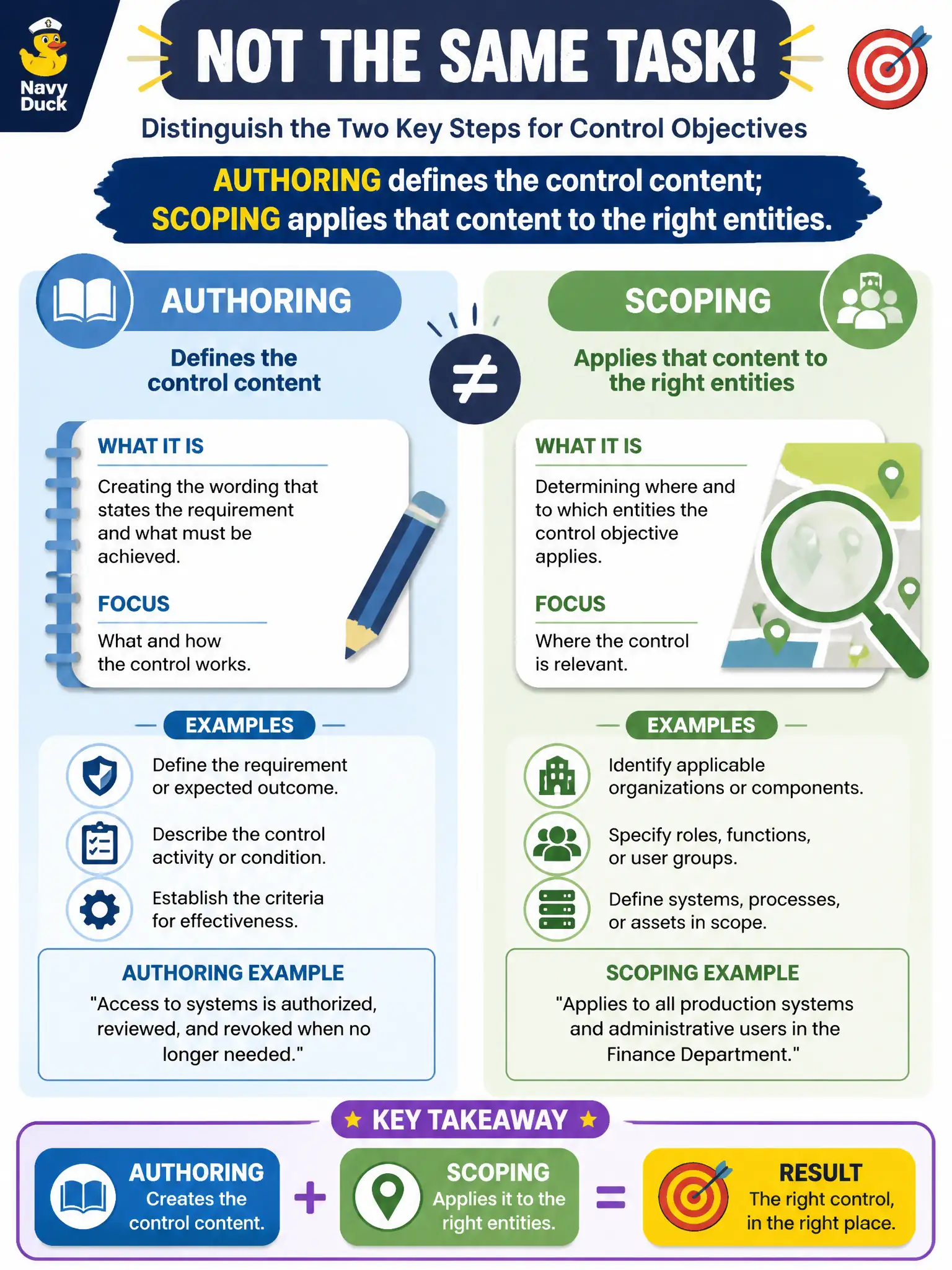
During a workshop, staff treat “scoping a control objective” as the same task as writing the control objective’s wording. What distinction should the implementer emphasize?
Select an answer to reveal the explanation.
Short Explanation
Writing the recipe is not the same as deciding which kitchens must cook it. Control objective wording is the recipe; scoping is pinning it to the entities that must follow it. Mix those up and you get beautiful text that never lands on the right departments or apps.
Full Explanation
Authoring defines control content; scoping applies that content to the right entities. Writing the recipe is not the same as deciding which kitchens must cook it. Workshops that treat “scoping a control objective” as identical to wording the objective polish text while leaving associations incomplete—or assume wording alone creates coverage. Clear separation keeps libraries portable and entity assignments intentional for municipal programs. Saying control objective text is authored only inside Audit Management and never reused silos content incorrectly. Claiming scoping replaces the need for control objectives because entities imply requirements invents requirements from inventory alone. Saying writing objective text automatically scopes every CI in the CMDB conflates authoring with reckless universal association. Exam caveat: content authoring versus entity scoping are distinct IRM tasks. Operational check for the implementer: finalize objective wording in the library, then in a separate step associate it to a filtered entity population, generate controls, and verify coverage reports reflect associations rather than text length. In civic IRM programs, document the decision, name owners, and verify the platform records match the intended operating model before expanding scope. Re-check after organizational or CMDB changes so evidence remains defensible.