
A municipality wants vendors, facilities, and business services all in year-one IRM scope without ranking which populations matter most. What approach should the team recommend?
Select an answer to reveal the explanation.
Short Explanation
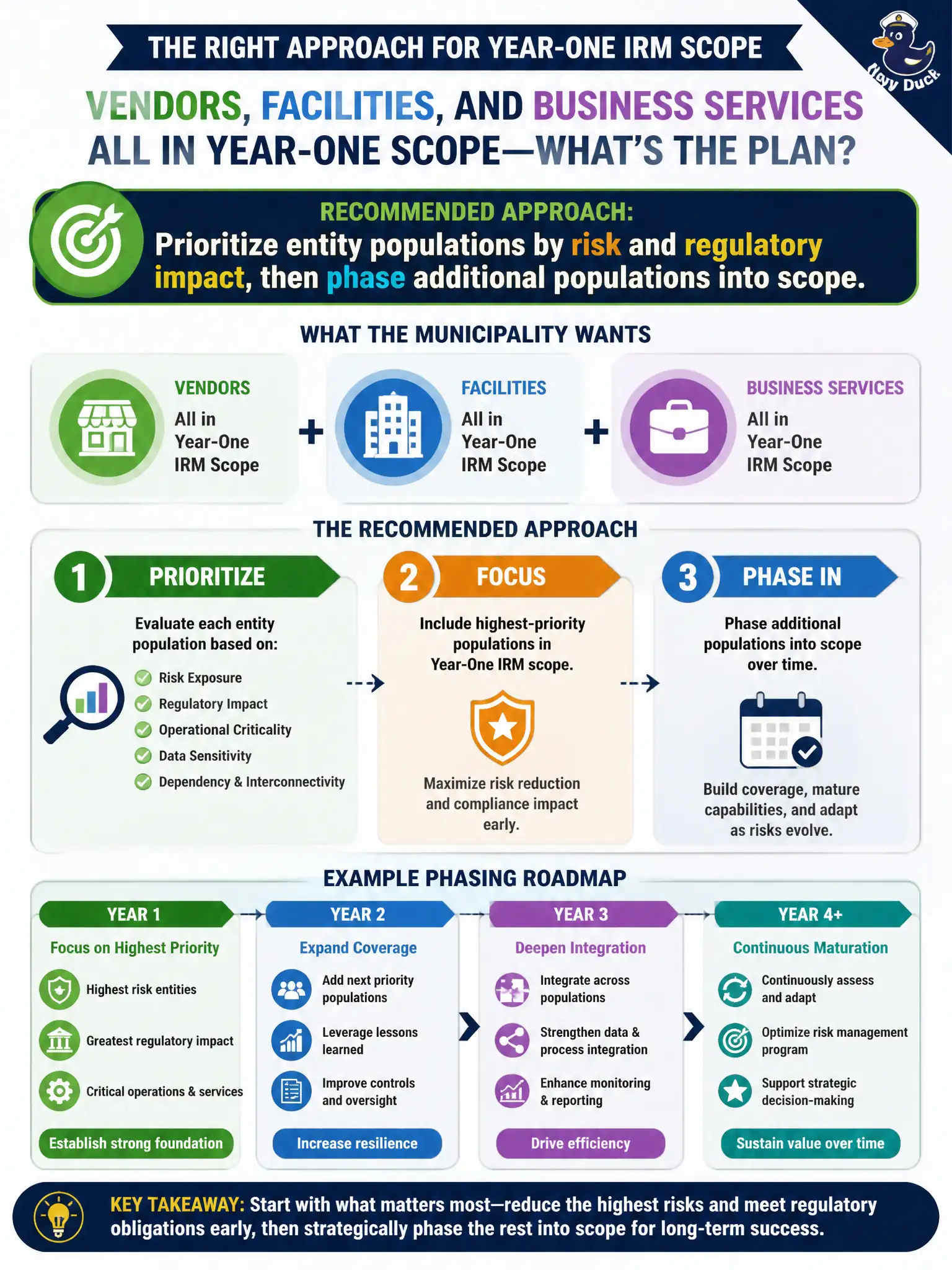
Trying to govern vendors, plants, and every business service on day one is like remodeling every floor before the foundation cures. Pick the populations where a miss hurts most—public safety apps, regulated data, critical plants—and phase the rest. Prioritized scope beats a year-one everything-bagel.
Full Explanation
Year-one implementations should prioritize entity populations by risk and regulatory impact, then phase additional populations into scope. A municipality wanting vendors, facilities, and business services all in year-one scope without ranking materiality remodeled every floor before the foundation cures. Sequencing by public-safety criticality, regulated data, and audit demand still allows a complete long-term architecture while delivering credible early results. Including every population on day one so reports never show an empty domain overwhelms ownership and data quality. Deferring all entity work until Policy and Compliance content packs finish importing leaves citations with nowhere meaningful to land. Collapsing vendors, facilities, and services into one unfiltered entity type to save configuration time destroys filter quality and stakeholder clarity. Exam caveat: prioritized, phased entity populations beat year-one everything-bagel scope. Operational check for the municipality: rank candidate populations by regulatory and service impact, select the top one or two for wave one with entity types and owners, and schedule later waves explicitly in the roadmap. In civic IRM programs, document the decision, name owners, and verify the platform records match the intended operating model before expanding scope. Re-check after organizational or CMDB changes so evidence remains defensible.