
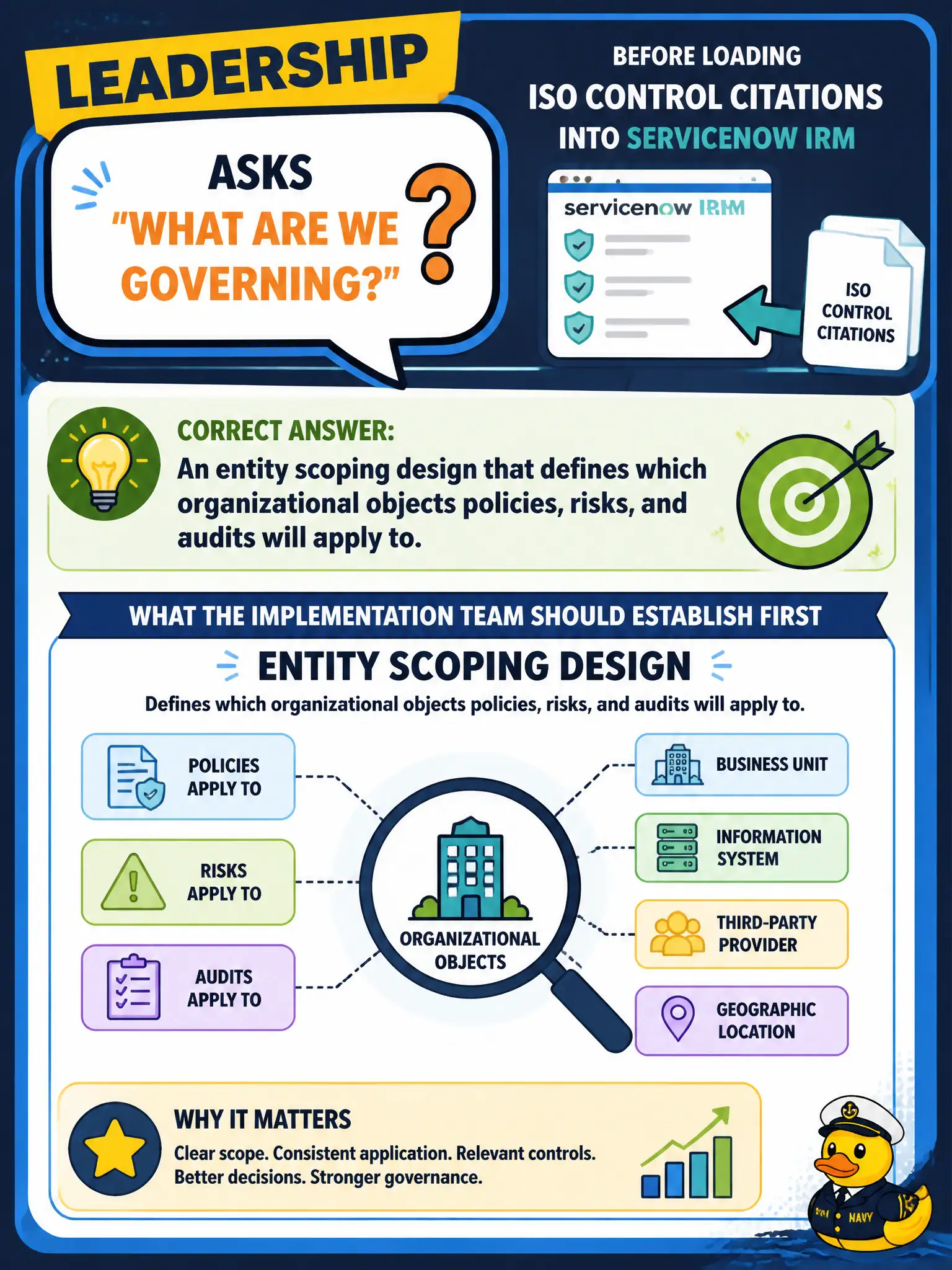
Leadership asks “what are we governing?” before loading ISO control citations into ServiceNow IRM. What should the implementation team establish first?
Select an answer to reveal the explanation.
Short Explanation
Before you stock the pantry with recipes, decide whose kitchen you are cooking for. Leadership’s “what are we governing?” question is about entities—departments, apps, facilities—not dumping ISO text. Nail the scope map first; then citations and controls have somewhere meaningful to land.
Full Explanation
Before loading ISO control citations into ServiceNow IRM, the team should establish an entity scoping design that defines which organizational objects policies, risks, and audits will apply to. Leadership’s “what are we governing?” question is about departments, apps, and facilities—not dumping standard text into an empty pantry. Without scoped populations, control libraries become orphaned reference content and associations are reworked later under audit pressure. A full library of authority documents and citations with no entity associations creates bookshelf theater. A completed Advanced Audit engagement schedule for the next fiscal year does not answer what is governed day to day. Scripted integrations that push every CMDB CI into Vendor Risk Management confuse mass loading with deliberate entity design and park work in the wrong product emphasis. Exam caveat: entity scoping is a prerequisite to useful policy, risk, and audit content. Operational check for the implementation team: approve a scope map of in-scope entity populations with owners, then import or map ISO citations to control objectives associated to that map—not the reverse order. In civic IRM programs, document the decision, name owners, and verify the platform records match the intended operating model before expanding scope. Re-check after organizational or CMDB changes so evidence remains defensible.