
A new state privacy bill moves from proposed to signed and then effective. What should Regulatory Change Management in IRM emphasize for the county privacy office?
Select an answer to reveal the explanation.
Short Explanation
Laws crawl from rumor to real — track that journey and ask what citations break. Regulatory change management is intake plus impact, not waiting for a fine or bookmarking the PDF.
Full Explanation
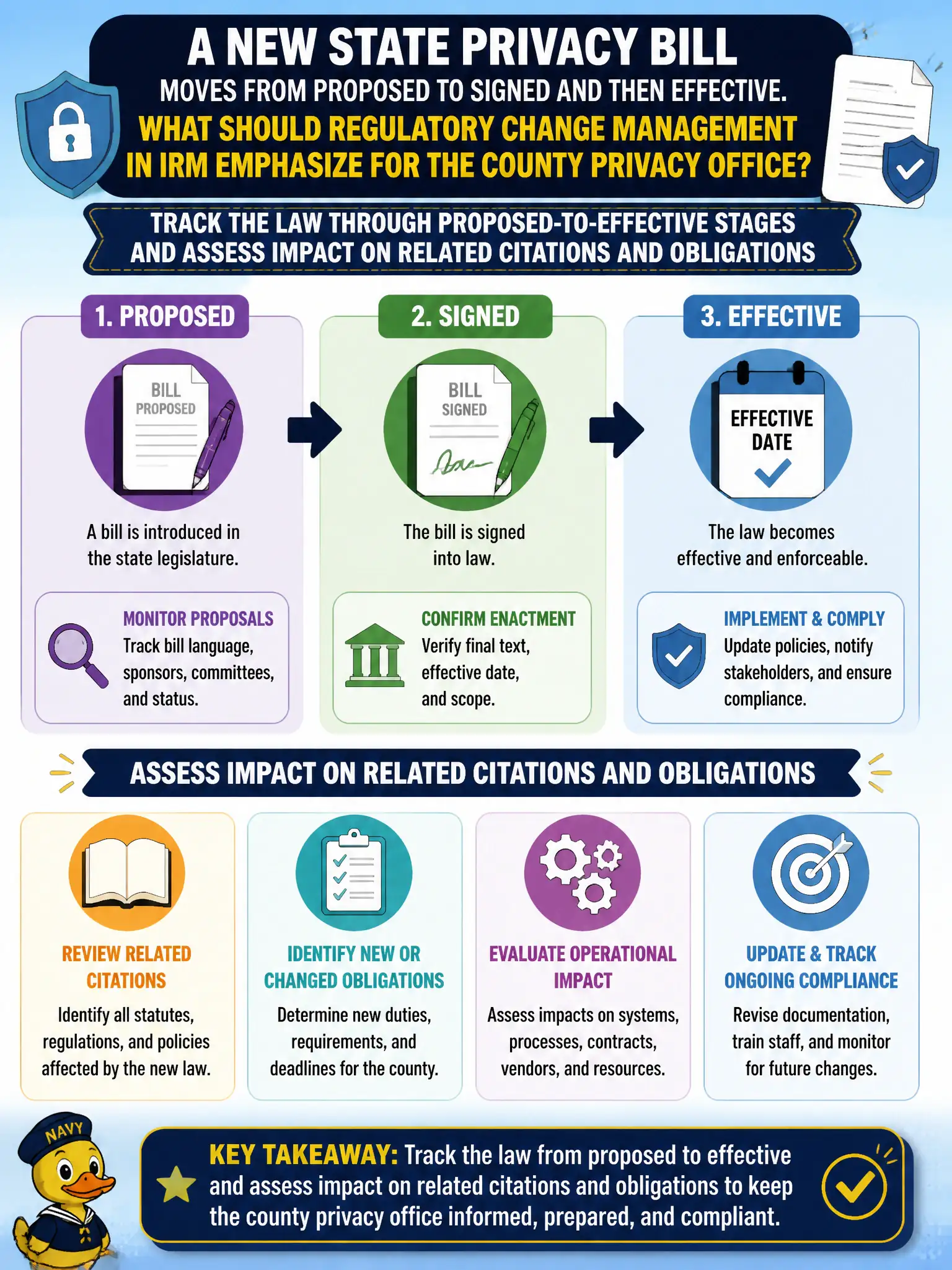
Regulatory Change Management for a county privacy office should track a new state privacy bill through proposed-to-effective stages and assess impact on related citations and obligations. The capability’s emphasis is staged intake plus impact analysis—not waiting for fines or bookmarking PDFs. Civic privacy teams need early visibility as law moves from draft to force.
Waiting until after the first enforcement fine before creating any regulatory-change record is reactive failure. Treating every draft bill as an immediate production control failure with no impact analysis creates false emergencies. Storing the bill only in a personal browser bookmark with no IRM tracking abandons enterprise regulatory change.
Exam caveat: stage tracking + impact assessment define Regulatory Change Management; neither freeze-until-fine nor instant-failure-without-analysis is correct.
Operational check: create a regulatory-change record for the bill; advance stages as status changes; run impact analysis against privacy citations; brief leadership before the effective date.
Impact analysis outputs should feed citation owners before the effective date with clear cover-or-gap tasks. Bookmark-only tracking and fine-triggered intake fail municipal regulatory readiness; stage the bill and assess early.