
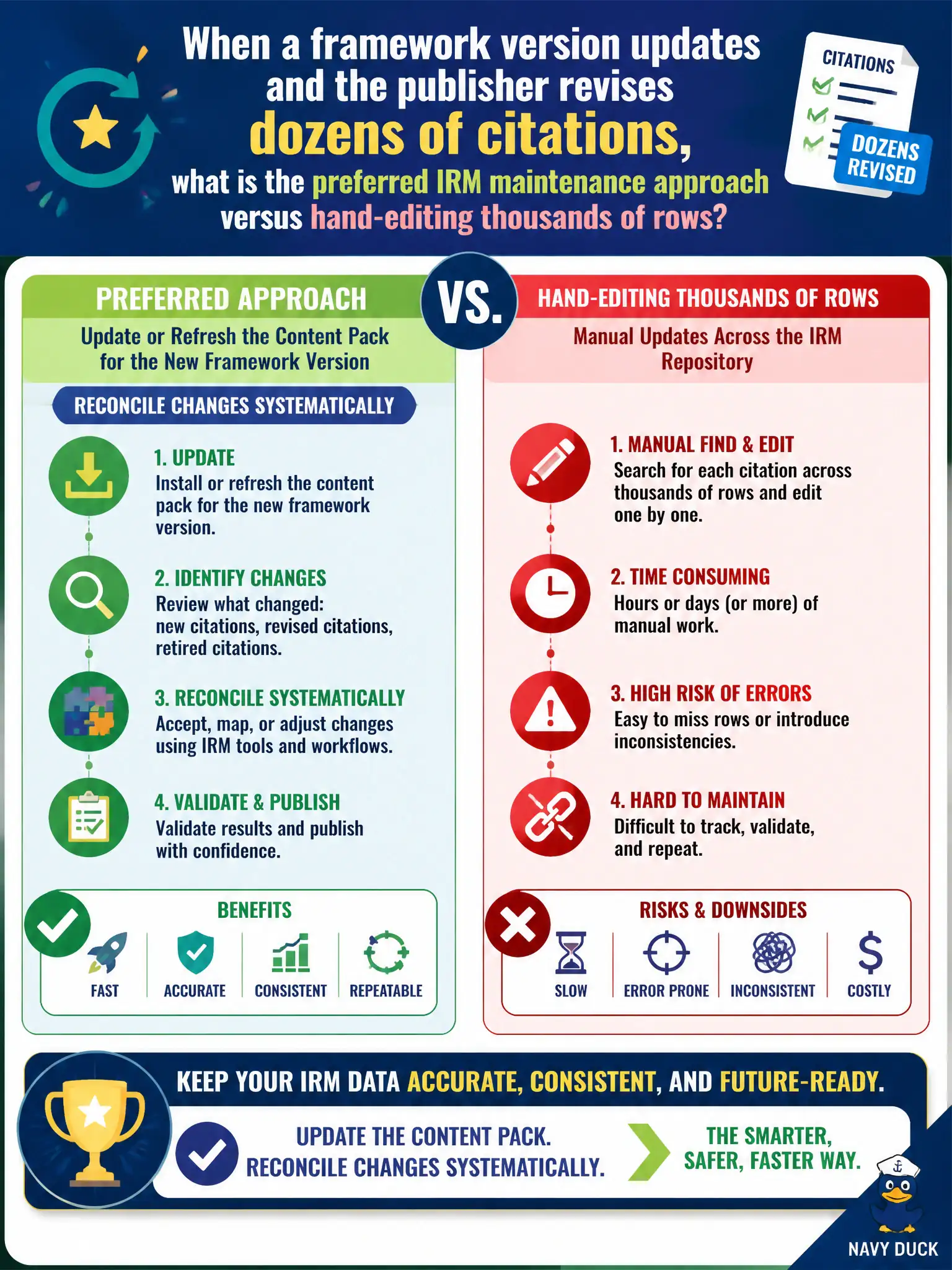
When a framework version updates and the publisher revises dozens of citations, what is the preferred IRM maintenance approach versus hand-editing thousands of rows?
Select an answer to reveal the explanation.
Short Explanation
Frameworks get new editions — don't retype the library by hand. Refresh the content pack and reconcile the deltas. Nightly row surgery or email folders won't scale.
Full Explanation
When a framework version updates and the publisher revises dozens of citations, preferred IRM maintenance is to update or refresh the content pack for the new framework version and reconcile changes systematically. Pack refresh plus reconciliation scales; nightly hand-edits across thousands of production rows do not. Civic compliance libraries must track edition changes deliberately.
Ignoring framework versions forever once the first pack is imported freezes the library on obsolete law. Hand-editing every production citation nightly without pack update mechanisms does not scale and invites error. Abandoning authority documents to track laws only in personal email folders destroys enterprise GRC.
Exam caveat: content-pack version refresh + reconcile beats ignore-forever and hand-edit-everything.
Operational check: when a new framework pack version lands, refresh in subprod; diff changed citations; remap affected objectives; promote reconciled changes with release notes to production.
Reconciliation after pack refresh should include owner review of material citation text changes and automatic flags where control mappings broke. Treat framework edition upgrades as mini-releases with backout notes, not as silent overnight row edits.