
Before a content pack's hundreds of citations are scoped to every production civic entity, what should the GRC team do?
Select an answer to reveal the explanation.
Short Explanation
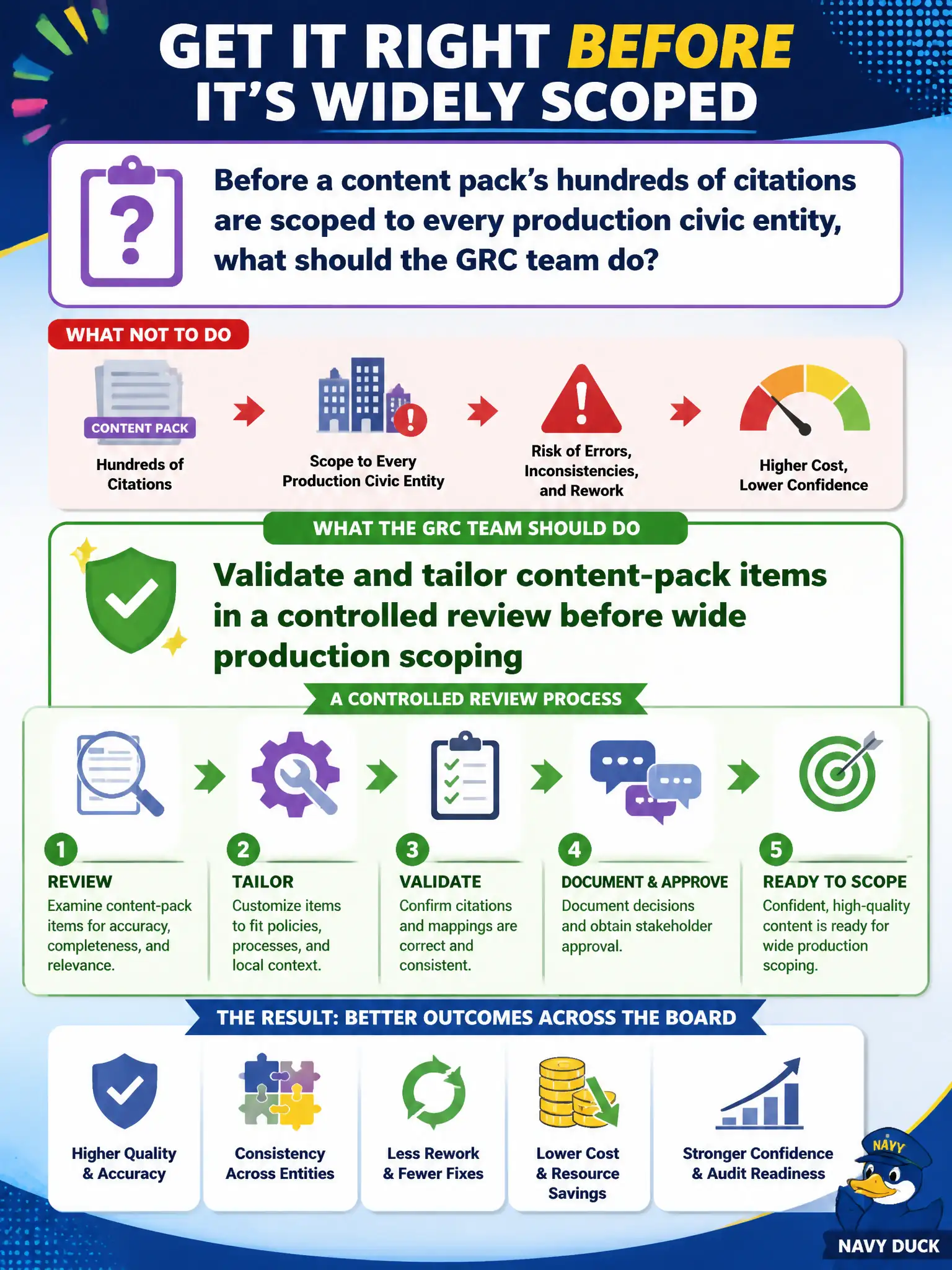
A content pack is a starter wardrobe — try it on before the whole city wears it. Review and tailor items, then scope. Blanket-scoping every row on day one creates noise and bad fits.
Full Explanation
Before a content pack’s hundreds of citations are scoped to every production civic entity, the GRC team should validate and tailor pack items in a controlled review. Starter content is a wardrobe to try on: relevance, ownership, and applicability vary by city service. Controlled review prevents noise, false applicability, and massive remediation backlogs from blanket scoping.
Scoping every imported row to all entities immediately with no review creates unmanageable obligation sprawl. Deleting the pack after import so nothing can be scoped later wastes the library. Converting all pack citations into CMDB relationships and retiring Policy and Compliance abandons the compliance data model.
Exam caveat: review/tailor before wide production scoping. Blanket-scope-on-import is a common CIS-RC trap.
Operational check: import to subprod; review top citation families with owners; descope irrelevant items; then scope tailored content to production entity sets in waves.
Use a staged scoping plan: pilot entities first, measure noise and ownership gaps, then expand. Record tailor decisions (keep, modify, descope) against pack items so future refreshes do not blindly reintroduce rejected content citywide.