
Executives at a port authority ask for GRC posture—open issues, control failures, residual risk—on the same platform reporting they already trust. What capability addresses that purpose?
Select an answer to reveal the explanation.
Short Explanation
Leaders already live in platform dashboards — hang GRC posture there. PA-style reporting for issues, failures, and residual risk beats whiteboard photos and secret chats.
Full Explanation
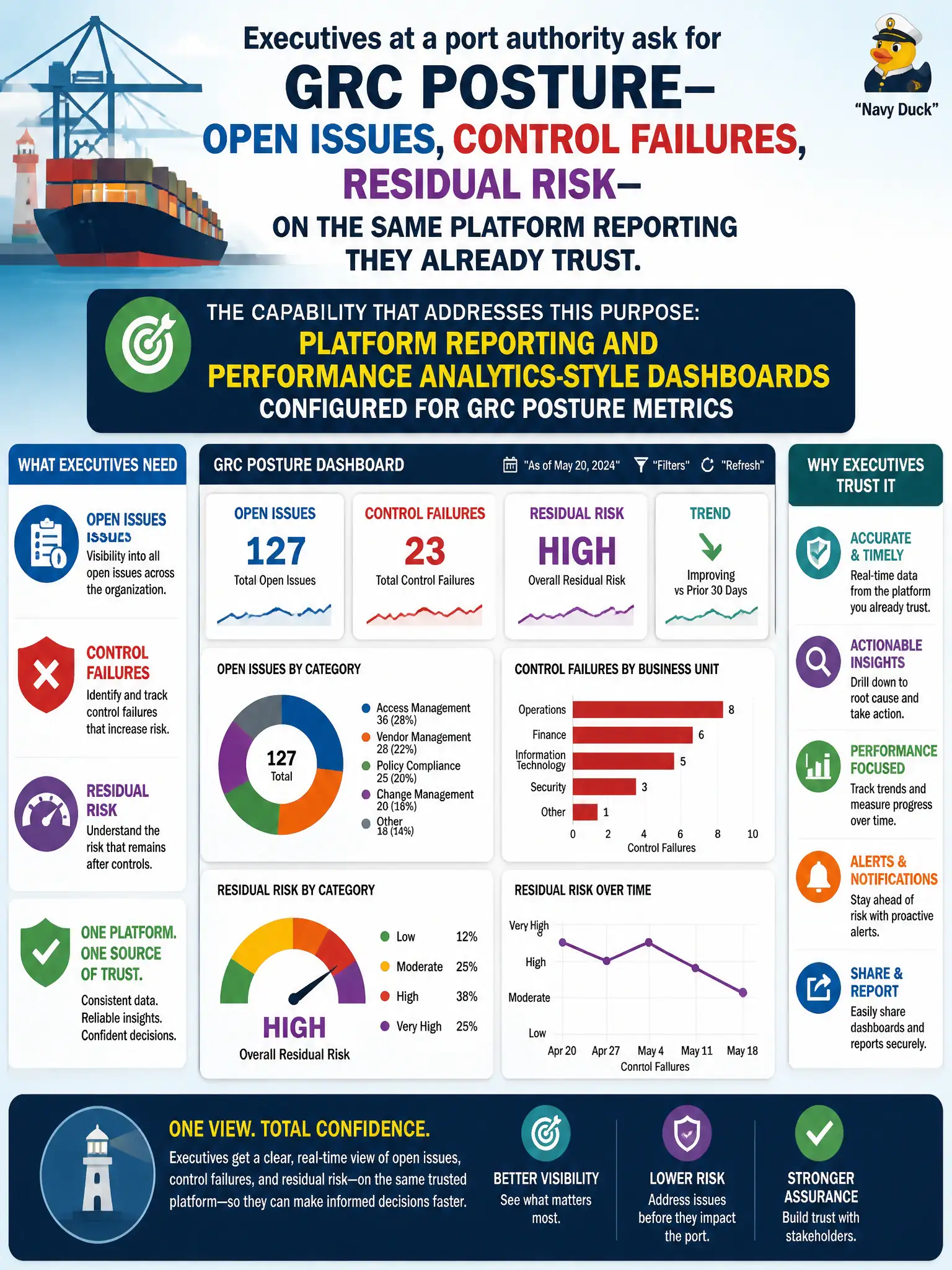
Port-authority executives asking for GRC posture—open issues, control failures, residual risk—on the same platform reporting they already trust need platform reporting and Performance Analytics-style dashboards configured for GRC metrics. Purpose-level answer: surface posture where leaders already look, using governed IRM data. Reporting capability is how GRC joins the executive windshield.
A single undocumented whiteboard photo after each board meeting is not durable reporting. Disabling all reporting so posture stays only in private risk-owner chats hides enterprise risk. Requiring CAD-built custom mobile games as the only executive GRC interface is absurd over-customization unrelated to standard platform analytics.
Exam caveat: configure PA/platform dashboards for GRC posture; do not substitute whiteboards or disable reporting.
Operational check: publish widgets for open issues, failed controls, and residual bands; validate against source tables; grant executives read access to the dashboard, not to unconstrained admin roles.
Standard GRC dashboard packages should cover open issue aging, control failure rates, and residual distribution by entity class. Grant executives dashboard roles without GRC admin, and retire whiteboard-photo board packs as the posture source of truth.