
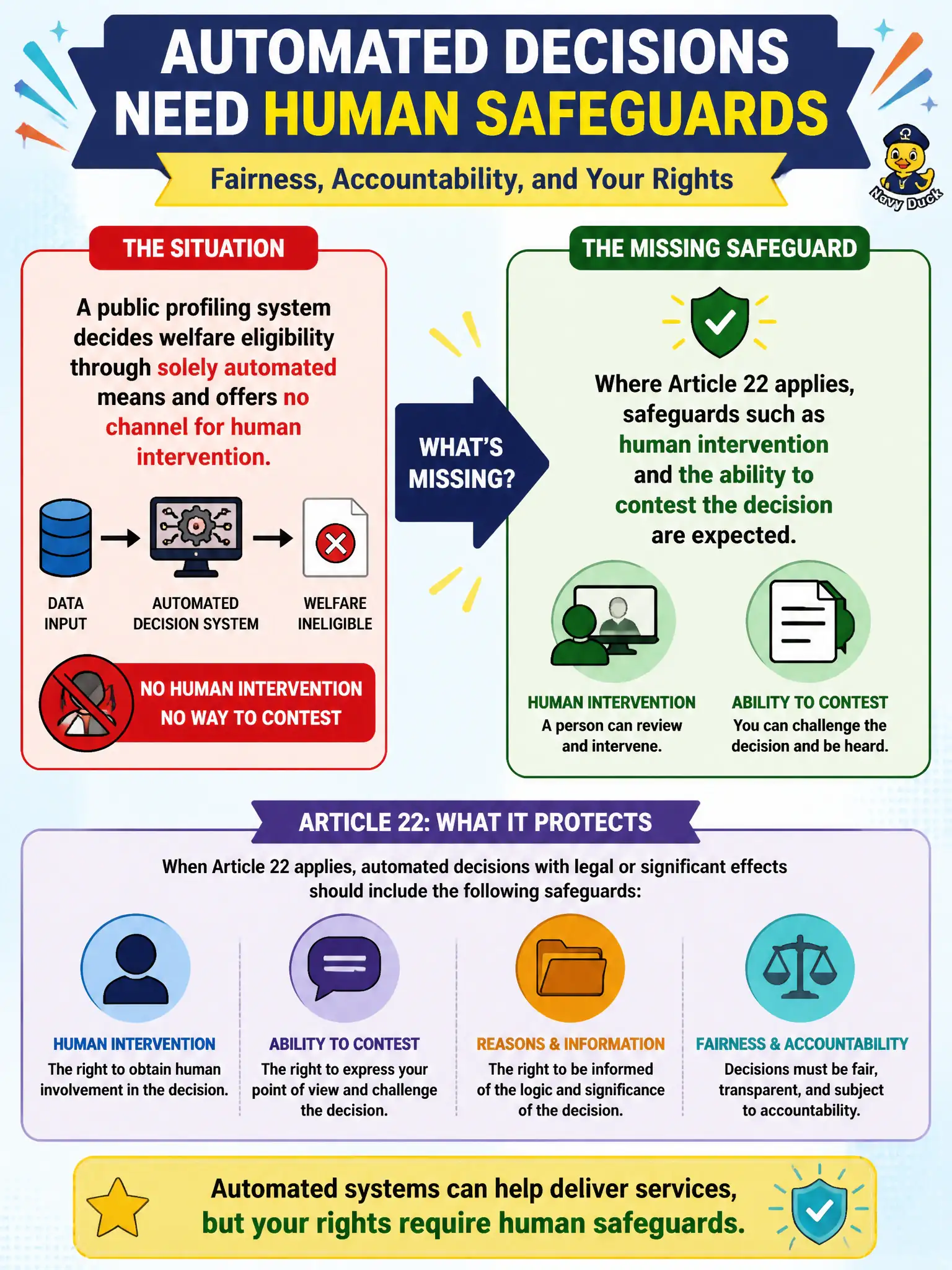
A public profiling system decides welfare eligibility through solely automated means and offers no channel for human intervention. What safeguard expectation is missing?
Select an answer to reveal the explanation.
Short Explanation
A welfare gate run entirely by a profile with nobody to talk to is the textbook scary automated decision. People need a human review path and a way to push back. No-human eligibility bots skip the safeguards the rules expect.
Full Explanation
Where Article 22 applies to solely automated decisions with legal or similarly significant effects—such as a public profiling system deciding welfare eligibility with no human-intervention channel—safeguards such as human intervention and the ability to contest the decision are expected. Missing that channel is a central compliance and fairness failure for high-impact public decisions that shape people’s material lives.
Welfare decisions are not exempt from all GDPR automated-decision rules by slogan. Human intervention is not reserved for premium-fee payers. Using open-source models does not remove the need for safeguards when sole automation produces significant effects on eligibility.
Exam caveat: public eligibility automation is a textbook Article 22 stakes pattern. Operational check: provide human review on request, explain meaningful logic at an intelligible level, log automated outcomes, and allow contestation before benefits are finally denied. Civic welfare systems must remain contestable by humans; otherwise residents face unappealable machines deciding subsistence—antithetical to accountable public administration—and leaders should record why a no-appeal design was rejected.