
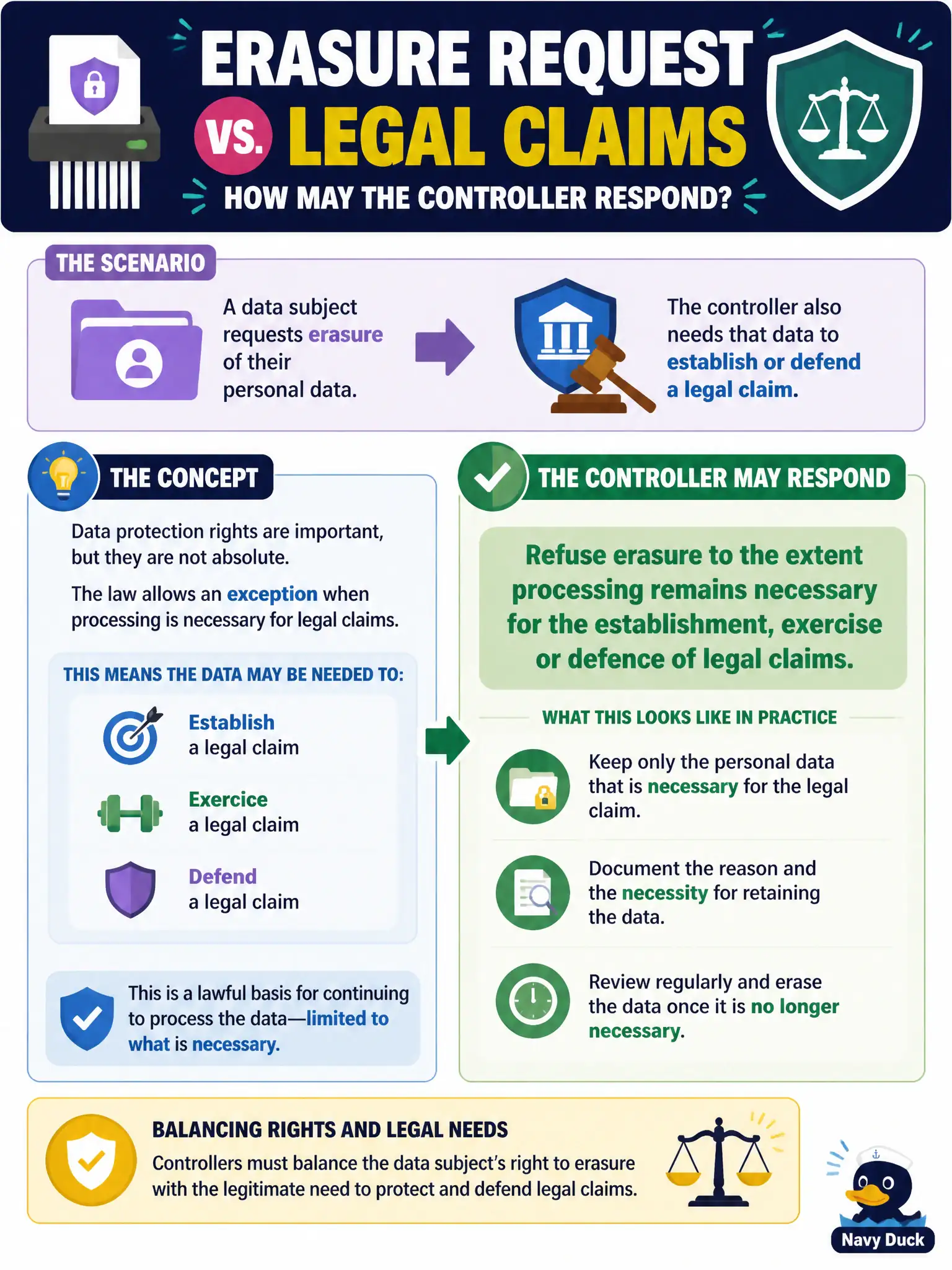
A data subject requests erasure of personal data that the controller also needs to establish or defend a legal claim. How may the controller respond?
Select an answer to reveal the explanation.
Short Explanation
You cannot wipe the evidence locker just because someone asked for erasure mid-dispute. If you still need the data to bring or defend a legal claim, that is a recognised exception. Erase what you do not need for the fight; keep what the claim still requires.
Full Explanation
Erasure may be refused to the extent processing remains necessary for the establishment, exercise or defence of legal claims. When a data subject requests erasure of personal data the controller also needs for litigation or legal defence, the controller may retain what is necessary for that purpose while still erasing unrelated data that do not serve the exception. Necessity and relevance bound the shield.
Erasing immediately and relying on reconstructed memories in court risks spoliation and ignores a recognised exception. Publishing the data to create a public-interest archive is not a proper response to an erasure request. Always erasing first and restoring from backups only after losing a case turns retention exceptions on their head and invites evidence problems.
Exam caveat: the legal-claims exception is a shield for necessary evidence—not a warehouse for everything forever. Operational check: place a legal hold on the minimal relevant dataset, erase or restrict the rest, document the litigation nexus, and revisit holds when claims end. Public bodies and companies alike should explain to residents that evidence retention is bounded and purposeful, preserving both justice and privacy discipline in civic and commercial disputes.