
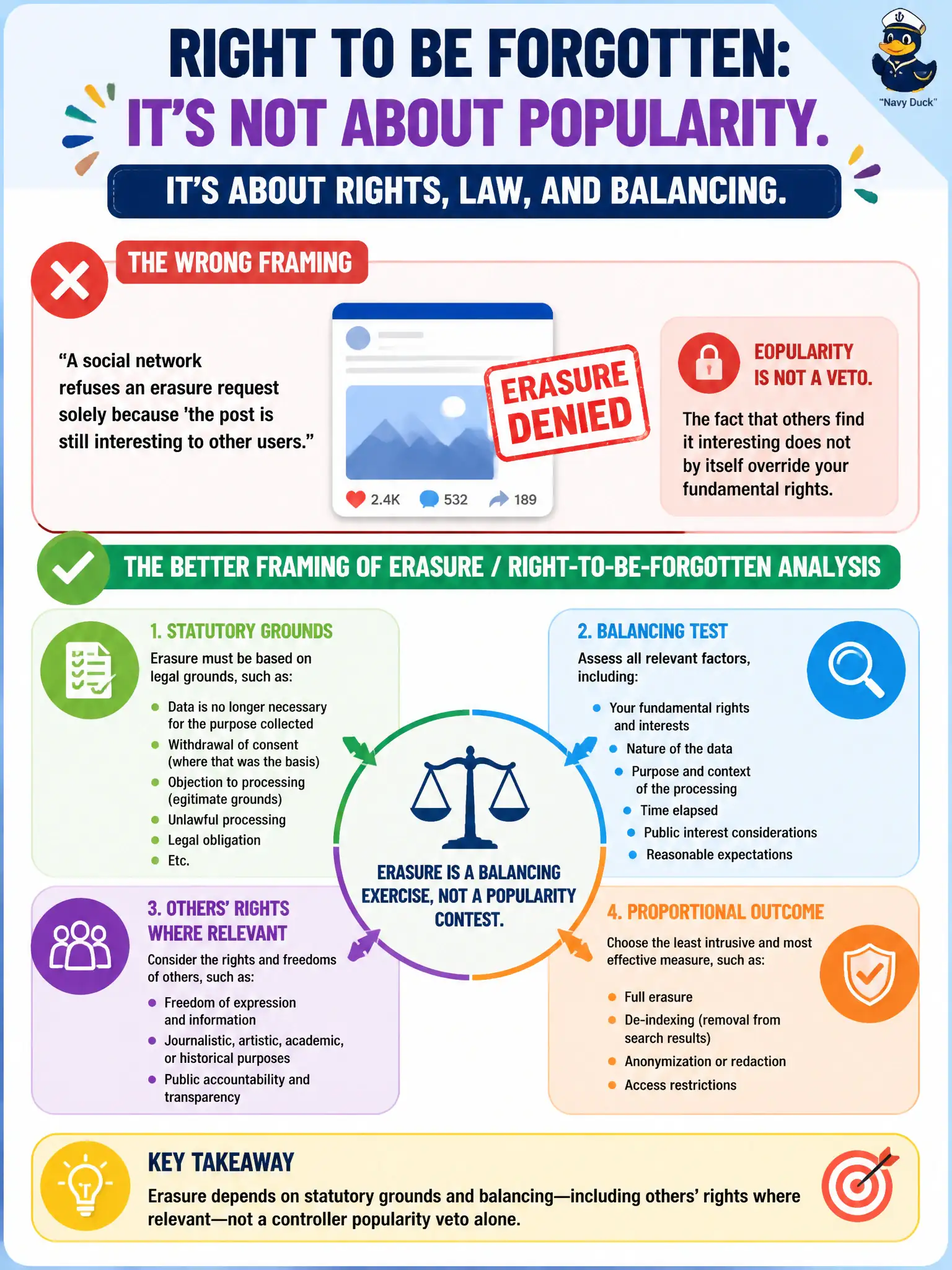
A social network refuses an erasure request solely because 'the post is still interesting to other users.' What is the better framing of erasure / right-to-be-forgotten analysis?
Select an answer to reveal the explanation.
Short Explanation
Interesting to the crowd is not a GDPR eraser-proof shield. You still check whether an erasure ground fits and whether competing rights tip the scale. Virality is not a legal basis for keeping someone’s data forever.
Full Explanation
Erasure and right-to-be-forgotten analysis depends on statutory grounds and balancing—including others’ freedom of expression and information where relevant—not on a controller’s popularity veto. Refusing erasure solely because “the post is still interesting to other users” substitutes engagement metrics for legal analysis under Article 17 and related delisting themes. Controllers must identify a ground, check exceptions, and balance rights rather than cite traffic as destiny.
Controllers may not always keep posts that generate engagement. Erasure can apply to content the data subject published, subject to grounds and exceptions; saying erasure “never” applies to self-published content is too absolute. Interest from other users does not create an adequacy decision for retention—adequacy concerns international transfers, not popularity contests.
Exam caveat: RTBF is a structured legal test, not a viral-metrics test. Operational check: identify the erasure ground claimed, assess exceptions (legal claims, freedom of expression, legal obligations), document the balance, and delist or delete where required. Platforms used in public discourse should show residents that retention decisions rest on rights analysis, not on what keeps people clicking, and should record why an engagement-only refusal failed the civic expectation of accountable moderation.