
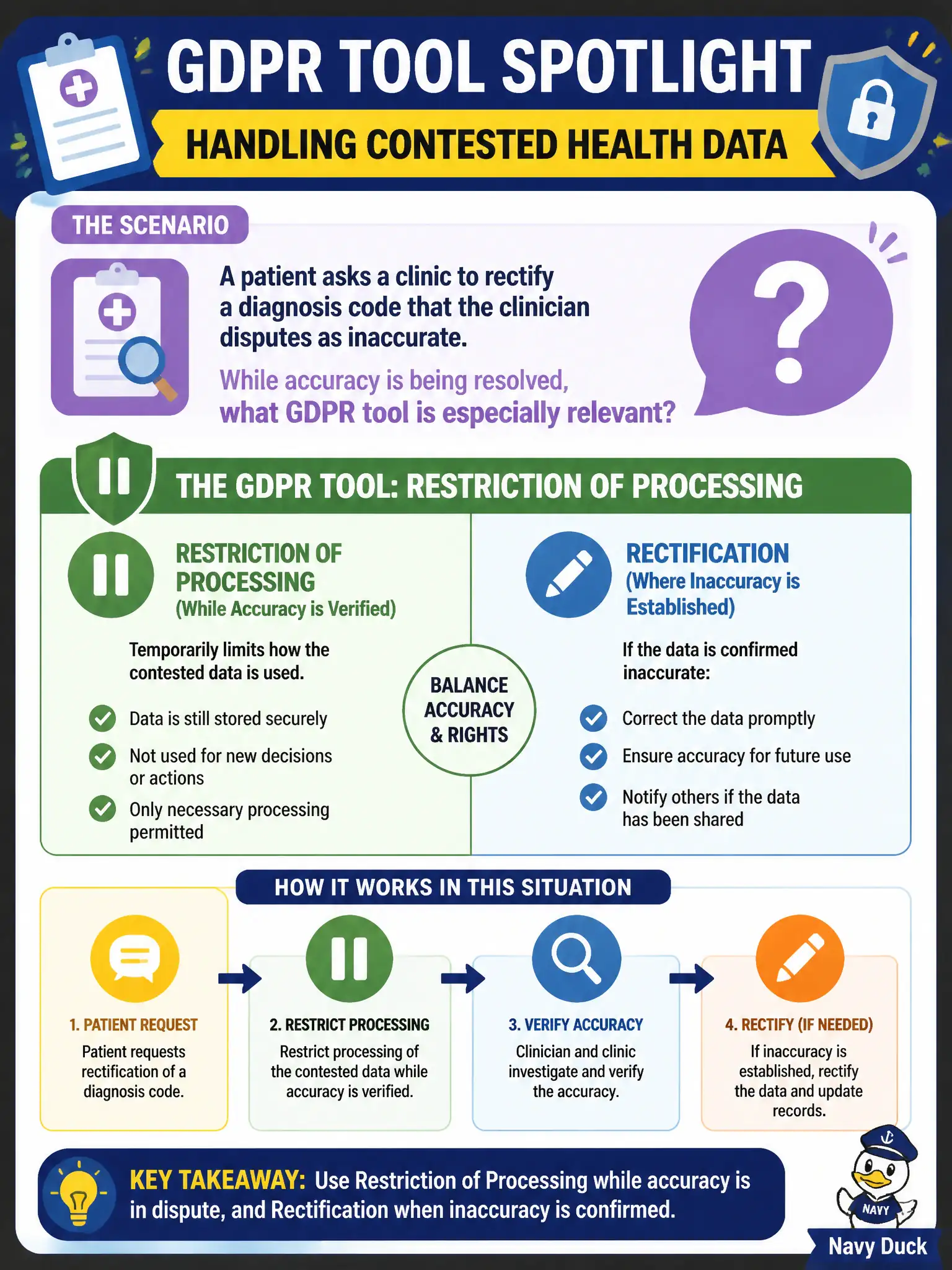
A patient asks a clinic to rectify a diagnosis code that the clinician disputes as inaccurate. While accuracy is being resolved, what GDPR tool is especially relevant?
Select an answer to reveal the explanation.
Short Explanation
When the facts are in a tug-of-war, freeze the contested field so it is not waved around as gospel. Restriction parks the disputed code while you sort out what is true. Then fix it—or keep a clear note—once the accuracy fight is settled.
Full Explanation
While a patient and clinician dispute whether a diagnosis code is inaccurate, restriction of processing of the contested data is especially relevant, alongside rectification once inaccuracy is established. Restriction limits routine use of the disputed field so care pathways and administrative decisions are not casually driven by contested information during verification. It is a protective pause, not a public spectacle and not automatic destruction of the whole file.
Immediate public disclosure on a hospital noticeboard worsens confidentiality and is not a dispute-resolution tool. Automatic erasure of the entire medical file within twenty-four hours may destroy necessary health information, ignore legal retention, and confuse restriction with erasure. Crowdsourcing diagnosis via social-media moderators is not a GDPR accuracy process and introduces further unlawful disclosure risks.
Exam caveat: contested accuracy → think restriction pending resolution, then rectify or maintain with documented reasons. Operational check: mark the code restricted in clinical systems, limit processing to permitted narrow uses, complete clinical review promptly, rectify if wrong, and communicate clearly with the patient. Health and civic care settings should protect both record integrity and the person’s dignity while disagreements are resolved, explaining why public posting or file-wide deletion were rejected as harmful shortcuts.