
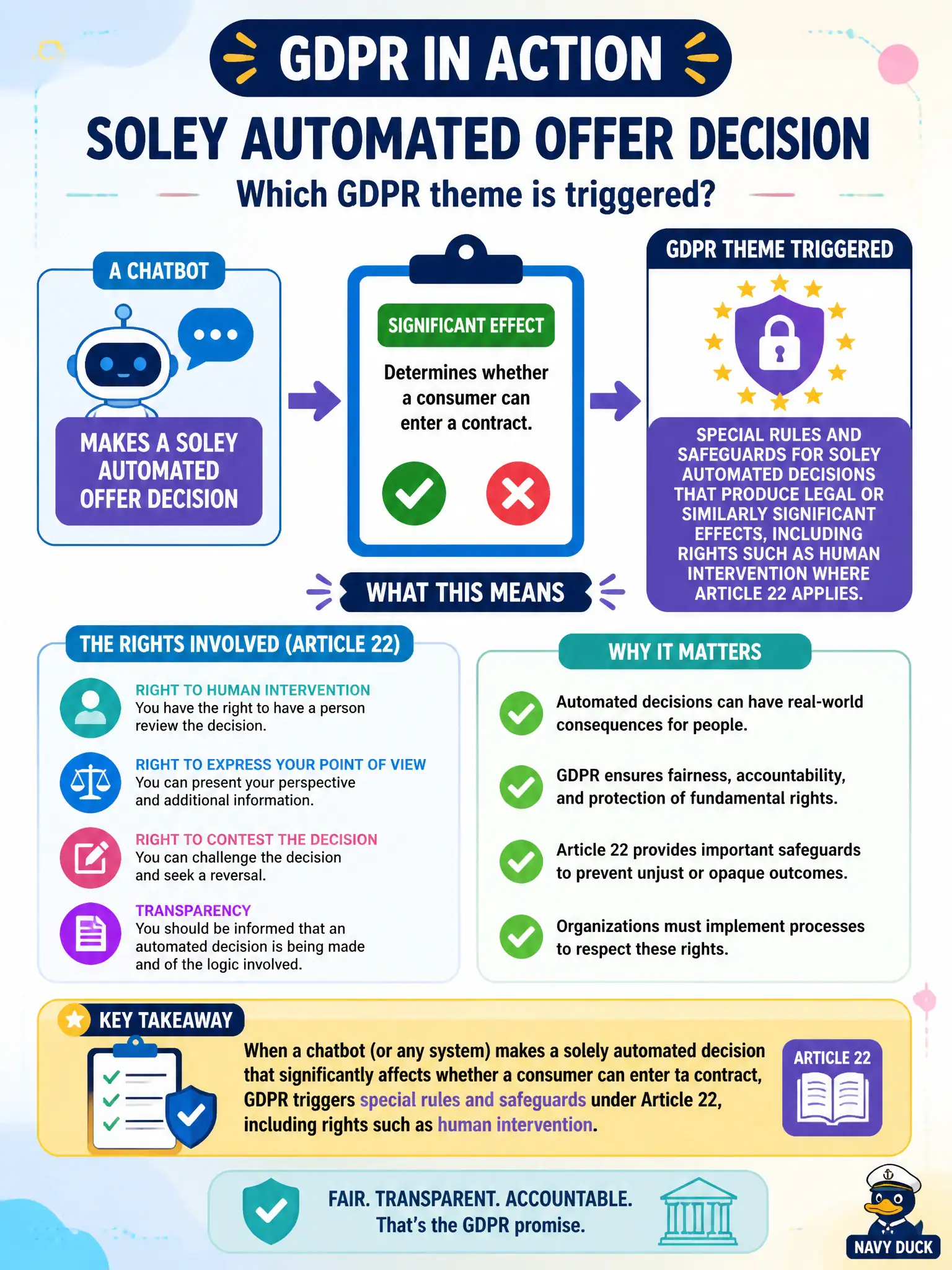
A chatbot makes a solely automated offer decision that significantly affects whether a consumer can enter a contract. What GDPR theme is triggered?
Select an answer to reveal the explanation.
Short Explanation
When a bot alone decides if you get the deal, that is not just a cute FAQ widget. Legal or similarly big effects flip on the automated-decision safeguards—human review, a chance to contest, meaningful info. Solely machine-made contract gates need those guardrails.
Full Explanation
A chatbot that makes a solely automated offer decision significantly affecting whether a consumer can enter a contract triggers special rules and safeguards for automated decisions with legal or similarly significant effects. Where Article 22 applies, expect rights such as human intervention, expressing a point of view, and contesting the decision, plus meaningful information about the logic involved and the consequences for the person.
Chatbots are not excluded from GDPR merely because they are not natural persons; the controller remains responsible for personal-data processing carried out through the bot. Legal effects are not limited to paper contracts—digital offer accept/deny flows can qualify. Automated offers do not require prior European Data Protection Board approval for each customer; the Regulation sets general conditions and safeguards instead of a per-customer licence.
Exam caveat: legal or similarly significant effect plus solely automated processing should trigger Article 22 analysis. Operational check: detect high-impact automated refusals, route to human review on request, log decisions, and publish meaningful explanations without hiding behind “it’s just a bot.” Civic and commercial digital fronts that approve or deny access to services should keep a human path so residents are not silently locked out by an unappealable system.