
A marketing email lacks any unsubscribe mechanism and states that GDPR consent is 'forever.' What is wrong with that approach?
Select an answer to reveal the explanation.
Short Explanation
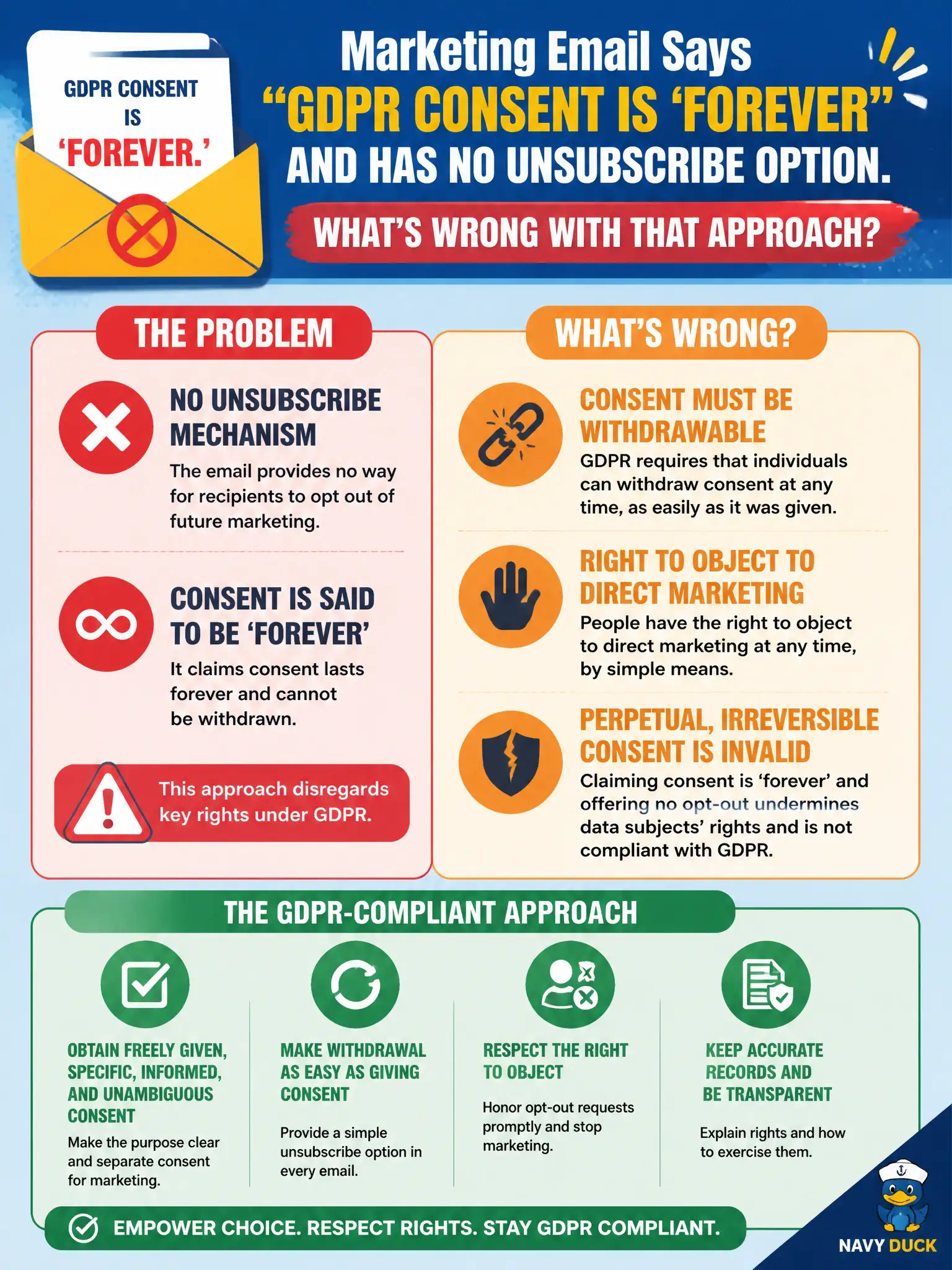
Consent is a lease, not a deed in perpetuity. People must be able to walk away, and marketing needs a clear stop button. Forever-consent with no unsubscribe is the opposite of how GDPR treats choice.
Full Explanation
Consent must be withdrawable, and data subjects must be able to object to direct marketing. A marketing email with no unsubscribe mechanism that declares GDPR consent “forever” undermines both withdrawal and marketing-objection rights. Perpetual irreversible consent is incompatible with the freeness and ongoing control that make consent valid; missing opt-out also fails the practical stop required after a marketing objection.
Marketing emails are not banned entirely under the GDPR; they require a valid lawful basis and honourable stop mechanisms. Unsubscribe links are not required only for postal mail—electronic marketing especially needs a workable, visible opt-out. Consent does not become permanent after a high open rate; engagement metrics do not rewrite legal validity or erase objection rights.
Exam caveat: “forever consent” plus missing unsubscribe are paired exam red flags. Operational check: include one-click unsubscribe, wire it to suppression lists across channels and processors, honour objections immediately, and purge consent language that claims irrevocability. Public communicators and city newsletters should make leaving the list as easy as joining, modelling respect for residents’ attention and autonomy and recording why irreversible consent copy was removed.