
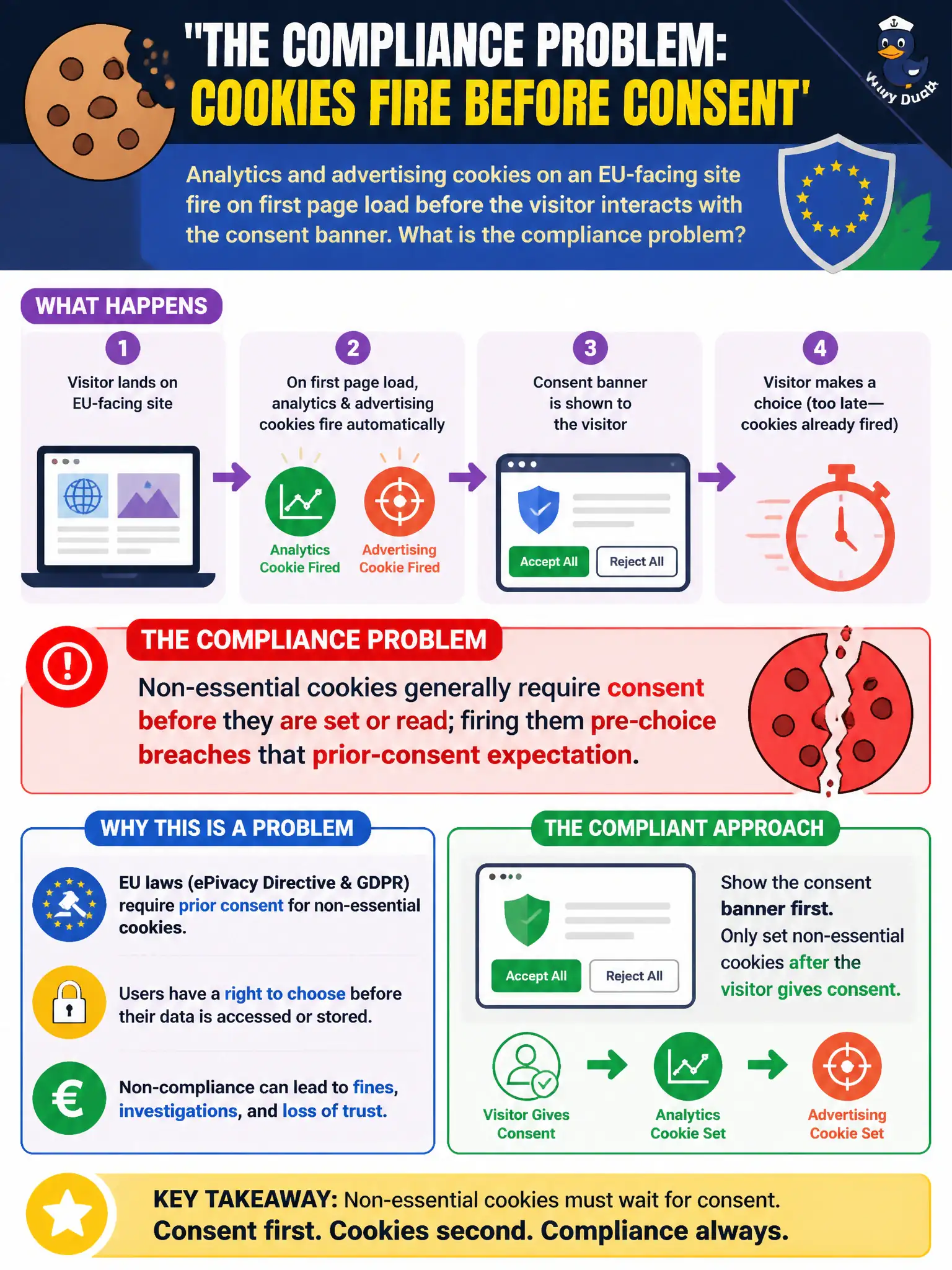
Analytics and advertising cookies on an EU-facing site fire on first page load before the visitor interacts with the consent banner. What is the compliance problem?
Select an answer to reveal the explanation.
Short Explanation
If the trackers already sprinted out the door before anyone tapped Accept, the banner is just decoration. Non-essential cookies wait for a real yes. Load the choice first—then the tags.
Full Explanation
Analytics and advertising cookies on an EU-facing site that fire on first page load before the visitor interacts with the consent banner present the compliance problem that non-essential cookies generally require consent before they are set or read; firing them pre-choice breaches that prior-consent expectation. If trackers sprint out before anyone taps Accept, the banner is decoration. Saying prior consent is never required if the banner appears somewhere on the page fails timing. Claiming non-essential cookies may load first if the privacy policy is linked in the footer fails—footer links are not prior consent. Asserting analytics cookies are always ‘strictly necessary’ and need no consent fails; many analytics cookies are treated as non-essential. Exam caveat: strictly necessary cookies for a service expressly requested by the user can be set without consent; marketing and many analytics tags are not in that category by default. Operational check: block non-essential tags until consent, configure the CMP for prior blocking, verify with browser tests that no ad/analytics cookies set pre-choice, and retain consent logs. In public-interest terms, documenting the lawful analysis, assigning owners, and retaining evidence of how individuals were protected is how organisations demonstrate accountability when supervisory questions arrive.