
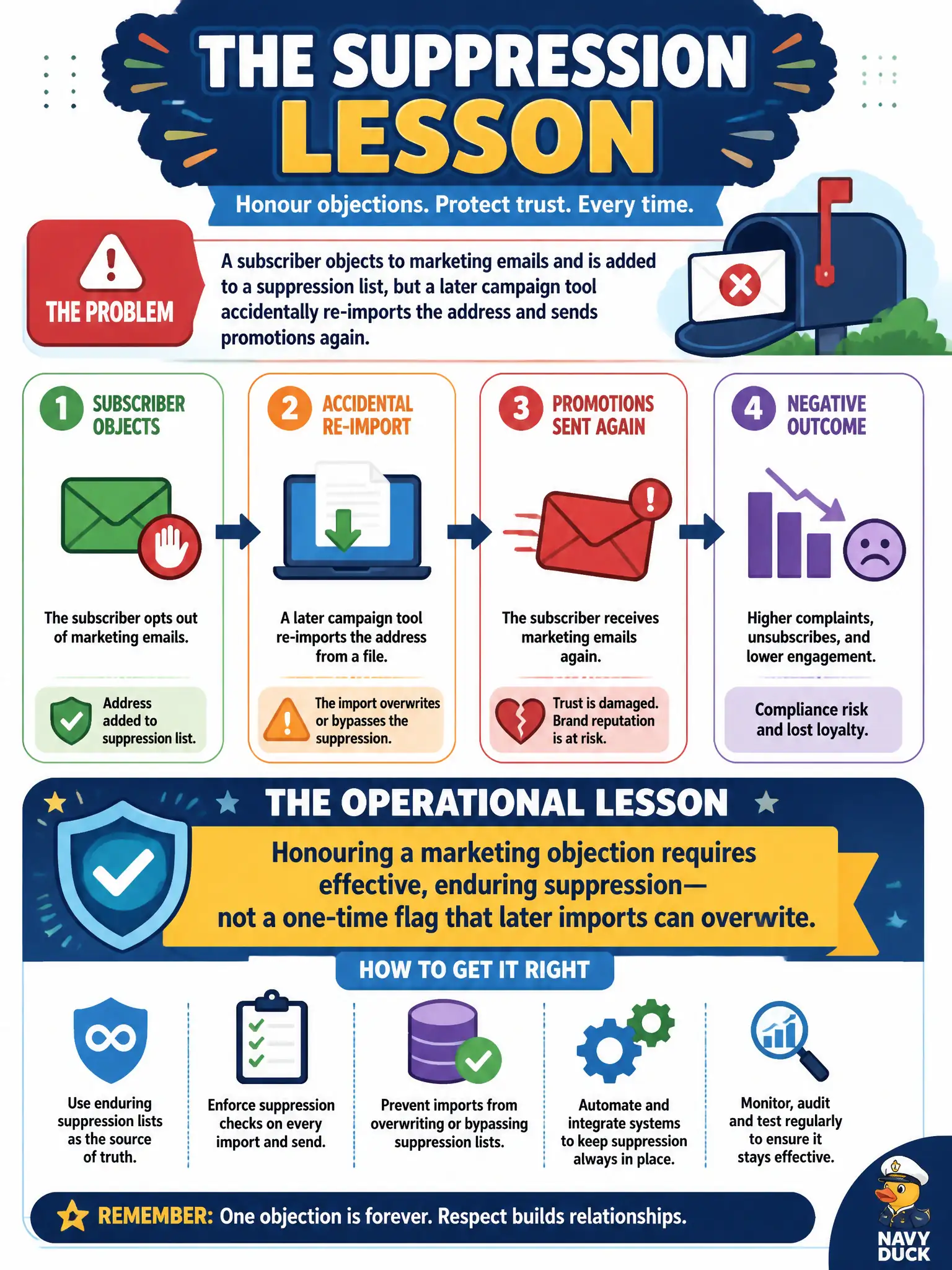
A subscriber objects to marketing emails and is added to a suppression list, but a later campaign tool accidentally re-imports the address and sends promotions again. What operational lesson follows?
Select an answer to reveal the explanation.
Short Explanation
An opt-out that can be overwritten by the next CSV import is not an opt-out—it is theatre. Suppression has to stick across tools and campaigns. Treat the do-not-mail list as sacred infrastructure.
Full Explanation
When a subscriber objects to marketing emails and is added to a suppression list, but a later campaign tool accidentally re-imports the address and sends promotions again, the operational lesson is that honouring a marketing objection requires effective, enduring suppression—not a one-time flag that later imports can overwrite. An opt-out that dies on the next CSV is theatre, not a right. Saying suppression lists may be discarded after thirty days under storage limitation fails—suppression exists to prevent unlawful remessaging and may be retained for that purpose. Claiming re-mailing objectors is fine if the creative is new fails Article 21. Asserting objection only blocks postal mail while email may continue indefinitely fails channel coverage of direct marketing objections. Exam caveat: retaining suppression data is compatible with storage limitation when kept to the minimum needed to honour the objection; it is not an excuse to keep full marketing profiles forever. Operational check: centralise a durable suppression source of truth, block imports that lack suppression merges, test quarterly for resurrection bugs, and alert when bounce/complaint signals indicate failures. In public-interest terms, documenting the lawful analysis, assigning owners, and retaining evidence of how individuals were protected is how organisations demonstrate accountability when supervisory questions arrive.