
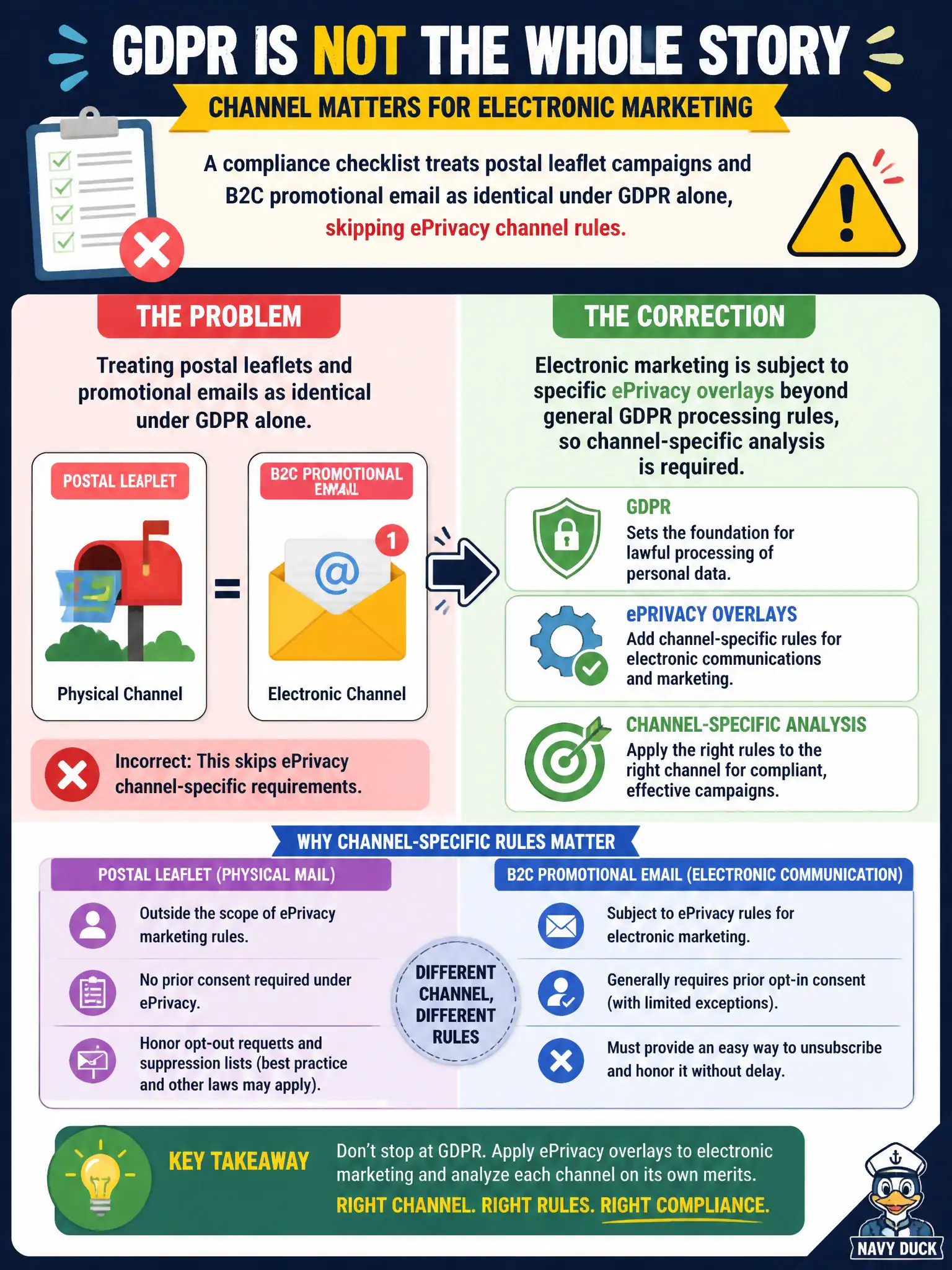
A compliance checklist treats postal leaflet campaigns and B2C promotional email as identical under GDPR alone, skipping ePrivacy channel rules. What correction is needed?
Select an answer to reveal the explanation.
Short Explanation
Paper mail and inbox spam are not twins under European rules. Email rides the ePrivacy track with tighter consent habits in many Member States, while GDPR still wraps the personal data. Check the channel, not just a generic GDPR checkbox.
Full Explanation
A compliance checklist that treats postal leaflet campaigns and B2C promotional email as identical under GDPR alone, skipping ePrivacy channel rules, needs correction: electronic marketing is subject to specific ePrivacy overlays beyond general GDPR processing rules, so channel-specific analysis is required. Paper mail and inbox messages are not twins under European rules. Saying postal and email marketing are always governed by identical consent thresholds EU-wide fails channel differentiation. Claiming email is unregulated once a postal preference centre exists fails—postal opt-outs do not automatically govern electronic mail. Asserting ePrivacy applies only to telephone marketing, never email or cookies, fails the Directive’s electronic-communications scope. Exam caveat: GDPR still wraps personal data in all channels, but ePrivacy/national rules often impose prior consent or soft-opt-in specifically for electronic mail and SMS. Operational check: split playbooks by channel, apply national email/SMS consent rules, keep postal campaigns on their own preference logic, and train marketers not to treat ‘GDPR LI’ as sufficient for cold email. In public-interest terms, documenting the lawful analysis, assigning owners, and retaining evidence of how individuals were protected is how organisations demonstrate accountability when supervisory questions arrive.