
A consultant treats marketing wristbands that track shopper movement the same as court-ordered geolocation bracelets for parolees. What mistake is being made?
Select an answer to reveal the explanation.
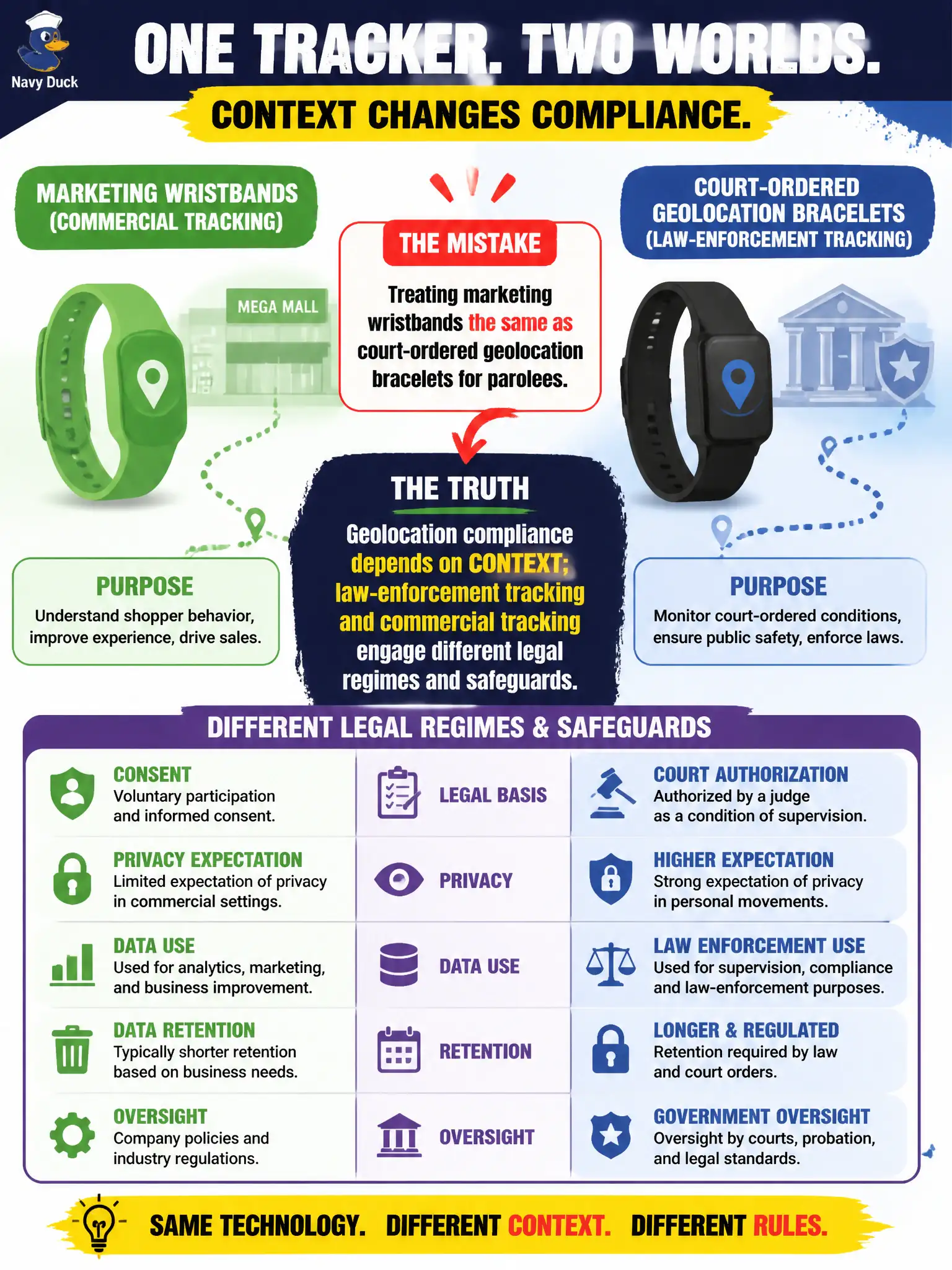
Short Explanation
A parole ankle monitor and a mall marketing wristband are not the same animal wearing different straps. Context decides the legal regime and the safeguards. Do not copy-paste one playbook onto the other.
Full Explanation
A consultant treating marketing wristbands that track shopper movement the same as court-ordered geolocation bracelets for parolees is mistaken because geolocation compliance depends on context; law-enforcement tracking and commercial tracking engage different legal regimes and safeguards. Context decides the playbook—mall analytics is not parole supervision wearing a different strap. Saying geolocation rules are identical in every context fails by erasing regime differences. Claiming marketing bracelets are always higher risk than parole monitoring fails as a blanket ranking that ignores legal compulsion and oversight structures in criminal justice. Asserting neither use case ever involves personal data if the device has a serial number instead of a name fails—identifiers that single out a person still engage personal-data rules. Exam caveat: CIPP/E rewards separating commercial ePrivacy/GDPR analysis from law-enforcement geolocation authorities and safeguards rather than copy-pasting one memo onto both. Operational check: classify the use case first, apply the correct instrument (GDPR/ePrivacy vs LED/national LE rules), document distinct lawful bases and oversight, and train staff not to conflate marketing telemetry with judicial supervision tools.