
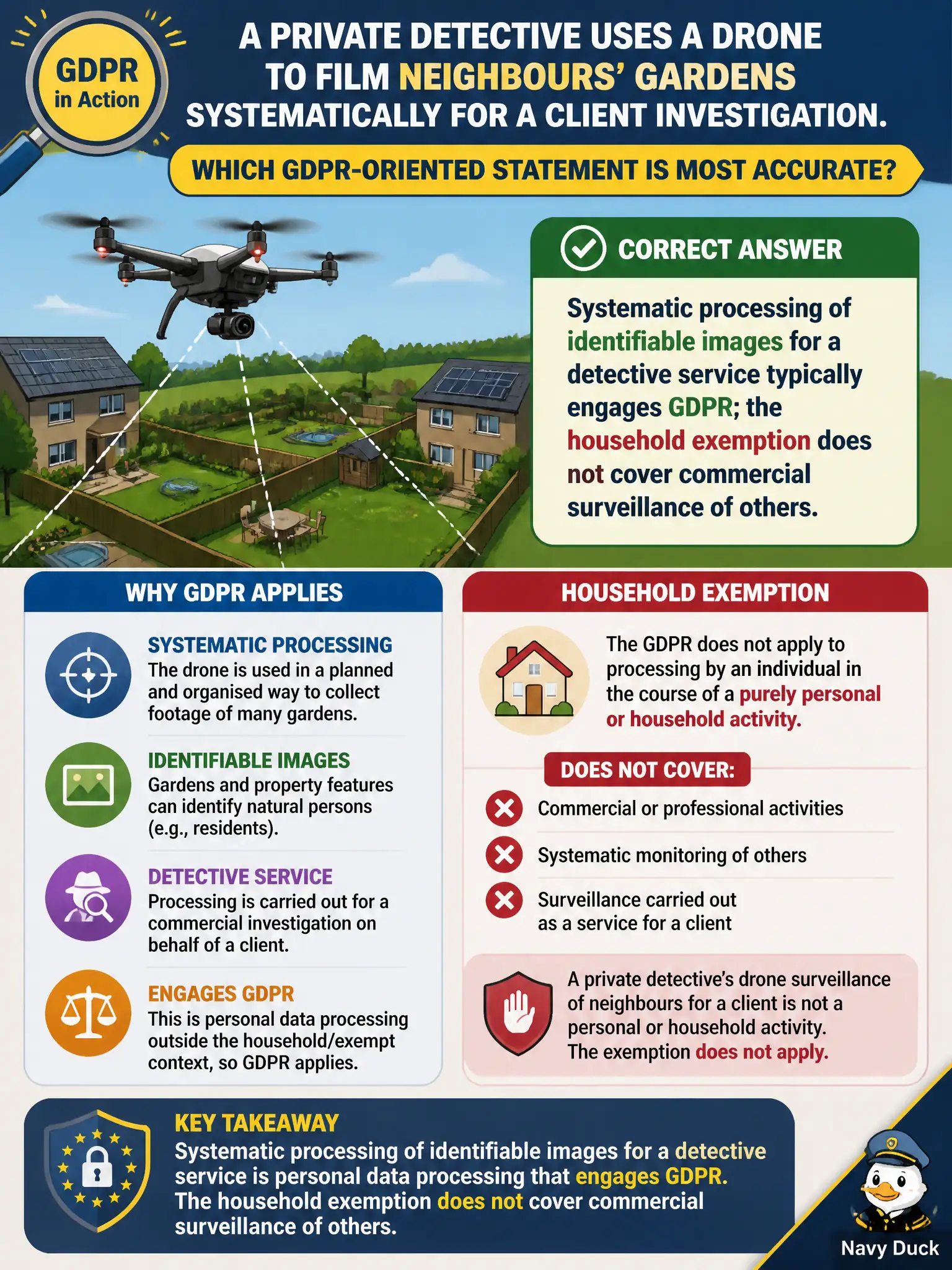
A private detective uses a drone to film neighbours’ gardens systematically for a client investigation. Which GDPR-oriented statement is most accurate?
Select an answer to reveal the explanation.
Short Explanation
Hobby filming your own backyard is one thing; a paid detective buzzing the neighbourhood is another. Commercial, systematic imaging of identifiable people usually sits under the GDPR. The household exemption is not a spy cloak.
Full Explanation
A private detective using a drone to film neighbours’ gardens systematically for a client investigation is best addressed by noting that systematic processing of identifiable images for a detective service typically engages the GDPR; the household exemption does not cover commercial surveillance of others. Paid buzzing of the neighbourhood is not hobby filming of one’s own backyard. Claiming any drone flight is covered by the pure household exemption regardless of commercial investigation use fails the narrowness of that exemption. Saying private investigators are never subject to data-protection rules when filming outdoors fails material scope. Asserting garden imagery is never personal data because gardens attach to houses fails when people are identifiable in the footage. Exam caveat: intrusive imaging of private spaces heightens necessity and minimisation burdens; lawful basis, transparency where applicable, and proportionality still apply to professional investigators. Operational check: require documented lawful basis and client instructions, minimise capture of bystanders, avoid unjustified private-space intrusion, secure footage, set retention, and refuse jobs that are pure voyeurism without legal footing.