
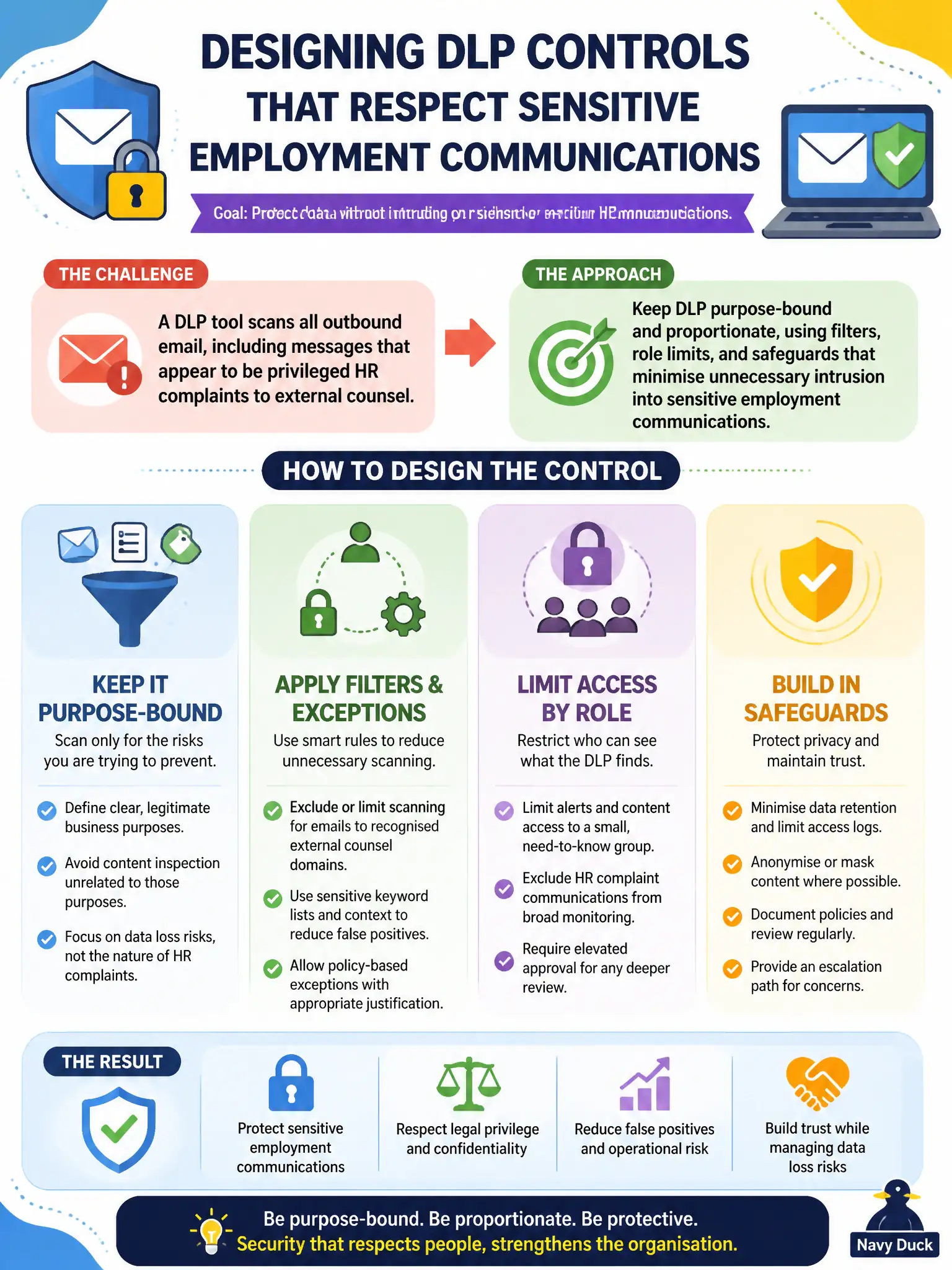
A DLP tool scans all outbound email, including messages that appear to be privileged HR complaints to external counsel. How should the employer approach design of the control?
Select an answer to reveal the explanation.
Short Explanation
DLP is a seatbelt, not a license to steam-open every sealed envelope. You can still protect against leaks while narrowing what gets scanned and who sees it. Purpose, minimisation, and careful handling of sensitive HR traffic matter.
Full Explanation
A DLP tool that scans all outbound email, including messages that appear to be privileged HR complaints to external counsel, should be designed to keep DLP purpose-bound and proportionate, using filters, role limits, and safeguards that minimise unnecessary intrusion into sensitive employment communications. Leak prevention can protect the organisation and the public without turning every sealed worker complaint into wide managerial reading material. Disabling all DLP because employment email can never be scanned fails by inventing a total ban that ignores legitimate security needs when properly limited. Routing every matched message to the entire management distribution list for ‘awareness’ fails confidentiality and need-to-know. Treating DLP alerts as marketing leads for upselling security training fails purpose limitation by repurposing security detections for unrelated persuasion. Exam caveat: employment DLP remains personal-data processing; privileged or highly sensitive content heightens the need for minimisation, access restriction, and documented necessity—not a free-for-all human review of all outbound mail. Operational check: tighten DLP rules to true exfiltration patterns, restrict alert audiences, mask content where feasible, log access to matches, exclude or specially handle known counsel channels, and record the balancing test with the DPO.