
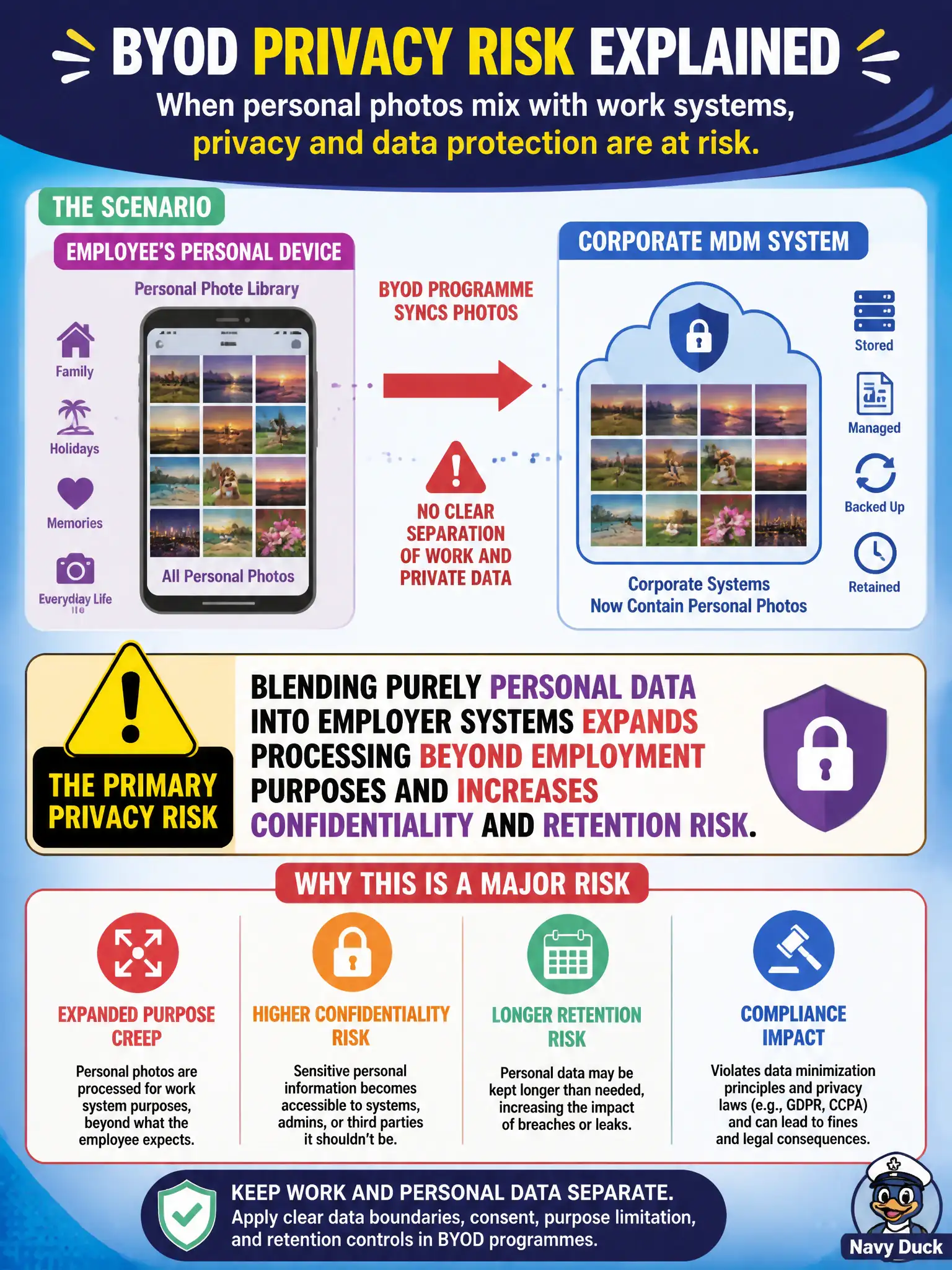
A BYOD programme syncs employees’ personal photo libraries into corporate MDM without clear separation of work and private data. What is the primary privacy risk?
Select an answer to reveal the explanation.
Short Explanation
Mixing vacation selfies into the company vault is like dumping your diary into HR’s filing cabinet. BYOD can work, but only if work containers stay separate from private life. Syncing personal photos into MDM blows that boundary.
Full Explanation
A BYOD programme that syncs employees’ personal photo libraries into corporate MDM without clear separation of work and private data primarily risks blending purely personal data into employer systems, expanding processing beyond employment purposes and increasing confidentiality and retention risk. Mixing private life into the corporate vault harms workers’ autonomy and creates sprawling civic-style retention problems inside employer tools. Claiming BYOD is prohibited in all EU Member States fails as an overbroad ban myth. Saying personal photos are never personal data when stored on a phone also used for work fails definitionally—photos of people remain personal data. Asserting that once MDM is installed the employer becomes joint controller with every social network the employee uses fails by inventing automatic joint controllership with unrelated platforms. Exam caveat: employers may secure corporate containers on BYOD devices, but collection of purely personal content usually exceeds employment purposes and undermines data minimisation. Operational check: enable work profiles/containerisation, sync only corporate email and work apps, ban bulk personal-library ingestion, publish a clear BYOD boundary policy, and verify selective wipe paths at offboarding.