
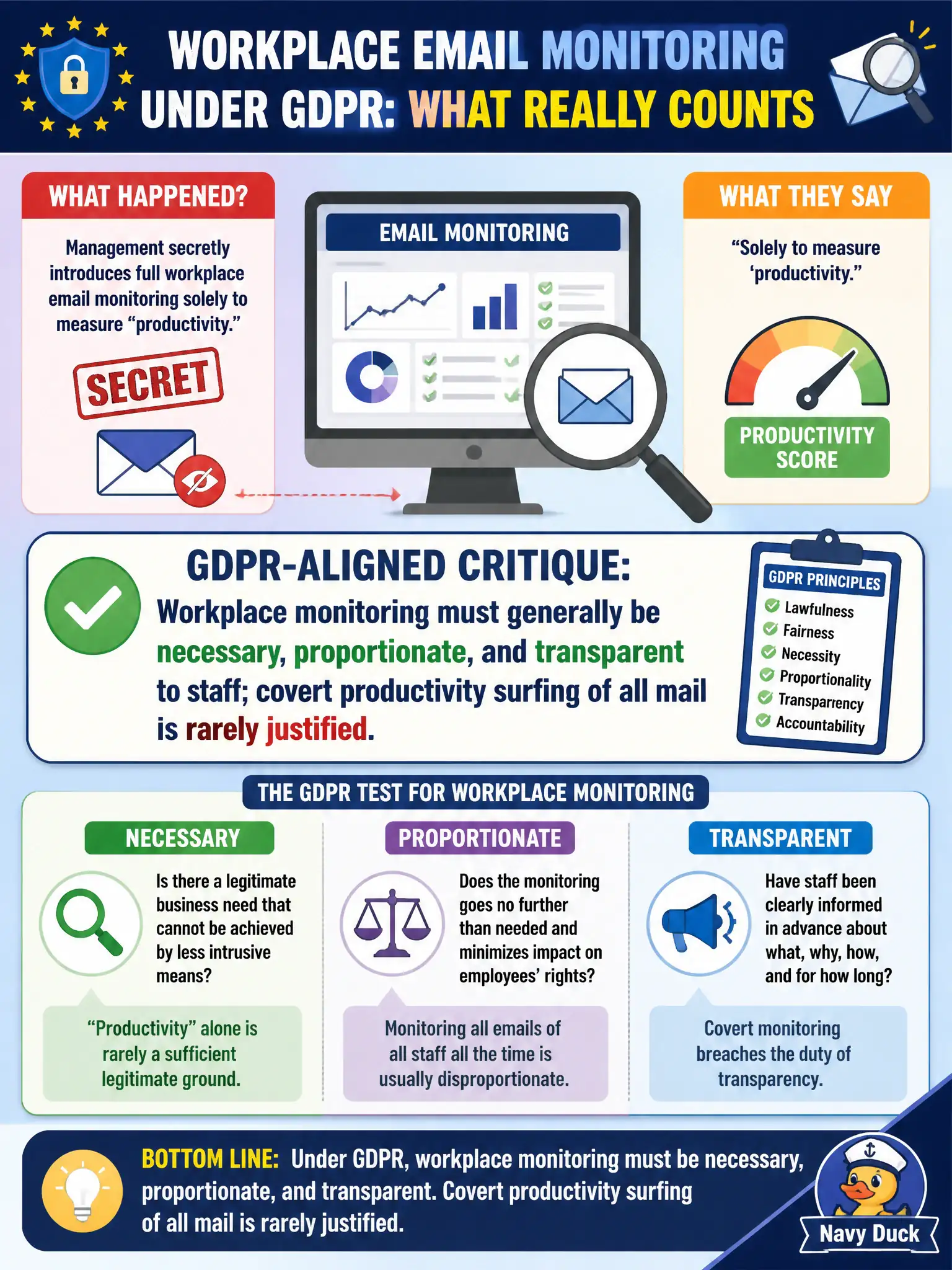
Management secretly introduces full workplace email monitoring solely to measure “productivity.” What GDPR-aligned critique is most accurate?
Select an answer to reveal the explanation.
Short Explanation
Spying on every inbox “for productivity” without telling people is the digital equivalent of hiding cameras in desks. GDPR expects necessity, proportionality, and usually clear notice. Secret blanket monitoring is a red flag, not a clever management hack.
Full Explanation
Management secretly introducing full workplace email monitoring solely to measure ‘productivity’ is best critiqued on the ground that workplace monitoring must generally be necessary, proportionate, and transparent to staff; covert productivity surfing of all mail is rarely justified. Secret blanket reading of inboxes treats workers as permanent suspects and undermines fairness in the digital workplace. Saying secret email monitoring is always lawful if the employer owns the mail servers fails—ownership of infrastructure does not erase GDPR principles. Claiming productivity goals automatically override transparency and proportionality fails by elevating managerial convenience over rights. Asserting employees forfeit all privacy expectations the moment they accept a company email address fails as an overbroad waiver myth. Exam caveat: targeted, transparent monitoring for defined security or compliance risks may be justifiable with safeguards; covert, purpose-vague, blanket productivity surveillance is the pattern that typically fails. Operational check: halt covert programmes, run a DPIA for systematic monitoring, publish a clear monitoring policy, narrow scope to necessity, prefer less intrusive metrics, and consult worker representatives where national law requires.