
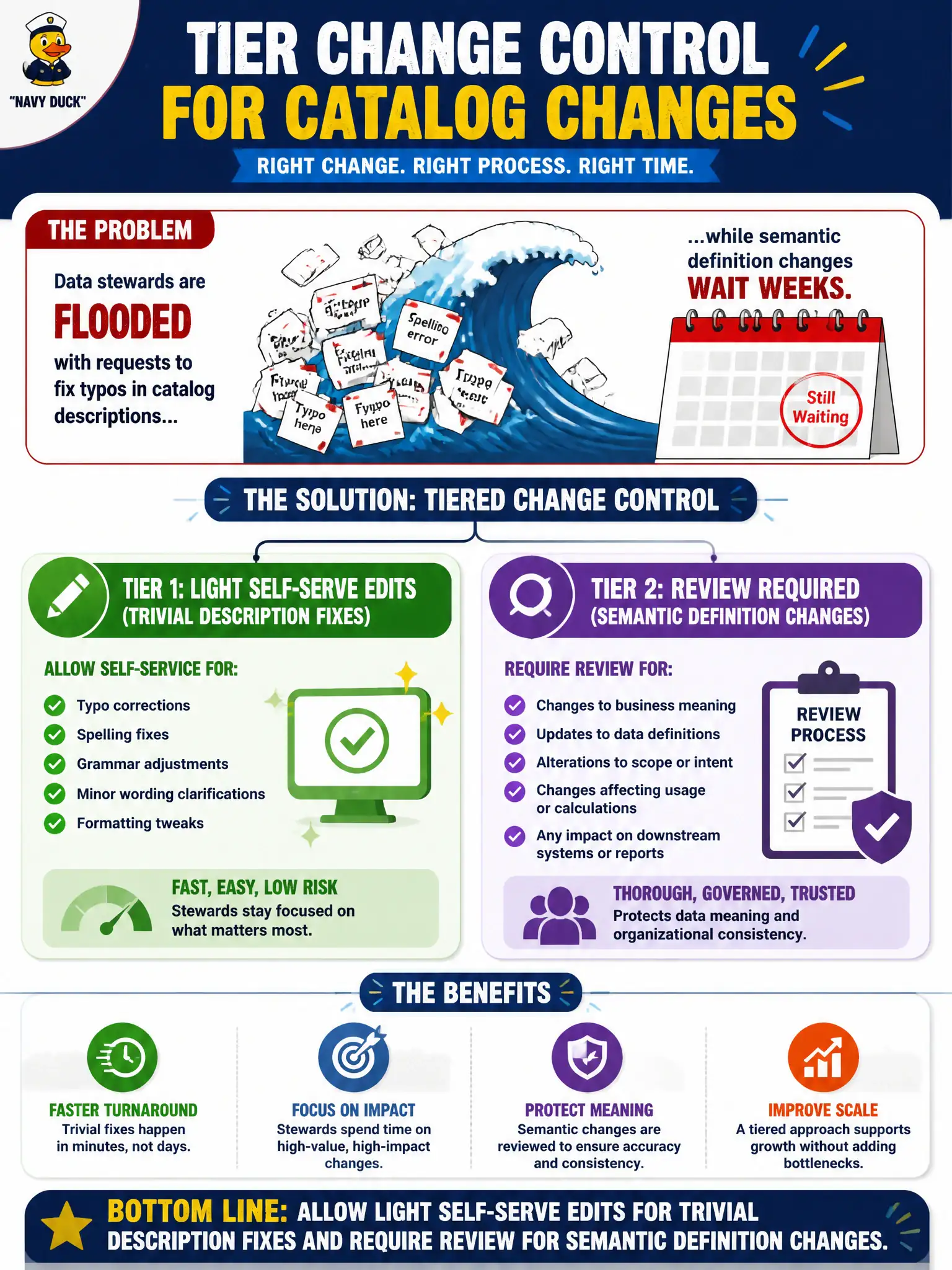
Data stewards are flooded with requests to fix typos in catalog descriptions while semantic definition changes wait weeks. How should change control be tiered?
Select an answer to reveal the explanation.
Short Explanation
Not every edit needs a city council hearing—fixing a typo is not the same as redefining a KPI. Let trivial description fixes be light and self-serve, and keep review for meaning changes. That tiering clears the steward backlog.
Full Explanation
Not every catalog edit deserves the same control burden. Tier change control so trivial description typo fixes can be light self-serve edits while semantic definition changes require stewardship review. Forcing every typo through a month-long council vote burns goodwill and creates backlog that hides real semantic work. Blocking all catalog edits including urgent semantic corrections freezes quality. Letting anyone rewrite official KPI definitions without review invites metric anarchy. Exam nuance: proportional governance by change risk. Caveat: “trivial” must be defined—altering allowed values or metric formulas is semantic even if the text change looks small. Operationally, configure two workflows in the catalog tool, train stewards on the boundary, sample recent edits for misclassified changes, and measure time-to-fix for both tiers to show governance is enabling rather than only blocking. Audit a sample of “trivial” edits weekly to catch semantic changes misfiled as typos—especially edits that alter KPI wording or allowed values. Publish examples of trivial versus semantic edits beside the workflow buttons so stewards and self-serve editors share the same boundary in daily catalog work.