
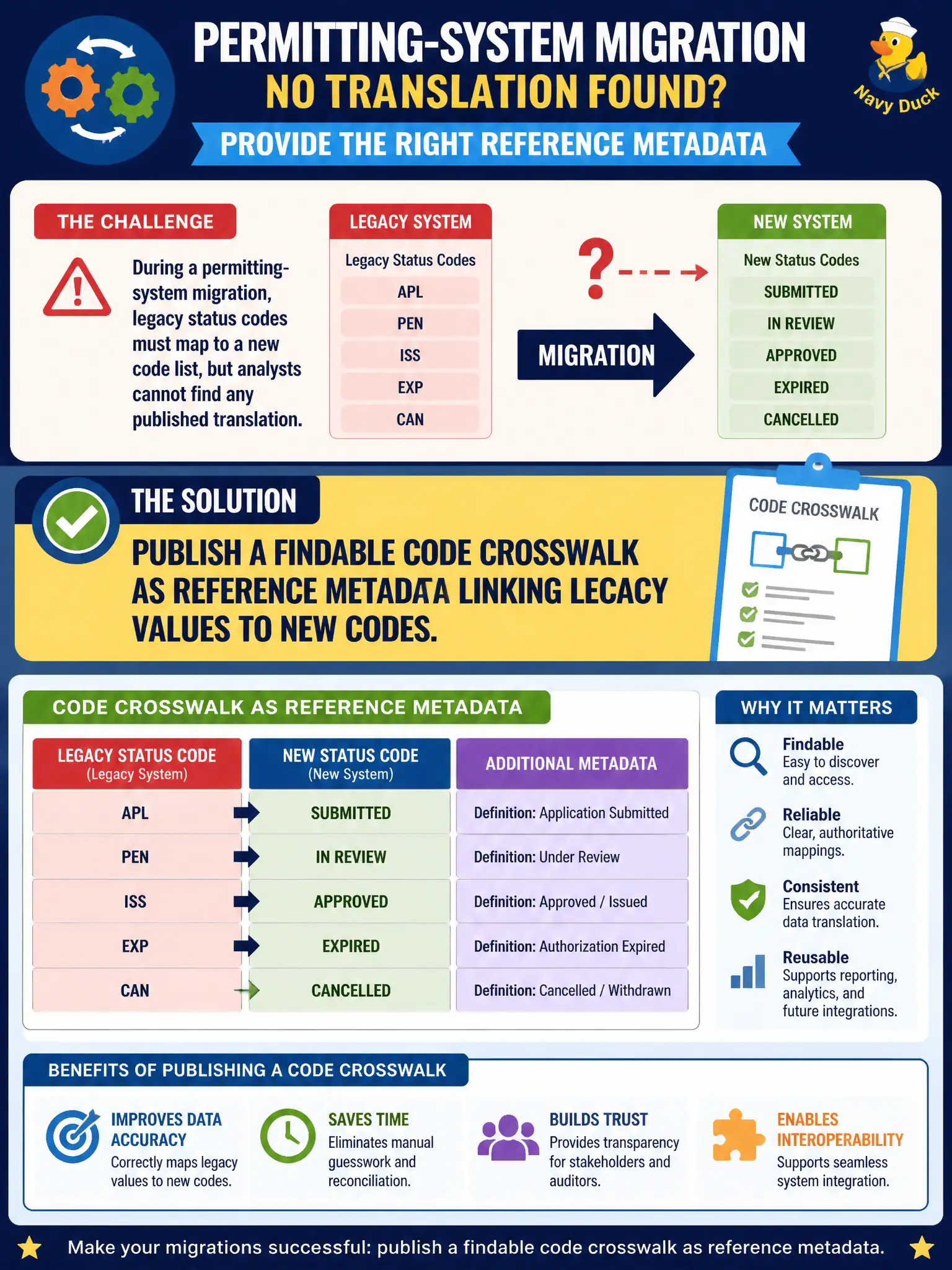
During a permitting-system migration, legacy status codes must map to a new code list, but analysts cannot find any published translation. What reference metadata should the program provide?
Select an answer to reveal the explanation.
Short Explanation
A code crosswalk is the bilingual dictionary for systems that changed dialects. Publish the legacy-to-new status mapping as findable reference metadata so every report translates the same way. Personal invented maps guarantee mismatched counts.
Full Explanation
Permitting migrations that change status code lists require published translation metadata. Providing a findable code crosswalk as reference metadata linking legacy values to new codes lets analysts remap reports and historical extracts correctly. Asking each analyst to invent personal translations guarantees inconsistent civic statistics. Hiding legacy codes and pretending the new list always existed breaks longitudinal honesty. Shipping the new system without documenting how old codes relate to new ones transfers reverse-engineering burden onto every consumer. Exam answers elevate reference data and crosswalks as metadata assets. Caveat: crosswalks need versioning when mappings are corrected mid-migration; silent fixes recreate distrust. Operationally, publish the crosswalk in the catalog before cutover, validate sample historical reports through the map, assign a steward for mapping defects, and keep the crosswalk available after go-live for audit and late-migrating tools. Keep the crosswalk queryable after cutover; late-reporting tools and audit reconstructions will need legacy-to-new status translation for months. Stewards should confirm consumer-facing behavior in a controlled check before closing the change.