
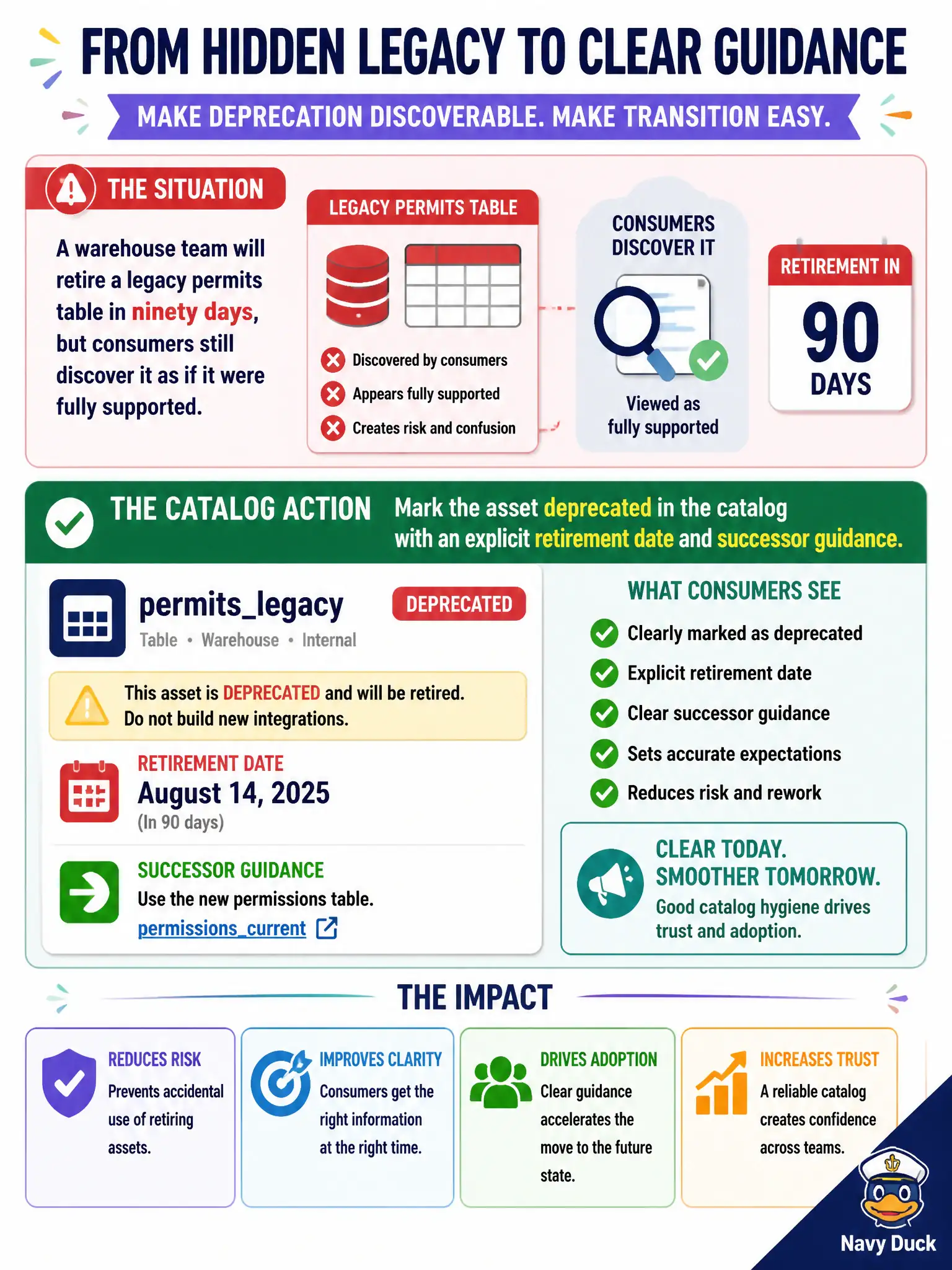
A warehouse team will retire a legacy permits table in ninety days, but consumers still discover it as if it were fully supported. What catalog action should accompany the technical deprecation?
Select an answer to reveal the explanation.
Short Explanation
Deprecation without a catalog notice is like closing a bridge with no detour signs. Mark the permits table deprecated, show the retirement date, and point people to the successor. Surprises on cutover day are how dashboards break.
Full Explanation
Technical deprecation of a legacy permits table must be mirrored in the catalog so consumers stop treating it as fully supported. Mark the asset deprecated with an explicit retirement date and successor guidance so analysts and integrators can plan migration. Deleting the catalog entry immediately removes the planning breadcrumb people need. Leaving the table unmarked and surprising consumers on retirement day causes avoidable outages. Renaming the table nightly to force early failures is chaos engineering without communication. Exam focus: deprecation metadata as part of lifecycle management. Caveat: deprecated does not always mean immediately unusable—state support level clearly during the sunset window. Operationally, set catalog status to deprecated with date and successor link, notify known lineage consumers, track migration completion, and only then retire the physical table under change control. Notify every lineage consumer of the retirement date in writing and track acknowledgements so sunset day is planned migration, not an outage. During the sunset window, search rankings should demote the deprecated permits table beneath its successor so discovery nudges consumers toward the supported asset.