
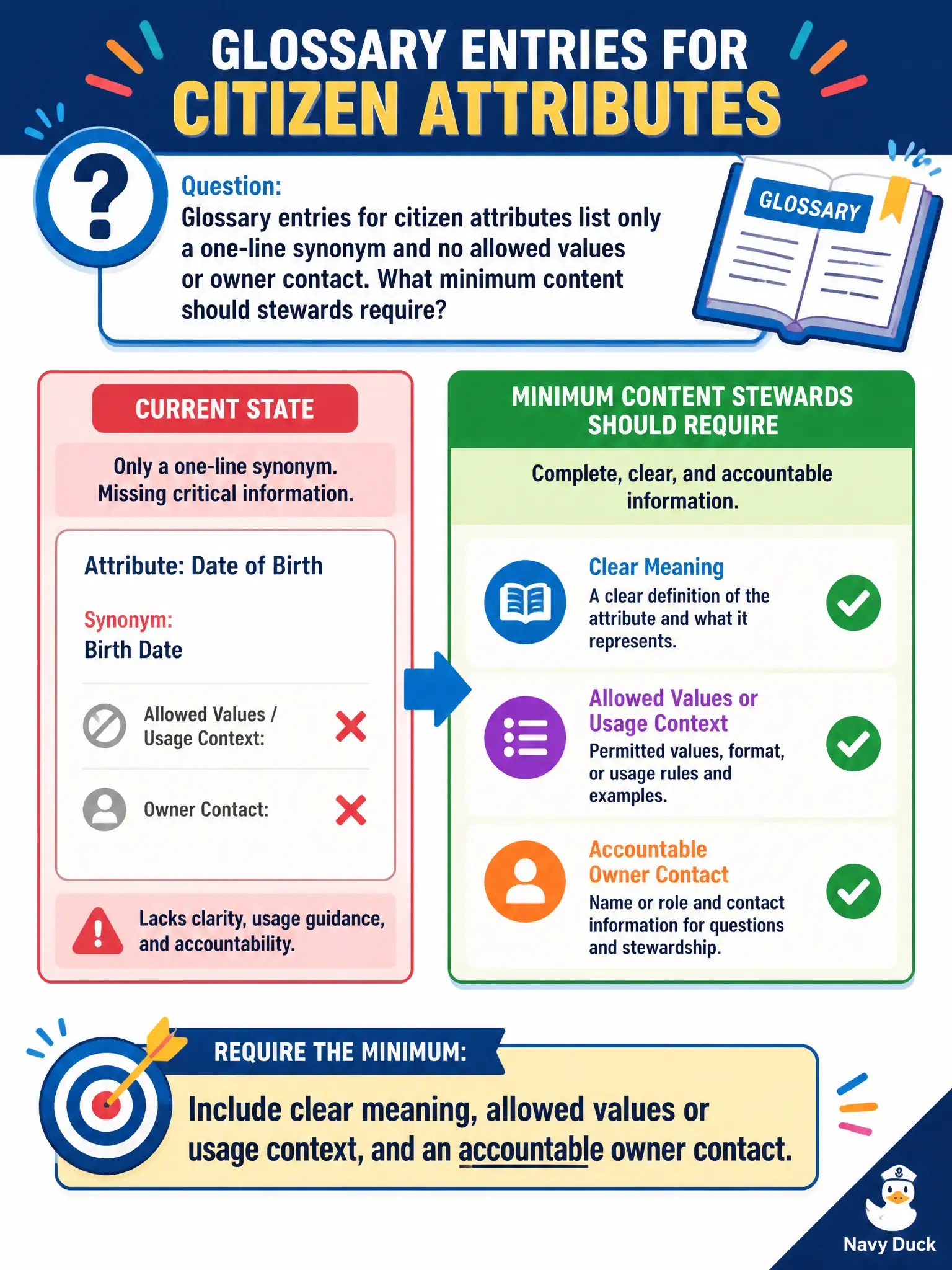
Glossary entries for citizen attributes list only a one-line synonym and no allowed values or owner contact. What minimum content should stewards require?
Select an answer to reveal the explanation.
Short Explanation
A glossary entry that is just a nickname is like a contact card with only a first name—no number, no role. Useful definitions spell out meaning, allowed values or context, and who owns the term. That trio is the minimum that actually helps.
Full Explanation
Thin glossary entries that list only a one-line synonym without allowed values or owner contact fail stewards and consumers. Minimum content should include clear meaning, allowed values or usage context, and an accountable owner contact so staff know what “citizen attribute” values are valid and whom to ask. Keeping entries empty to move faster produces a glossary that nobody trusts. Storing only cryptic abbreviations without expansion blocks literacy. Replacing glossary text with a link to an unrelated vendor brochure does not define municipal meaning. Exam questions test glossary completeness expectations. Caveat: depth can scale with criticality—priority civic terms need richer allowed-value lists than obscure rare codes—but owner and clear meaning remain baseline. Operationally, set a glossary quality checklist for meaning, allowed values or context, and owner; score citizen-attribute terms; and block “approved” status until those fields are populated and reviewed. Reject glossary publish requests that lack owner contact or allowed-value guidance for citizen attributes used in eligibility or enforcement workflows. Stewards should confirm consumer-facing behavior in a controlled check before closing the change.