
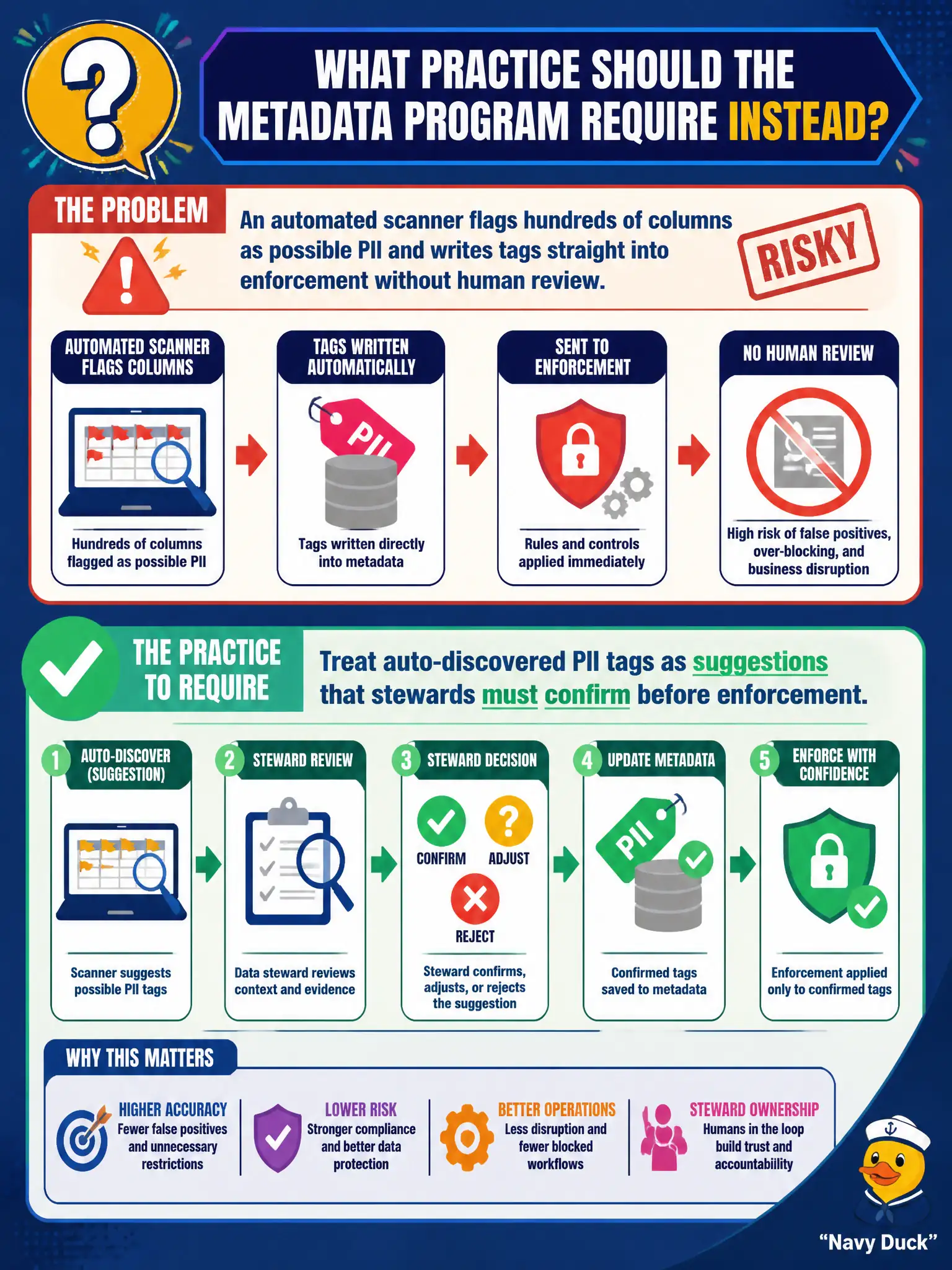
An automated scanner flags hundreds of columns as possible PII and writes tags straight into enforcement without human review. What practice should the metadata program require instead?
Select an answer to reveal the explanation.
Short Explanation
Auto-discovery is a helpful smoke alarm, not the fire marshal’s final report. Let scanners suggest PII tags, then have stewards confirm before those tags drive masking or access blocks. Blind trust in every machine guess creates false locks and missed risks.
Full Explanation
Automated PII scanners are useful suggestion engines, not unsupervised policy writers. When a scanner flags hundreds of columns and writes tags straight into enforcement without human review, the metadata program should require stewards to confirm auto-discovered tags before enforcement. Turning off discovery and relying only on memory loses scale. Accepting every automated tag as final policy with no steward check creates false positives that block services and false negatives that miss real exposure. Publishing raw scanner output to the open web for crowdsourced labeling is reckless for municipal data. Exam stance: human-in-the-loop for sensitivity metadata. Caveat: high-confidence patterns might follow a fast-track review SLA, but “no review” is not an acceptable track for enforcement. Operationally, configure discovery to stage suggested tags, assign stewards a review queue with due dates, measure confirmation lag, and only then bind access or masking policies to confirmed classifications. Publish steward SLAs for suggestion review so automated discovery remains useful without becoming an unowned enforcement backlog. Stewards should confirm consumer-facing behavior in a controlled check before closing the change.