
After a policy change, the city’s official definition of unemployed no longer matches last year’s meaning, but longitudinal dashboards still use one unversioned glossary entry. What should metadata management do?
Select an answer to reveal the explanation.
Short Explanation
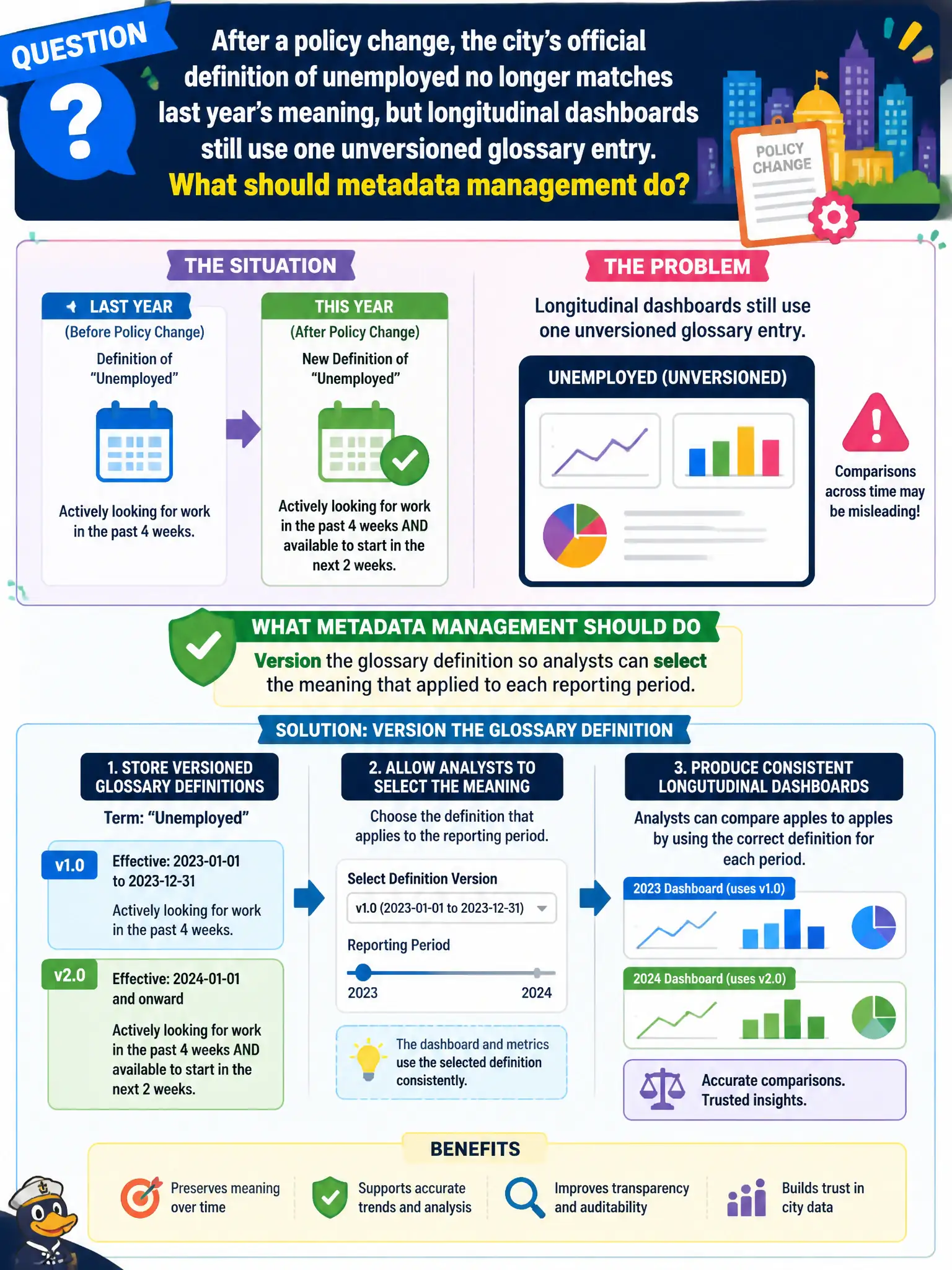
Definitions that change mid-stream are like swapping the yardstick halfway through a race. Version the unemployed glossary entry so each year’s dashboards use the meaning that applied then. Silent overwrites make trend lines lie.
Full Explanation
When policy changes the official meaning of “unemployed,” longitudinal dashboards cannot honestly keep a single unversioned glossary entry. Metadata management should version the glossary definition so analysts can select the meaning that applied to each reporting period and preserve comparability with clear caveats. Silently overwriting the old definition and deleting history breaks evidence and trend integrity. Stopping longitudinal analysis permanently whenever a term changes abandons a core analytic need. Keeping the new meaning only on a hallway poster outside the catalog fails enterprise discoverability. Exam themes: definition versioning for time-sensitive civic metrics. Caveat: versioning requires effective dates and communication so teams do not mix versions inside one chart without labeling. Operationally, create a new glossary version with effective dating, leave prior versions readable for historical periods, update dashboard metric definitions to reference the correct version per period, and document the break in trend notes for leadership. Label longitudinal charts with the glossary version used per period so leadership does not compare unlike unemployment meanings across a policy break.