
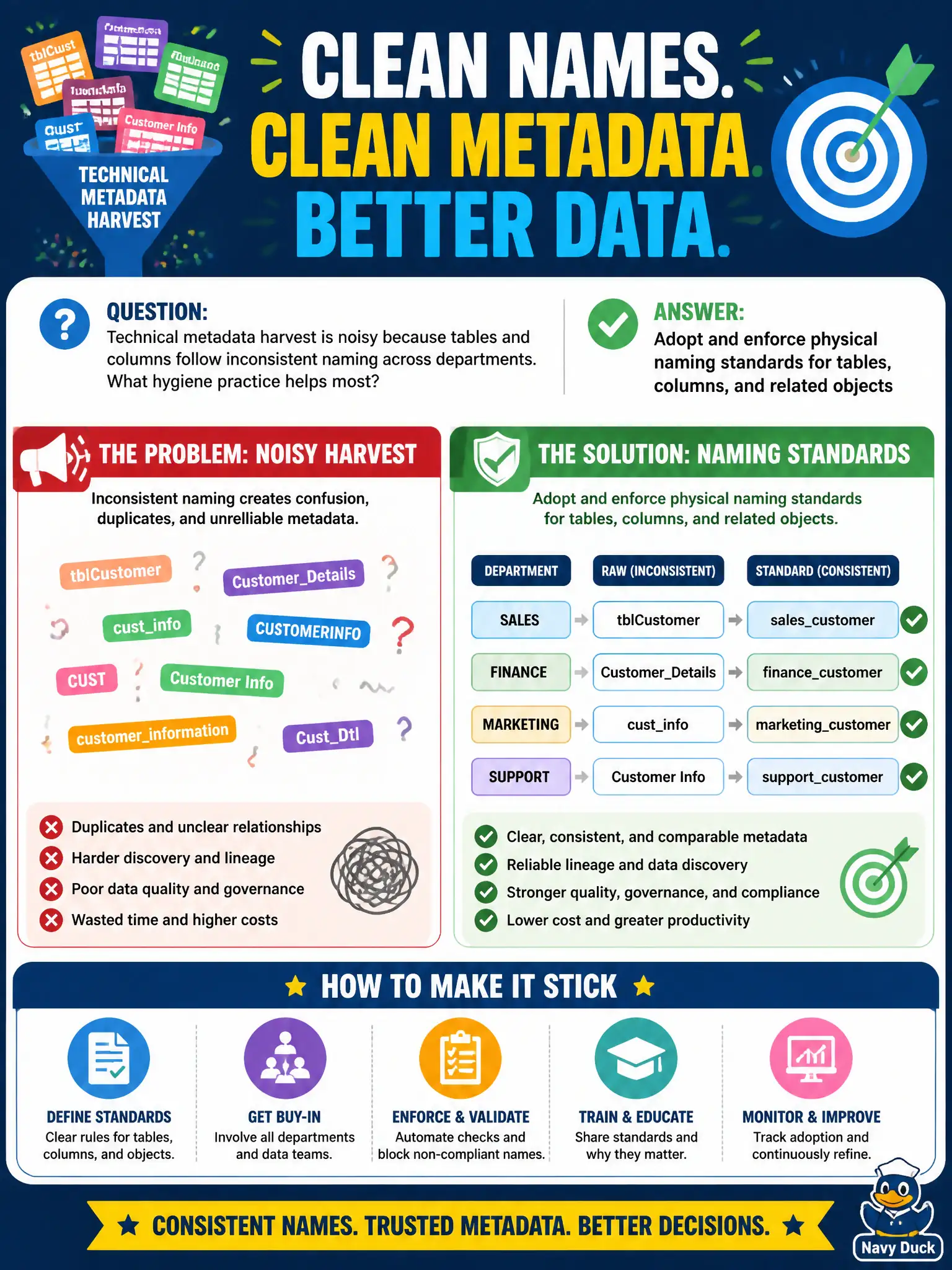
Technical metadata harvest is noisy because tables and columns follow inconsistent naming across departments. What hygiene practice helps most?
Select an answer to reveal the explanation.
Short Explanation
Consistent street signs make maps usable; consistent table and column names make technical metadata and automation usable. Naming standards are that hygiene.
Full Explanation
Noisy technical harvest often traces to inconsistent physical naming across departments. Adopting and enforcing naming standards for tables, columns, and related objects improves harvest quality, search, and automated lineage matching in a municipal estate. Randomizing names monthly defeats automation and human comprehension. Storing names only as emoji is not an enterprise standard. Forbidding documentation of naming conventions guarantees continued chaos. Exam answers favor standards and enforcement over clever uniqueness. Caveat: standards need exceptions with approval for legacy systems, plus a migration path—overnight mass renames without impact analysis create outages. Operationally, publish the naming standard, scan the harvested catalog for violations on priority schemas, assign remediation owners, and re-harvest a pilot department to measure reduction in ambiguous or duplicate technical names. Naming standards should cover prefixes, abbreviations, and code-table conventions used across departments so harvested metadata clusters related civic objects instead of scattering near-duplicates under incompatible labels. Enforcement can begin with new objects and high-churn schemas, then tackle legacy names through planned aliases so harvest quality improves without a big-bang rename outage.