
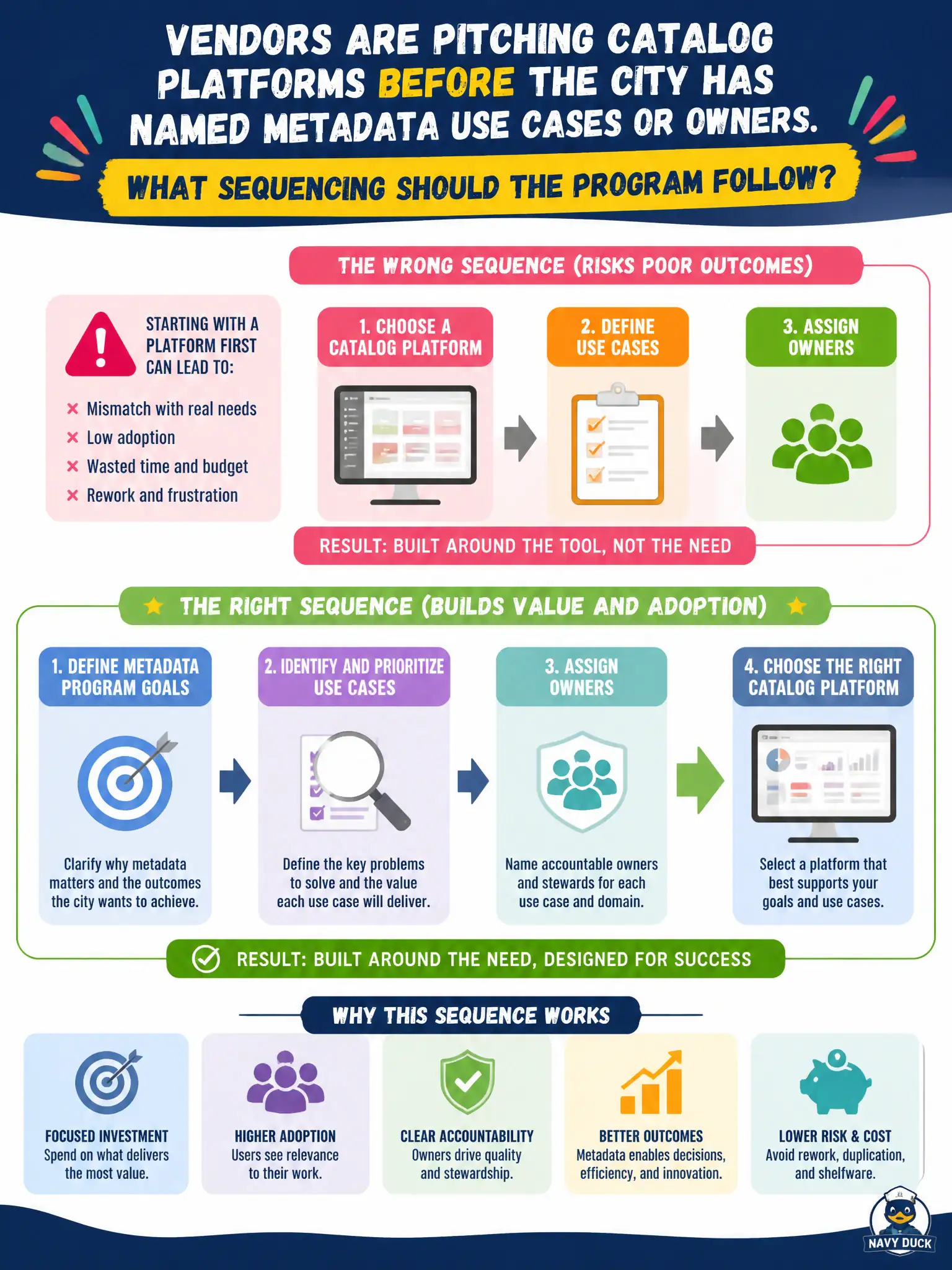
Vendors are pitching catalog platforms before the city has named metadata use cases or owners. What sequencing should the program follow?
Select an answer to reveal the explanation.
Short Explanation
Buying a kitchen before you know whether you cook for two or two hundred is backwards. Lock goals, use cases, and owners first—then pick the catalog tool that fits.
Full Explanation
Tool selection should follow program design, not precede it. When vendors pitch catalog platforms before the city has named metadata use cases or owners, sequencing should define metadata program goals, use cases, and owners first, then choose a platform that fits those needs. Flashiest-demo selection with owners invented later produces shelfware. Buying three overlapping catalogs and reconciling goals afterward multiplies cost and fragmentation. Skipping use-case definition because “tools create governance” confuses software with operating model. Exam items punish technology-first metadata programs. Caveat: proofs of concept are fine once priority use cases—such as glossary stewardship or lineage for a KPI—are explicit enough to score vendors. Operationally, write a one-page use-case and owner matrix for permitting and housing data discovery, then evaluate platforms against that matrix before signing a municipal procurement. Clear owners for glossary, lineage, and catalog quality also become acceptance criteria in procurement, preventing a platform launch with nobody accountable for civic metadata outcomes after the vendor leaves. Sequencing goals before tools further reduces duplicate purchases when multiple departments each buy a catalog for the same discovery problem.