
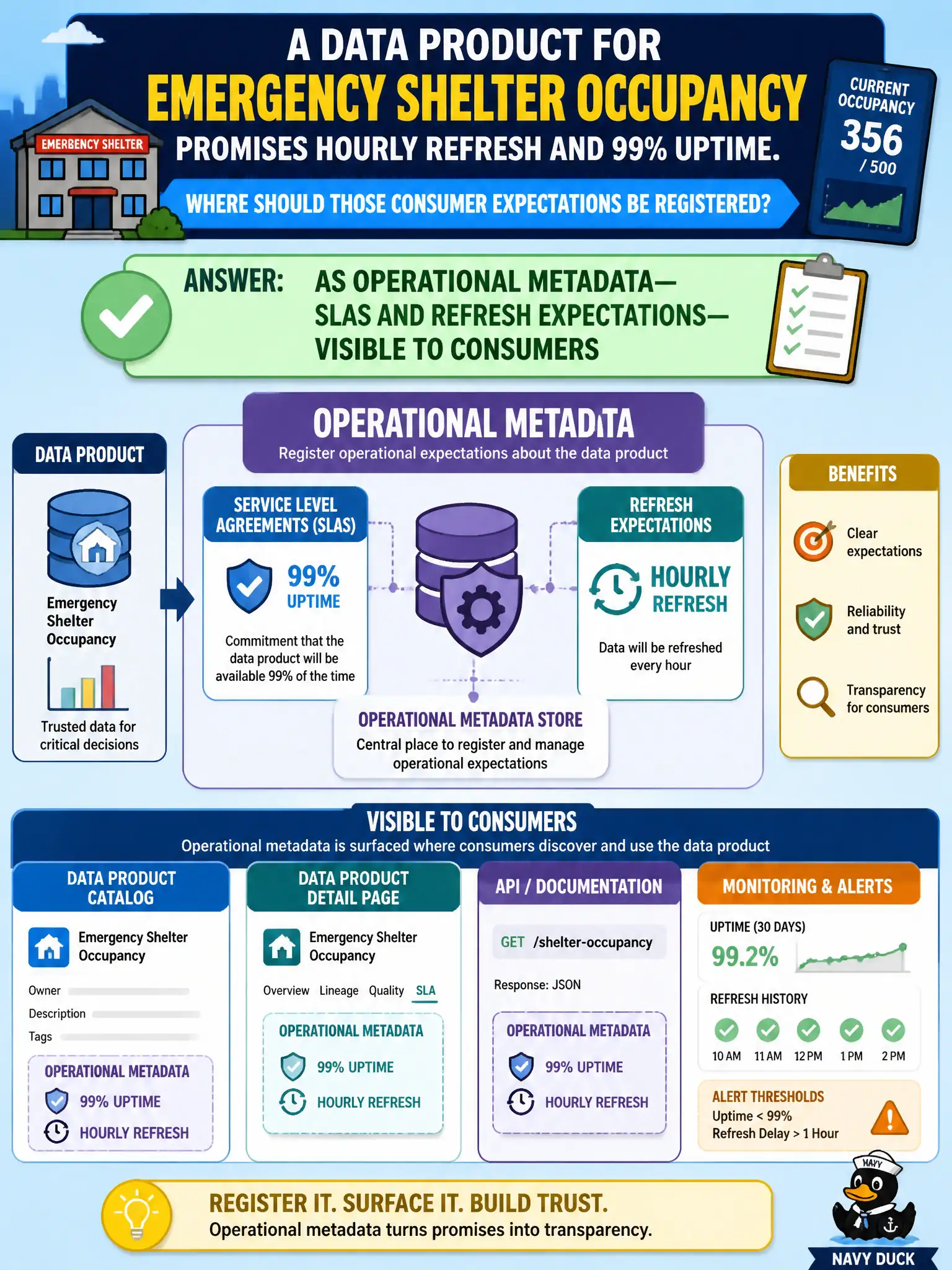
A data product for emergency shelter occupancy promises hourly refresh and 99% uptime. Where should those consumer expectations be registered?
Select an answer to reveal the explanation.
Short Explanation
If the product promises hourly refresh, that promise belongs where consumers look—not in a private chat. SLAs and freshness expectations are operational metadata for trust.
Full Explanation
Consumer expectations for a data product belong in visible operational metadata. When an emergency shelter occupancy product promises hourly refresh and 99% uptime, those SLAs and refresh expectations should be registered where consumers and responders can see them—not invented after an outage. Hallway conversations after failure are not a control plane. Watermarks on printed maps without a digital record do not support monitoring. Encrypted DBA chat logs inaccessible to catalog users hide the contract from the audience that relies on it. Exam questions cast SLAs as operational metadata for data products. Caveat: publishing an SLA without measurement and alerting is theater; pair the metadata with monitors. Operationally, verify the product’s catalog page lists refresh cadence and availability targets, confirm monitoring covers those targets, and test that a missed hourly load pages the on-call path documented for shelter operations. When shelter occupancy products miss published refresh expectations, consumers should see degraded status in the same catalog entry that stated the SLA, closing the loop between promise and observed service. Registering expectations centrally also prevents each dashboard team from inventing private freshness promises that operations cannot staff or measure.