
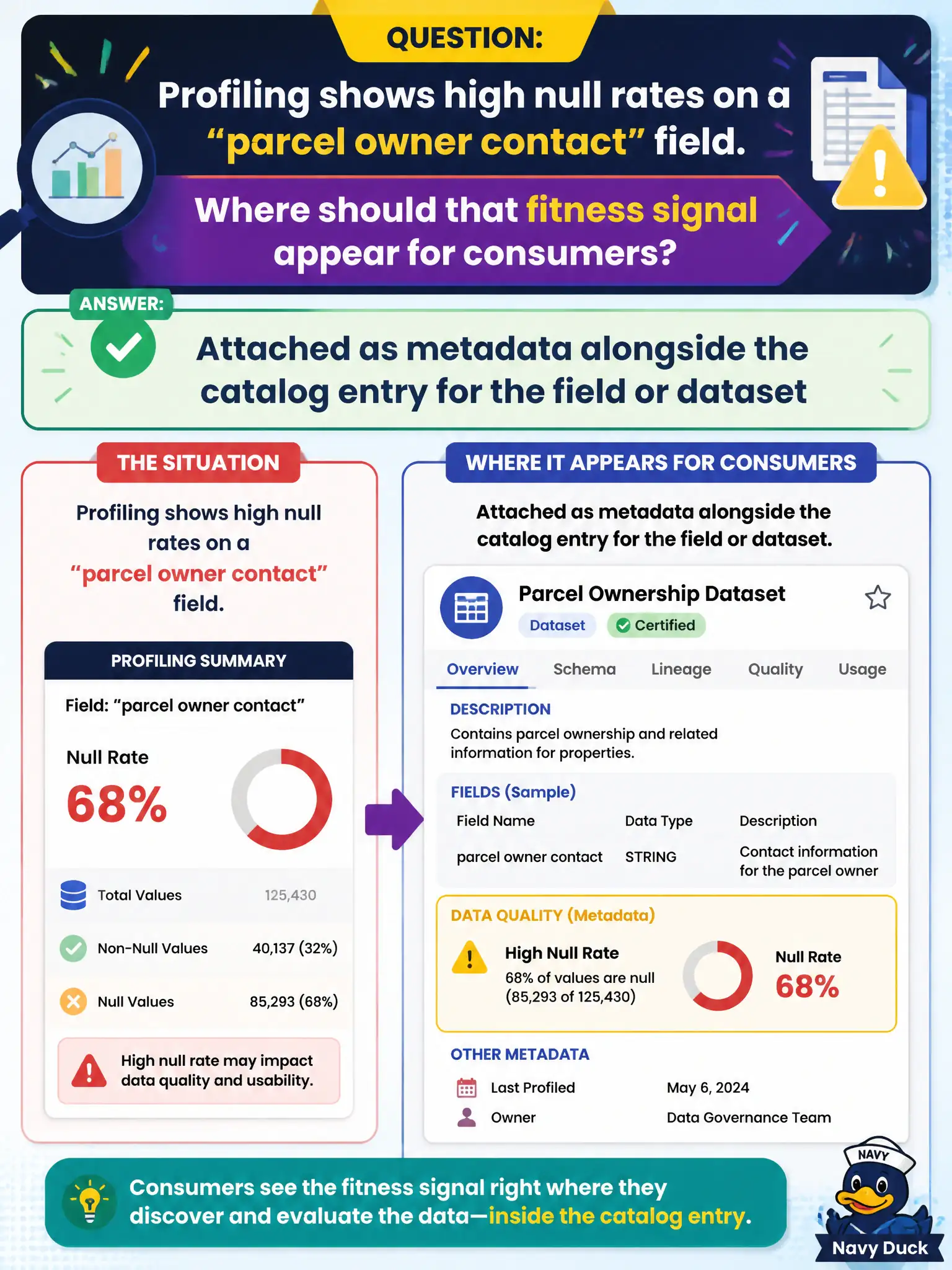
Profiling shows high null rates on a "parcel owner contact" field. Where should that fitness signal appear for consumers?
Select an answer to reveal the explanation.
Short Explanation
Profiling results are a "nutrition label" for the field. Put null rates and fitness notes next to the catalog entry so consumers judge usability before they build a mailing list.
Full Explanation
Profiling fitness signals only help if consumers can see them beside the data they might use. High null rates on a “parcel owner contact” field should appear as metadata attached to the catalog entry for that field or dataset so analysts judge fitness for notification campaigns or enforcement workflows. Leaving the signal only in a private notebook hides risk from peers. Printing once on a poster and discarding it provides no ongoing discovery. Encoding rates solely in a BI color theme without numeric metadata is opaque and non-portable. Exam themes treat data-quality metrics as metadata products. Caveat: publish methodology and freshness of the profile itself so stale null-rate badges do not mislead. Operationally, confirm the catalog field page shows the null-rate metric, its as-of time, and a link to remediation or steward contact before approving a civic outreach use case that depends on owner contact completeness. Publishing fitness metadata next to parcel contact fields also supports triage: stewards can prioritize cleansing where null rates block legally required notices or emergency outreach rather than cleansing every column equally. Consumers should be able to compare fitness across candidate datasets for the same civic purpose and choose the contact source that meets completeness thresholds for the campaign.