
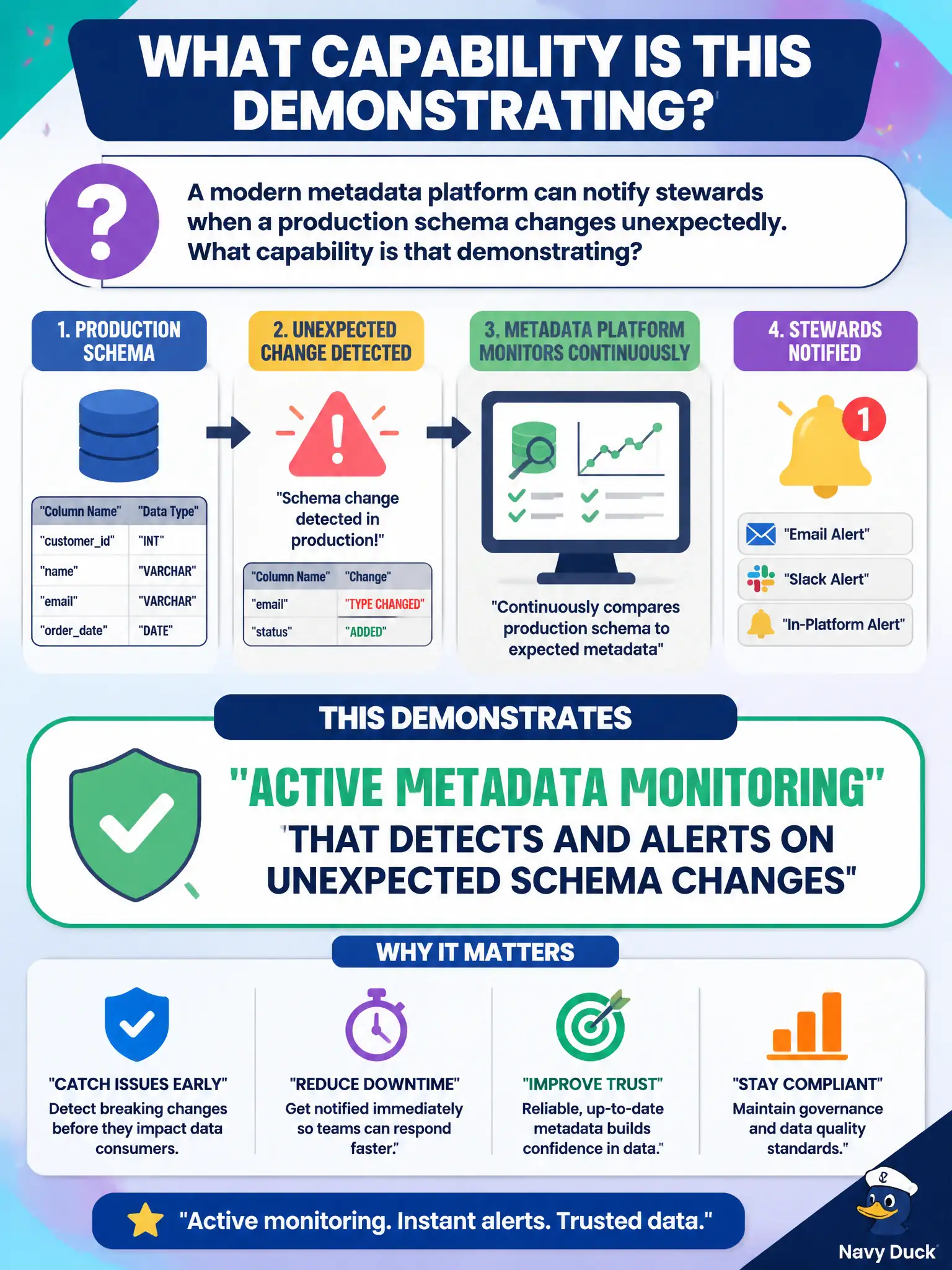
A modern metadata platform can notify stewards when a production schema changes unexpectedly. What capability is that demonstrating?
Select an answer to reveal the explanation.
Short Explanation
Smoke alarms for schemas—when something changes that should not, the catalog pings you. That active monitoring beats finding out months later that reports silently broke.
Full Explanation
Notifying stewards when a production schema changes unexpectedly demonstrates active metadata monitoring—detection and alerting on drift rather than waiting for annual manual reviews. In a municipal estate, unexpected column adds or type changes can break downstream civic reports; active signals shorten time to triage. Manual annual PDF reprints of table definitions are passive and stale by design. Deleting lineage whenever a column is renamed destroys the history needed for impact analysis. Disabling alerts so drift stays invisible is the opposite capability. Exam wording pairs “unexpected schema change” with active monitoring. Caveat: alert volume must be tuned with owners and severity; noisy alerts get ignored and recreate blindness. Operationally, simulate a non-prod schema change on a watched civic table and confirm the steward receives a timely, actionable alert that links to the catalog asset and proposed impact list. Active metadata should integrate with existing municipal change-management channels so alerts become tickets with owners, rather than unread emails that leave schema drift effectively unmonitored. Over time, patterns in schema-change alerts also inform architecture reviews, showing which civic systems change most chaotically and where stronger model governance is overdue.